This glossary defines the words homeowners meet when something goes wrong with a drain or sewer: the parts of the system, the symptoms, the fixes, and the paperwork. Each definition is written to stand on its own, so you can check a term from a contractor's quote, an insurance policy or a city page without reading anything else first.
- Terms are grouped by what they describe, not alphabetically.
- Where a term means slightly different things in different cities or policies, the definition says so.
- Words from a quote you do not understand are worth asking about before you sign.
01 /How is the glossary organised?
The terms follow the order a homeowner usually meets them: first the parts of the drain system inside the house, then the pipe outside, then symptoms, then the fixes, and finally the paperwork of permits, credentials and insurance. Definitions are short on purpose. Where a term has a page of its own on this site, the definition points to it.
If a word in a quote is not here, ask the contractor to explain it in writing. A clear answer is a good sign; a vague one is worth noting. For how the parts fit together when something fails, start with the Sewer Symptom Triage or the FAQ.
A–ZTerms
- Air admittance valve (AAV)
- A one-way valve that lets air into a drain but not out, used where a fixture cannot easily vent to the roof. It can stick and leak odour.
- Auger (drain snake)
- A rotating cable with a cutting or retrieving head, fed into a drain to break up or pull out a blockage.
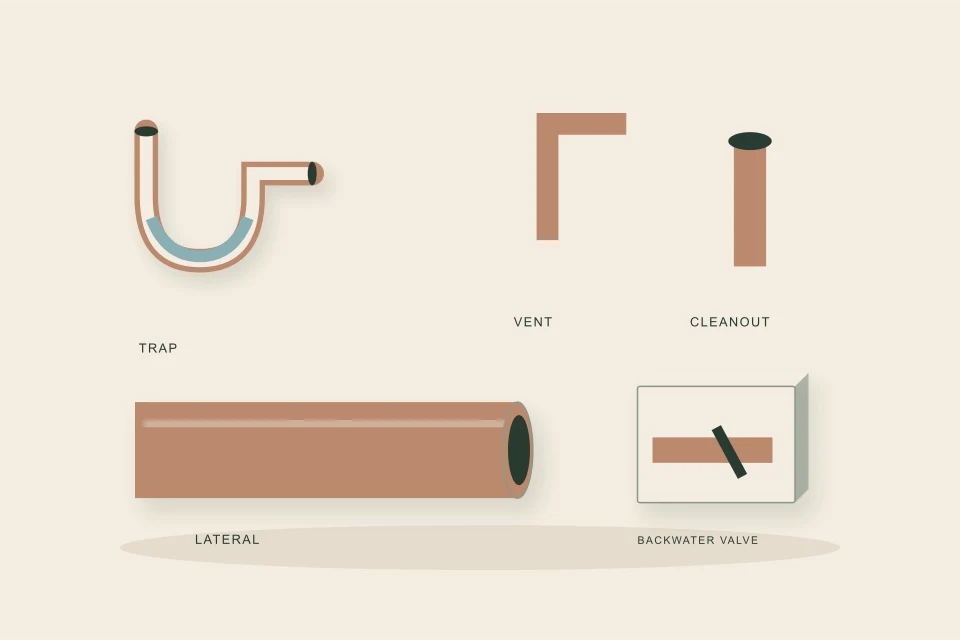
- Backwater valve
- A valve on the building drain with a flap that closes when flow reverses from the main, protecting against a surcharged sewer.
- Branch drain
- A pipe carrying water from one fixture or a group of fixtures to the stack or building drain.
- Building drain
- The horizontal pipe under the basement floor that collects everything from the stack and floor drains and carries it out through the foundation.
- Building sewer
- The pipe from just outside the foundation to the connection at the main; often used interchangeably with lateral.
- Camera inspection (CCTV)
- A recorded video of the inside of a pipe, with a distance counter, used to find and locate defects.
- CIPP (cured-in-place pipe)
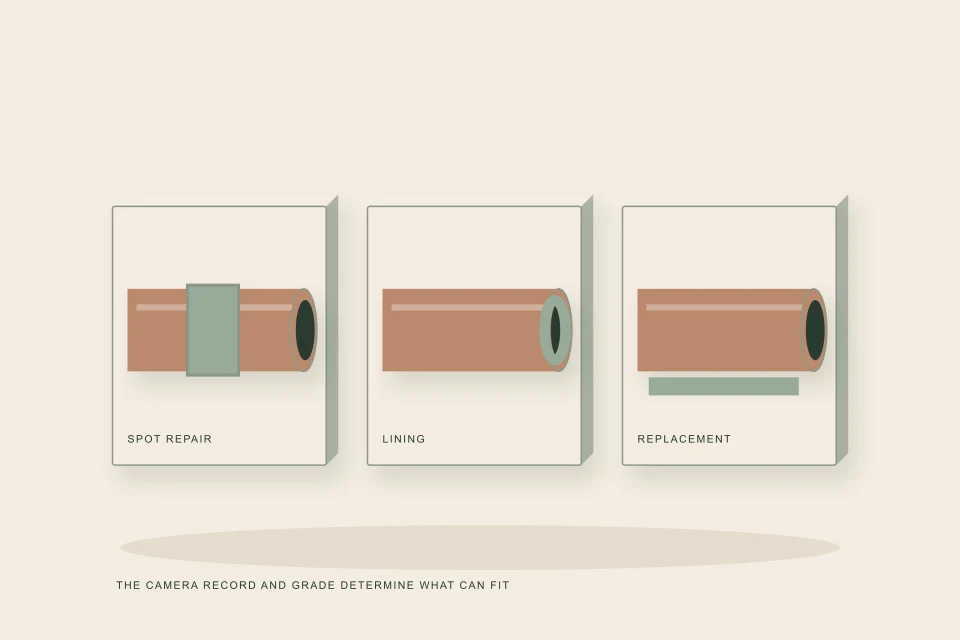
- A full-length liner put into the old pipe and hardened, forming a new jointless pipe inside it.
- Cleanout
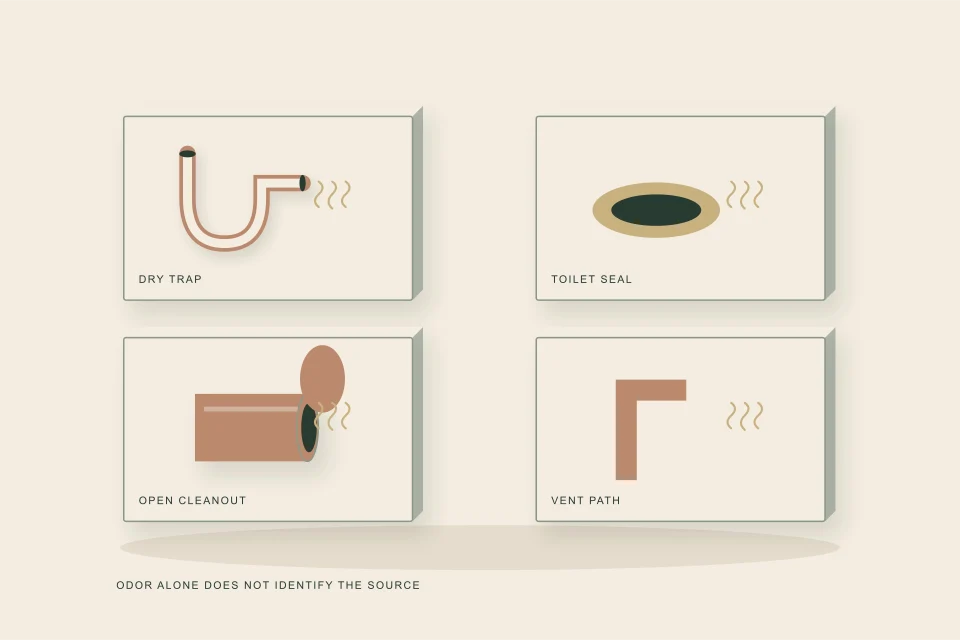
- A capped opening into the drain or sewer line that lets a contractor or city crew insert a cable or camera.
- Clearance letter
- A document from a workers' compensation board confirming a contractor's account is in good standing, protecting the hirer from unpaid premiums.
- Collapse
- A section of pipe that has lost its shape or is missing, usually blocking the camera and requiring excavation.
- Combined sewer
- An older type of sewer that carries both wastewater and storm water in one pipe, found in parts of some Canadian cities.
- Compulsory trade
- A trade that only certified workers or registered apprentices may practise in a given province.
- Drain-waste-vent system (DWV)
- All the pipes that carry used water out of a building and the vent pipes that let air in and out of them.
- Fixture
- Anything that uses water and drains it: sink, tub, shower, toilet, floor drain, laundry tub or washer standpipe.
- Floor drain
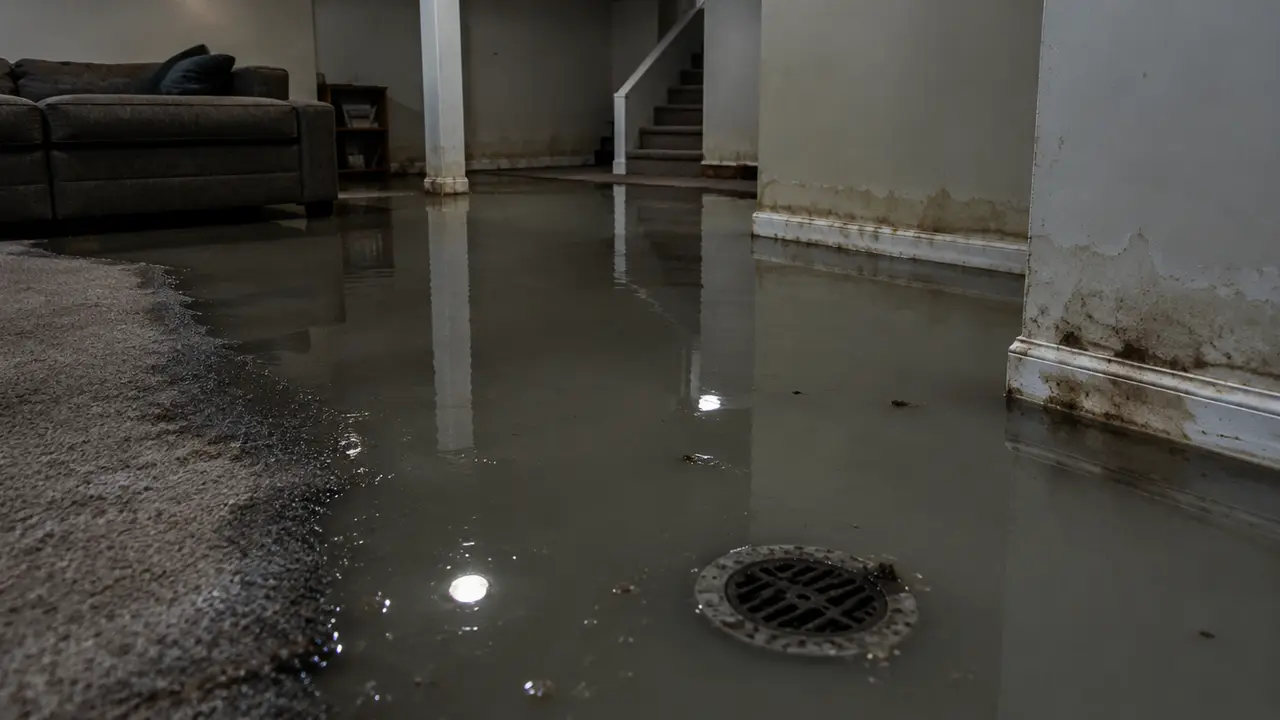
- A drain set into a basement floor, usually the lowest opening in the house and therefore the first place a backup appears.
- Fracture
- A break through the pipe wall, more serious than a surface crack, often visible on camera as a line with displacement.
- Gurgling
- The bubbling sound of air being pushed or pulled through a trap, caused by a restricted vent or a partial blockage downstream.
- Hydro jetting
- Cleaning a pipe with a high-pressure water hose and nozzle that scours the walls and flushes debris downstream.
- Hydrogen sulfide (H₂S)
- A gas that smells of rotten eggs and can dull the sense of smell. Dangerous at high concentrations, especially in confined spaces.
- Infiltration
- Groundwater that seeps into a sewer through cracks and open joints when the soil is saturated.
- Inflow
- Storm water that enters a sanitary sewer through direct connections such as downspouts, weeping tile or manhole lids.
- Lateral (service line)
- The sewer pipe connecting a house to the municipal main. Ownership is often split at the property line; confirm locally.
- Main (sewer main)
- The municipal pipe under the street or lane that collects flow from many laterals.
- Manhole
- An access chamber into a sewer main. Never enter one: gas and low oxygen can be deadly.
- Mercaptan
- The odorant gas utilities add to natural gas so leaks smell of sulphur or rotten eggs. It is why gas and sewer smells get confused.
- Offset joint
- A joint where one pipe section has shifted relative to the next, leaving a lip that catches paper and debris.
- Open-cut replacement
- Digging a trench along the line and laying a new pipe on new bedding, which can correct grade and route.
- Orangeburg (bituminous fibre)
- A layered fibre-and-tar pipe used in some mid-twentieth-century homes. It deforms with age and is usually treated as at end of life.
- Overland water
- Water that flows over the ground and into a building through windows, doors or walls. Insured separately from sewer backup.
- PACP
- The NASSCO Pipeline Assessment Certification Program, a standard system of codes for describing pipe defects on video.
- Pipe bursting
- Pulling a cone-shaped head through an old pipe to break it outward while a new pipe is drawn in behind.
- Plumbing permit
- Municipal permission for plumbing work, which brings inspections before pipes are covered.
- Prepaid contracting licence
- An Alberta licence required for businesses that sell home repair contracts away from their premises and take payment before the work is done.
- Private locate
- Locating customer-owned lines such as your sewer lateral, done by a hired locator, often with a camera sonde.
- Property line
- The legal edge of your lot. Many municipalities use it as the point where responsibility for the sewer lateral changes.
- Reinstatement
- Reopening a branch connection from inside a newly lined pipe, usually with a robotic cutter.
- Roof vent
- The open top of the stack above the roof. Its plume of drain air is sometimes smelled outside on still days.
- Root intrusion
- Tree roots growing into a pipe through joints or cracks and forming a mass that catches debris.
- Sag (belly)
- A section of pipe that has settled below its intended slope and holds water and solids. Liners and bursting cannot remove it.
- Sanitary sewer
- A sewer designed to carry wastewater from toilets, sinks and drains to treatment, not rainwater.
- Sectional (point) liner
- A short resin-soaked sleeve cured against the inside of a pipe at a single defect, installed without digging.
- Service line coverage
- Optional insurance some insurers offer for repairing buried service lines on your property. Terms and exclusions vary.
- Sewage ejector
- A sealed pit and pump that lifts wastewater from basement fixtures below the level of the building drain. Its lid must stay sealed.
- Sewer backup
- Wastewater flowing back up through drains into a building because the pipe downstream is blocked or full.
- Sewer backup coverage
- Optional home insurance coverage for damage caused by water backing up through drains. Not included by default in Canada.
- Sewer gas
- The air inside drains and sewers, whose smell comes mainly from hydrogen sulfide. It can also contain ammonia, methane and carbon dioxide.
- Siphoning
- Water flowing past a trap pulling the trap's own water out, usually because the vent is blocked, missing or too small.
- Smoke test
- A test that fills the drain and vent system with harmless smoke to show where it leaks sewer air.
- Sonde
- A small transmitter in a camera head that a locator follows above ground to mark the pipe's position and depth.
- Spot repair
- Digging down to one defect and replacing a short section of pipe. It can fix a local sag.
- Stack
- The main vertical drain pipe that runs from the roof vent down to the building drain, collecting branches on the way.
- Standpipe
- The vertical pipe a washing machine hose drops into. It should have a trap below it.
- Storm sewer
- A separate sewer that carries rain and snowmelt from streets and properties, usually to a river or pond.
- Stormwater charge
- A utility charge for managing rain and snowmelt runoff, often fixed or based on lot size rather than water use.
- Sump pit and pump
- A pit in the basement floor that collects foundation water and a pump that lifts it out of the house.
- Surcharge
- A sewer main running full, so its water level rises above normal and can push back up connected laterals.
- Toilet flange
- The fitting in the floor that the toilet bolts to and that connects it to the drain.
- Trap
- A U-shaped bend below a fixture that holds water after each use, forming a seal against sewer air.
- Trap primer
- A device that adds a little water to a rarely used trap, such as a floor drain, so its seal does not dry out.
- Trap seal
- The plug of water held in a trap. When it is lost to evaporation, siphoning or a pressure surge, sewer air can enter the room.
- Utility locate
- Marking of buried utility lines before digging, requested through the provincial one-call service. Private lines are not included.
- Vent
- A pipe that lets air into the drain system behind flowing water and carries drain air out through the roof.
- Vitrified clay pipe
- Fired clay sewer pipe common in older laterals, durable in itself but joined at many joints where roots enter.
- Wastewater charge
- The part of a utility bill for collecting and treating sewage, usually calculated from metered water use.
- Wax ring
- The seal between the base of a toilet and the drain flange in the floor. A failed ring leaks sewer air or water around the toilet.
- Weeping tile (foundation drain)
- Perforated pipe around the footing that collects groundwater. In older homes it may drain into the sanitary sewer; newer homes send it to a sump.