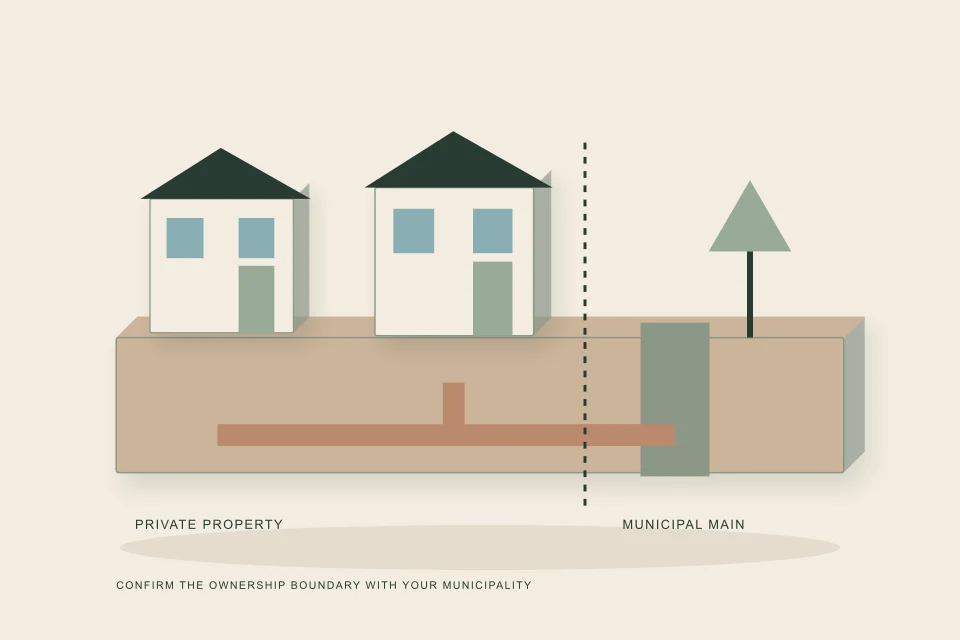
The sewer questions are the same across Canada, but the answers to "who owns it", "who do I call" and "is there help paying" change with your city and province. In most cities the owner is responsible to the property line and the city beyond it; backups are reported to 311 or the utility; some cities subsidise backwater valves; and plumbing licensing and locate notice are set provincially.
- Toronto and Edmonton both publish a split at the property line: owner on the house side, City or EPCOR on the main side.
- Calgary asks you to call 311 and clear space around the cleanout so a crew can check whether the blockage is public or private.
- Backwater valve help as published in September 2026: up to $800 from EPCOR in Edmonton, up to $1,600 per valve in Toronto.
- Locate notice: three full working days in Alberta, five business days in Ontario; private sewer lines are not marked.
01 /Who owns the sewer line in Canadian cities?
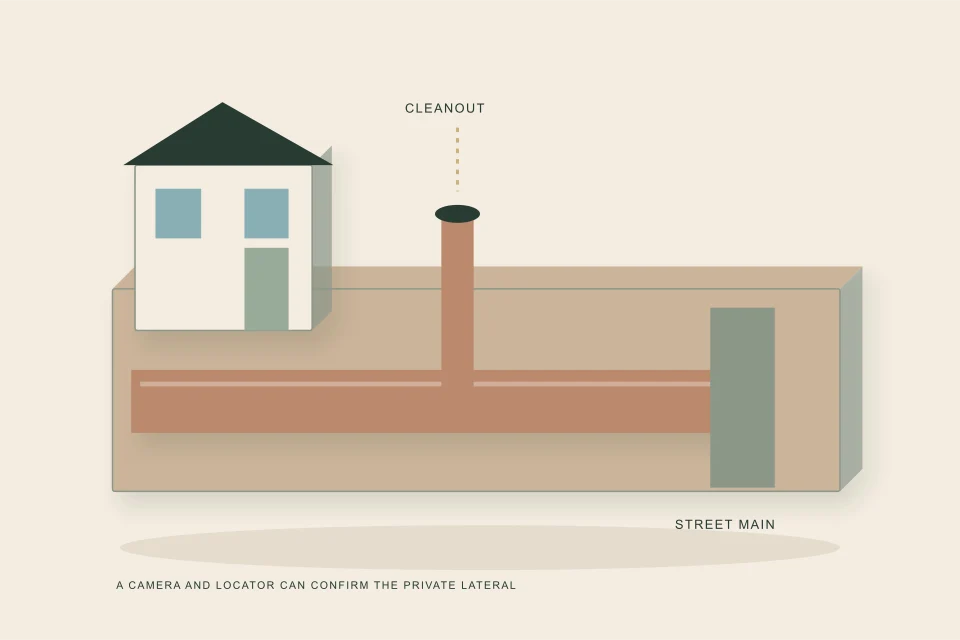
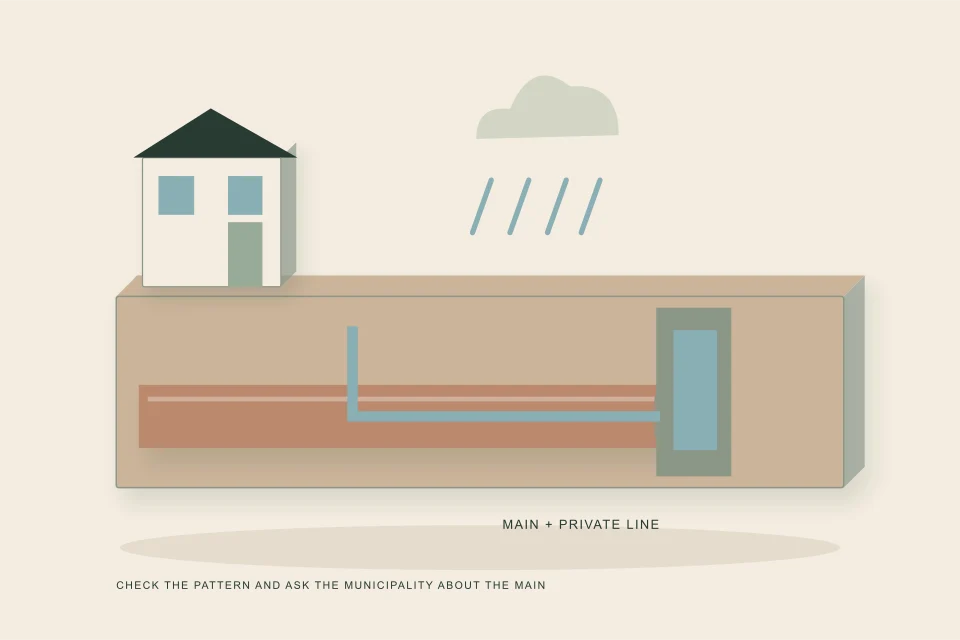
Usually the owner is responsible from the house to the property line, and the municipality or its utility from the property line to the main. That is the pattern Toronto and EPCOR in Edmonton publish, and it is common elsewhere, but it is not universal. Some municipalities put more of the connection on the owner, and some share repair costs by cause. Always confirm with your city before paying for work near the property line.
| City | What the city or utility publishes | Report a backup |
|---|---|---|
| Calgary | 311 decides whether you need a plumber or a City crew; a crew may run a steel snake to the main to find whether the blockage is public or private | 311 |
| Edmonton | EPCOR: owners maintain and repair sewer lines on their property, including any backwater valve; EPCOR is responsible from the property line to the main | EPCOR |
| Toronto | The City owns from the main to the property line; the owner from the property line into the home. Toronto Water inspects the City side by CCTV first | 311 |
| Winnipeg | Advises a backwater valve or a sump pit drainage system on the sewer line, installed by a licensed plumber | 311 |
| Other cities | Confirm the split and the investigation process with your municipality | 311 or the utility |
02 /What do cities do when my basement drain backs up?
Most will investigate whether the problem is in their part of the system, and send you to a plumber if it is not. What they check, and what you must do to let them check, differs. Know where your cleanout is and keep it clear, because every city process starts there.
- Calgary: clear a path of about two metres around the cleanout before the crew arrives. Crews will not move furniture, pull back carpet, remove toilets or open drywall to find it. If the cleanout is covered, providing access is the customer's responsibility.
- Edmonton: EPCOR offers basic help diagnosing drainage problems but will not reimburse plumber's fees wherever the blockage is, and charges when prohibited waste caused the blockage. Its crews cannot safely work in crawl spaces under 5 ft high or smaller than 4 ft by 4 ft.
- Toronto: a technician inspects the City-side portion by CCTV. If it is clear, the owner is responsible for repairs on the private side and is advised to call a licensed plumber. The City stresses that a working, accessible cleanout is essential.
Why the floor drain overflows first, and how to tell a city problem from your own, is explained in why sewers back up. The first-hour steps are in what to do when the sewer backs up.
03 /Which cities help pay for a backwater valve?
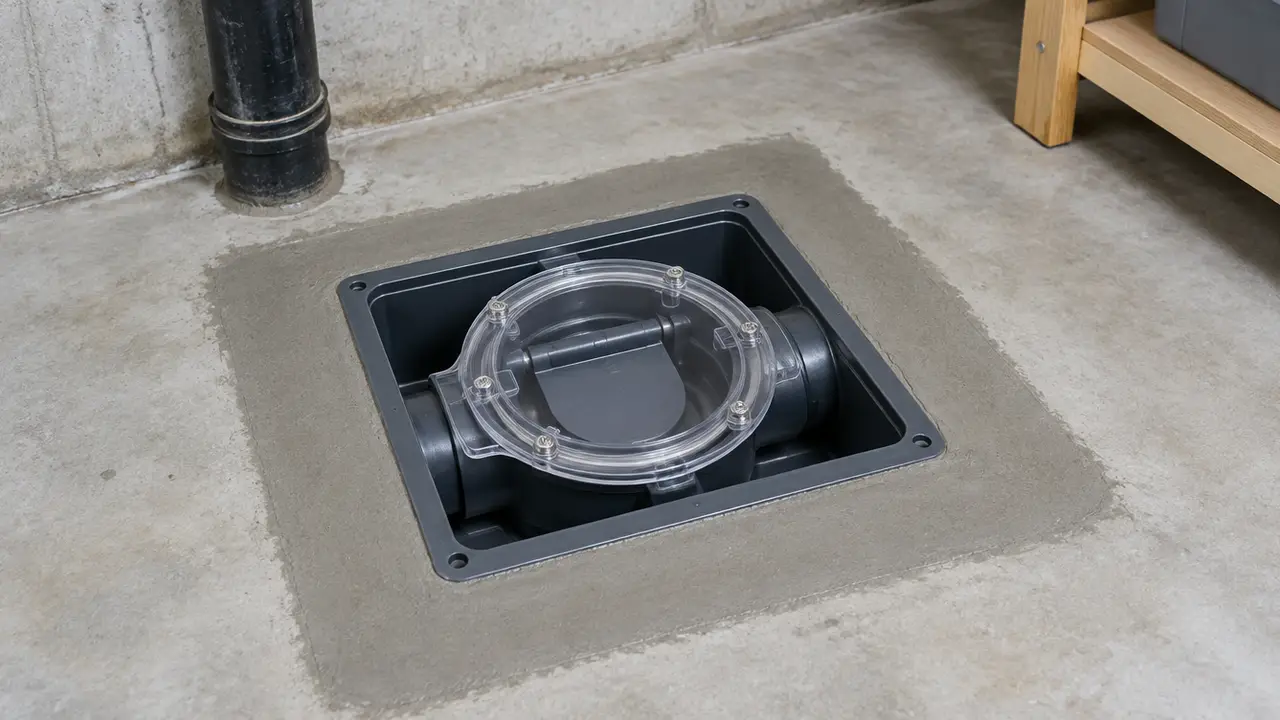
Some do, with conditions that change with budgets. As published in September 2026, EPCOR in Edmonton offers up to $800 toward an interior or exterior backwater valve for eligible homes, and Toronto's Basement Flooding Protection Subsidy pays up to 80 per cent of invoiced costs, to a maximum of $1,600 per valve (up to two) and $6,650 per property, for eligible work completed on or after November 12, 2025.
| City | Program as published | Key conditions |
|---|---|---|
| Edmonton (EPCOR) | Up to $800 per home | Homes built before 1989, or previous sewer backup, or a neighbourhood flooding history; no existing valve; single family or duplex; professional plumber; approved valve models; City permit; first come, first served |
| Toronto | Up to 80% of cost; up to $1,600 per valve, two valves; up to $6,650 per property | Building permit for the valve; contractor with a valid City business licence; apply within two years for work on or after November 12, 2025 |
| Ottawa | A Residential Protective Plumbing program is listed on ottawa.ca | Its page did not load when checked; confirm amounts and eligibility through 311 |
| Winnipeg | No subsidy found on the current flooding pages | The City advises a backwater valve or sump pit system; confirm any program through 311 |
| Calgary | The City recommends backwater valves on below-grade fixtures | Confirm whether any program applies through 311 |
A mainline valve in an existing home typically quotes $1,800 to $4,500 as a 2026 planning estimate; the breakdown is on the cost answers page. Why valves matter in storms is explained in backups in the rain.
04 /How much notice do locate services need before digging?
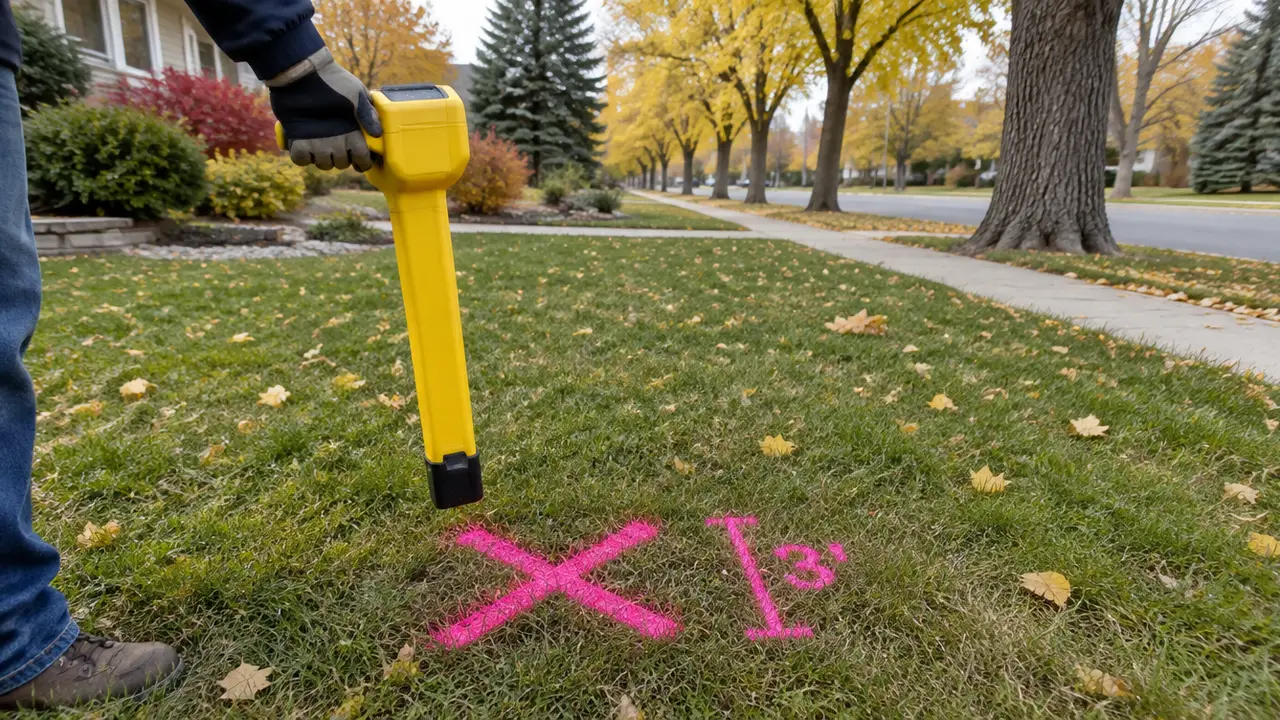
Every province requires utility locates before digging, and each service sets its own notice. Utility Safety Partners in Alberta asks for at least three full working days. BC 1 Call members respond within three working days. Ontario One Call asks for at least five business days. All three are free, and none marks your private sewer lateral: that takes a private locator, usually with a camera sonde.
Your contractor normally arranges both. Put it in the contract, because digging without locates is dangerous and can make you liable for damage. Where the line is and how to trace it are covered in finding your sewer line and cleanout.
05 /Does a sewer contractor need a licence in my province?
For plumbing, it depends on the province. As checked in September 2026, plumbing is a compulsory trade in Alberta, Saskatchewan and Ontario, so the worker must be certified or a registered apprentice. It is a voluntary certification trade in British Columbia and Manitoba. In Quebec, plumbing work requires an RBQ contractor licence with subclass 15.5, issued through the CMMTQ.
| Province | Status | Check with |
|---|---|---|
| Alberta | Compulsory | Tradesecrets Tradesperson Lookup |
| British Columbia | Voluntary | Ask for the certificate; SkilledTradesBC |
| Saskatchewan | Compulsory | SATCC |
| Manitoba | Voluntary | Ask for the certificate; Apprenticeship Manitoba |
| Ontario | Compulsory (306A) | Skilled Trades Ontario Public Register |
| Quebec | RBQ licence, subclass 15.5 | RBQ licence holders' repertory |
| Other provinces and territories | Confirm | Provincial or territorial apprenticeship authority |
Workers' compensation clearances differ too: WCB-Alberta and WorkSafeBC both warn that a homeowner can be liable for a hired contractor's unpaid premiums without a clearance letter, while WSIB in Ontario says its clearance policy does not apply to householders directly hiring for exempt home renovation work. The vetting checklist applies these rules by province, and how to vet a sewer contractor explains each check.
06 /How do sewer charges differ between cities?
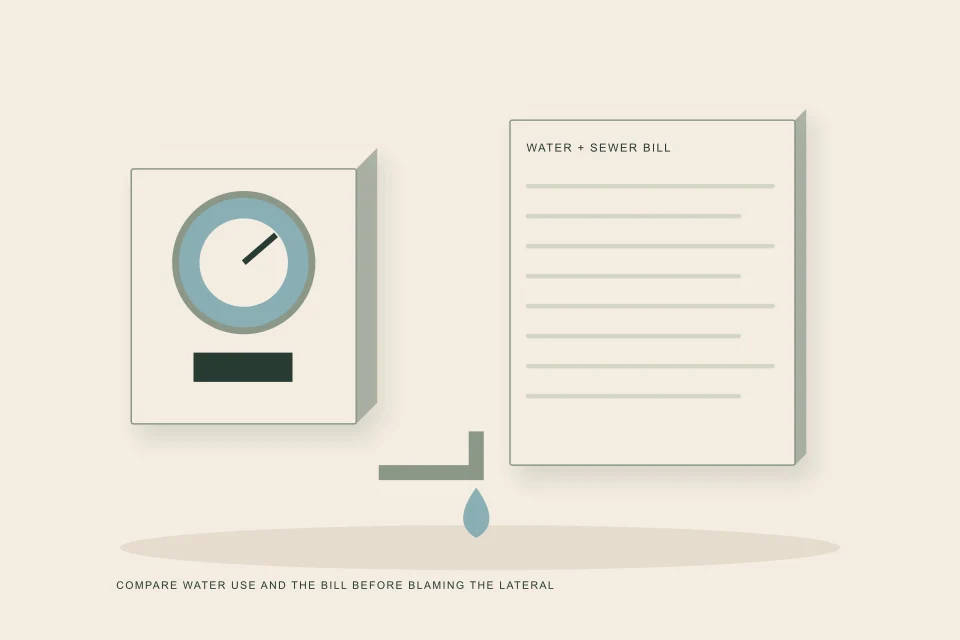
Most cities bill wastewater from metered water, but the details differ. Calgary charges residential wastewater on 88 per cent of metered water all year, plus fixed wastewater and stormwater service charges. EPCOR in Edmonton charges a variable rate per cubic metre of water plus a fixed charge that varies by meter size, and a stormwater charge based on lot area and runoff. Why the sewer bill is high explains how to read yours.
If your city is not listed here, the questions to ask it are the same: where does my responsibility end, what will you investigate in a backup, is there any help with a backwater valve, and how is my wastewater charge calculated. If you want help finding those answers for your address, ask the desk. Calgary homeowners can find city-specific depth on sister sites CalgarySewers.ca and, for Alberta replacements, SewerReplacements.ca.
FAQQuestions people ask
In most Canadian cities, where does my sewer responsibility end?
In most Canadian cities, you are responsible up to the property line and the city beyond it, but the split varies. Confirm with 311 or your utility before paying for work.
Does Calgary check whether a backup is the City's fault?
Yes. Call 311. A crew may run a steel snake from your cleanout to the main to find whether the blockage is on private or public property, if they can reach the cleanout.
Does Edmonton pay for backwater valves?
EPCOR published a subsidy of up to $800 for eligible homes when checked in September 2026, subject to funding and conditions. Confirm current terms with EPCOR.
Does Toronto inspect my sewer line if my basement floods?
Toronto Water investigates the City-side portion of the service line by CCTV. If that is clear, the owner is responsible for the private side.
Do I need to call before digging to fix my own sewer?
Yes. Request public locates through your provincial service before any digging. They will not mark your private sewer line, so you also need a private locate.