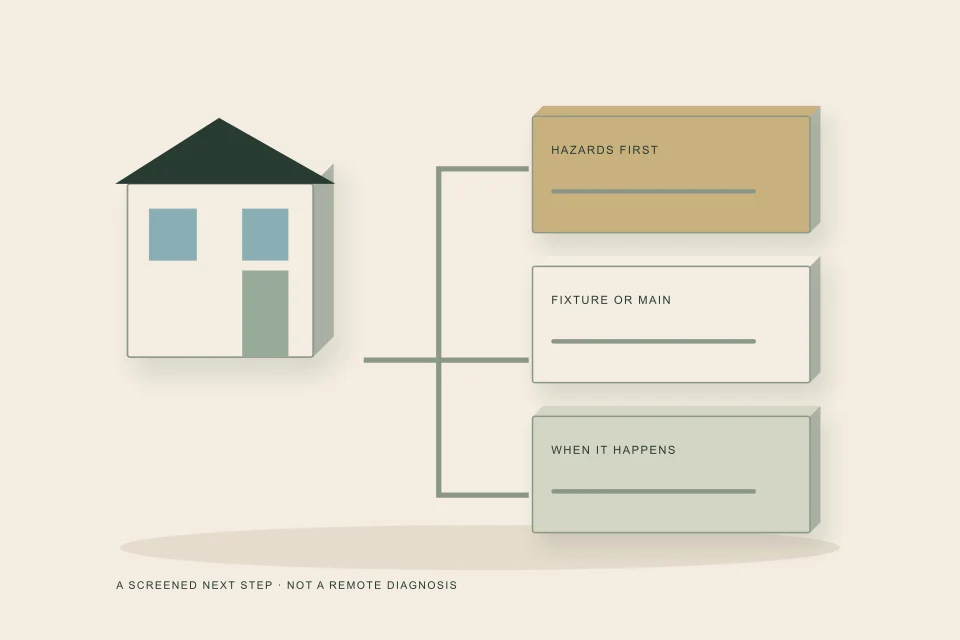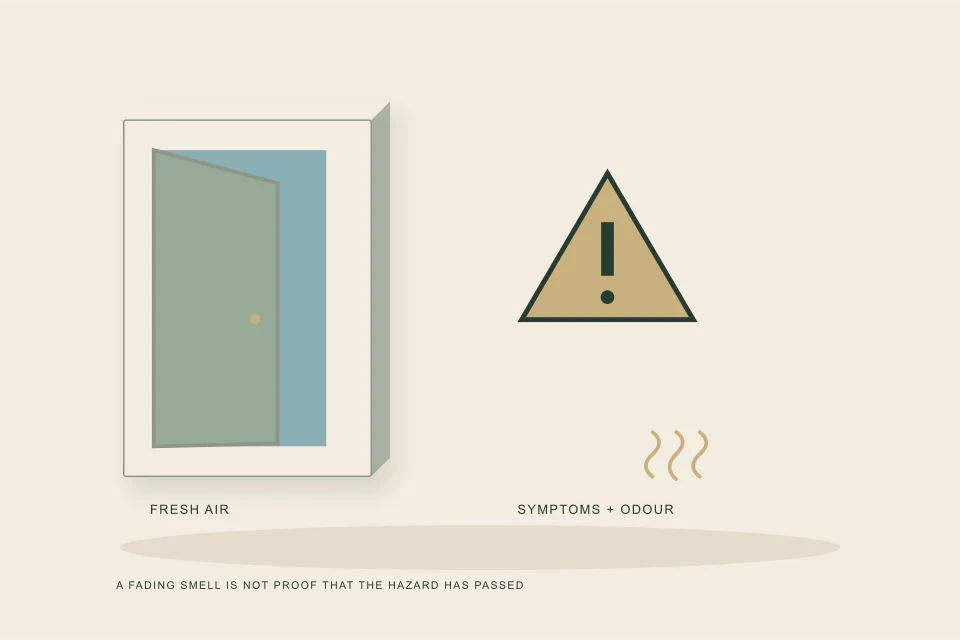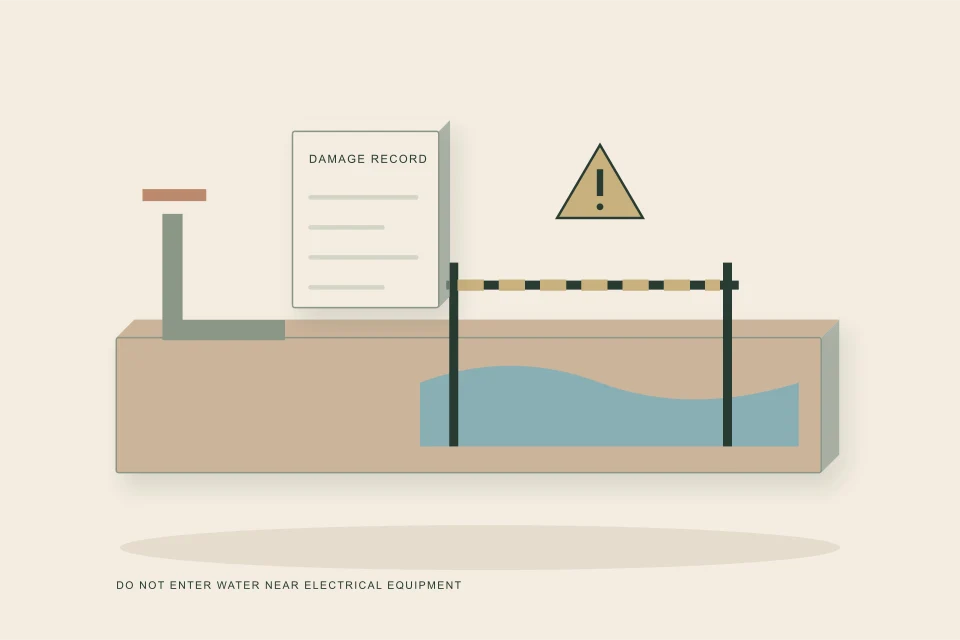
When sewage backs up, stop using all water in the house, keep people and pets out of it, and stay clear of anything electrical near the water. Then call the right people in order: your municipality if neighbours are affected or it is raining hard, otherwise a drain-cleaning contractor, then your insurer. Photograph everything before cleanup and do not open a pressurised cleanout.
- Every flush, shower or load of laundry adds to the backup; turn water use off first.
- Water near outlets, cords, the furnace or the panel means stay out until the power is cut by the utility or an electrician.
- The municipality first if it looks like the main; a drain contractor first if it looks like your line.
- Photos and times before cleanup, and a camera video after clearing, are the two pieces of evidence that matter later.
01 /What should I do first when the sewer backs up?
Stop adding water, then make the area safe. Tell everyone in the house not to flush, shower, run taps, or use the washer or dishwasher; with a blocked or full line, every litre you use ends up on the basement floor. Keep children and pets away, and if water is anywhere near electrical equipment, stay out and have the power cut by the utility or an electrician before anyone steps in.
- Turn water use off
Announce it to the household. In a duplex or condo, tell the neighbours who share the line or the property manager.
- Check for electrical and gas hazards
Water near outlets, cords, the furnace, the water heater or the panel means stay out. A rotten-egg smell near a gas appliance means leave and call the gas utility from outside.
- Note the time and the drains
Which drain it came from, when it started and whether it is still rising. Neighbours affected too? Raining hard?
- Photograph before touching anything
Wide shots of the room, close-ups of the drain, the high-water mark and damaged items.
- Make the first call
The municipality if it looks like the main; otherwise a drain-cleaning contractor. The next section explains which.
02 /Who do I call: the city, a plumber or my insurer?
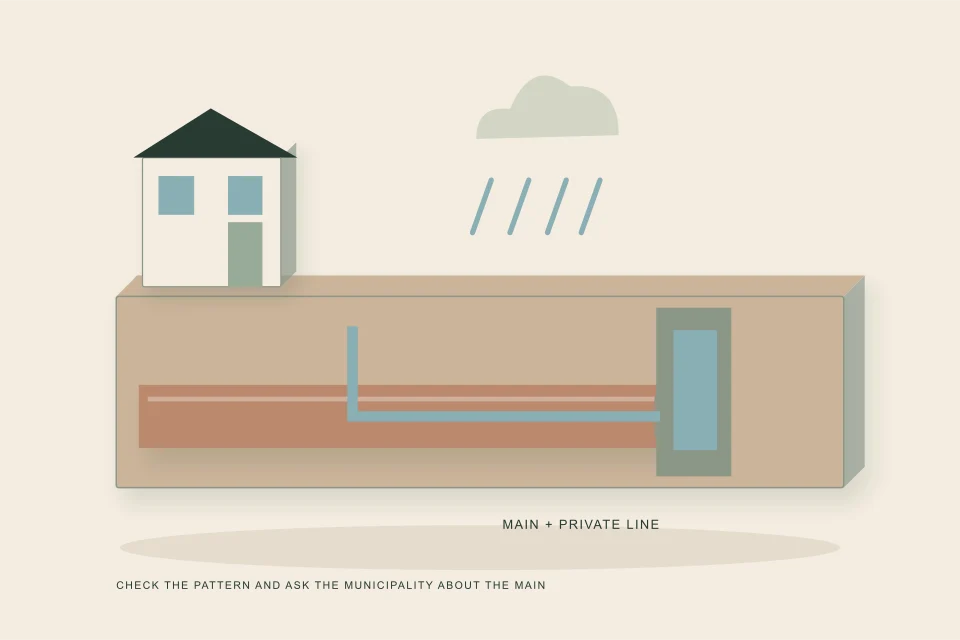
Call the municipality first if several houses are affected, if sewage came in during heavy rain or snowmelt, or if it arrived while nobody was using water. Those point to the main. Otherwise call a drain-cleaning contractor, because most backups start in the owner's line. Call your insurer or broker as soon as the water stops rising and you have photos.
| Call | When | Ask for |
|---|---|---|
| Municipality (often 311) | Neighbours affected, heavy rain, or sewage while no water was being used | An investigation of the main; a reference number |
| Drain-cleaning contractor | Most other backups | Clearing now, a recorded camera run after, the price and after-hours premium up front |
| Insurer or broker | As soon as you have photos | A claim number; whether to use their restoration company; what to keep |
| Restoration company | Once the line is flowing, if the damage is more than a small hard-surface area | Extraction, removal of wet materials, disinfection and drying |
| Property manager or landlord | Condo, apartment or rental | Immediately; shared lines are theirs to investigate |
Cities differ in what they check. Calgary's 311 agents ask questions to decide whether you need a plumber or a City crew, and a crew may run a steel snake from your cleanout to the main; they will not move furniture, pull back carpet or remove toilets to reach it. Toronto inspects the City-side portion of the line with a camera first. Know where your cleanout is before they arrive; finding your sewer line and cleanout shows where to look.
03 /Should I try to clear a sewer backup myself?
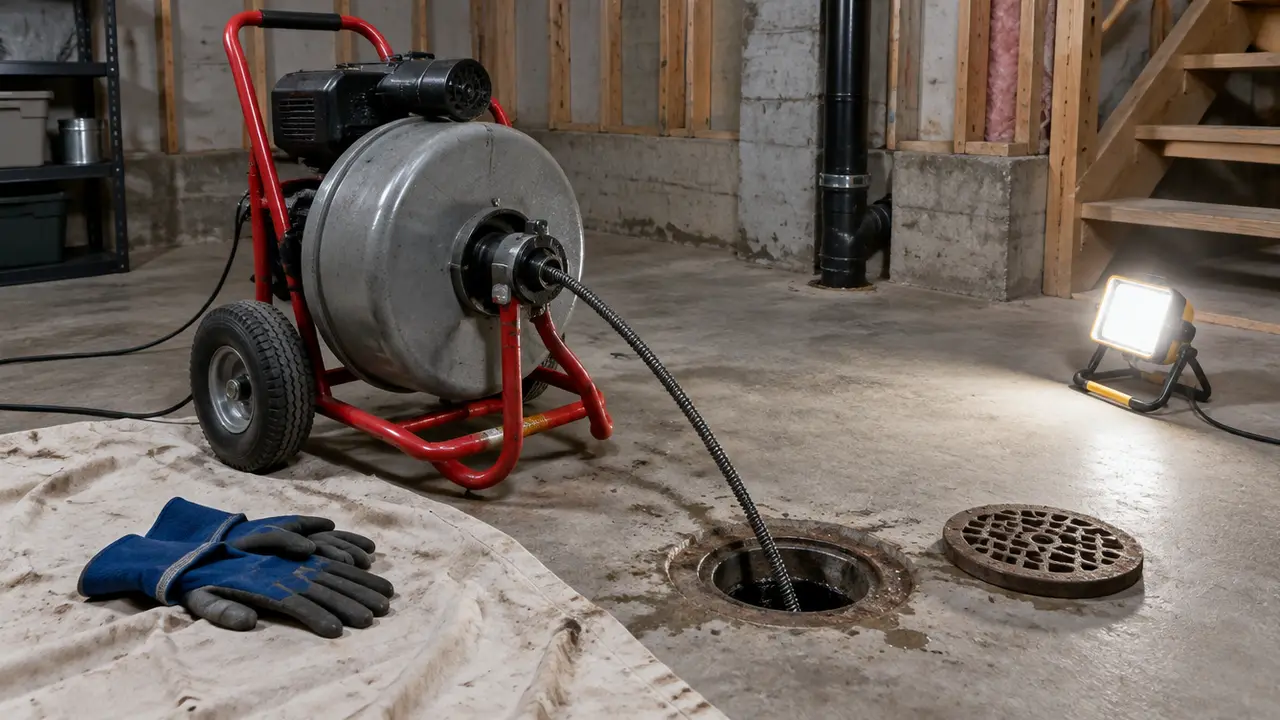
Usually not while sewage is standing in the house. Main-line clearing needs a cable machine long enough to reach the blockage, and the operator will be working at an open cleanout with contaminated water. Chemical drain cleaners do not clear a main line, and they make the water more hazardous for whoever does.
- Do not pour chemical drain openers into a backed-up floor drain or toilet.
- Do not plunge a basement toilet that is part of a backup; it pushes sewage around, not through.
- Rental drum machines can injure hands and wrists when the cable binds; if you are not trained, do not start with one.
- Once the line is flowing, ask for the camera while the contractor is there.
Paying an after-hours premium to get the line open is reasonable. Signing for a replacement in the middle of the night is not. Authorise the clearing and the camera, and decide on any repair in daylight with the video in hand; getting a second opinion explains how to check a diagnosis.
04 /How do I document a sewer backup for insurance?
Take photos and video before cleanup starts, keep damaged items (or clear photos of them) until your insurer says otherwise, and keep every invoice. Write down when it started, which drain, whether it was raining and whether neighbours were affected. Ask the drain contractor to state the cause and the blockage location on the invoice, and keep the camera file.
- Wide photos of each affected room, then close-ups of the drain and the water line on walls.
- Photos of serial numbers on damaged appliances and furnace or water heater labels.
- A list of damaged contents with rough age.
- The contractor's invoice stating the cause and location of the blockage.
- The recorded camera video and any written findings.
- Your municipal reference number, if you called the city.
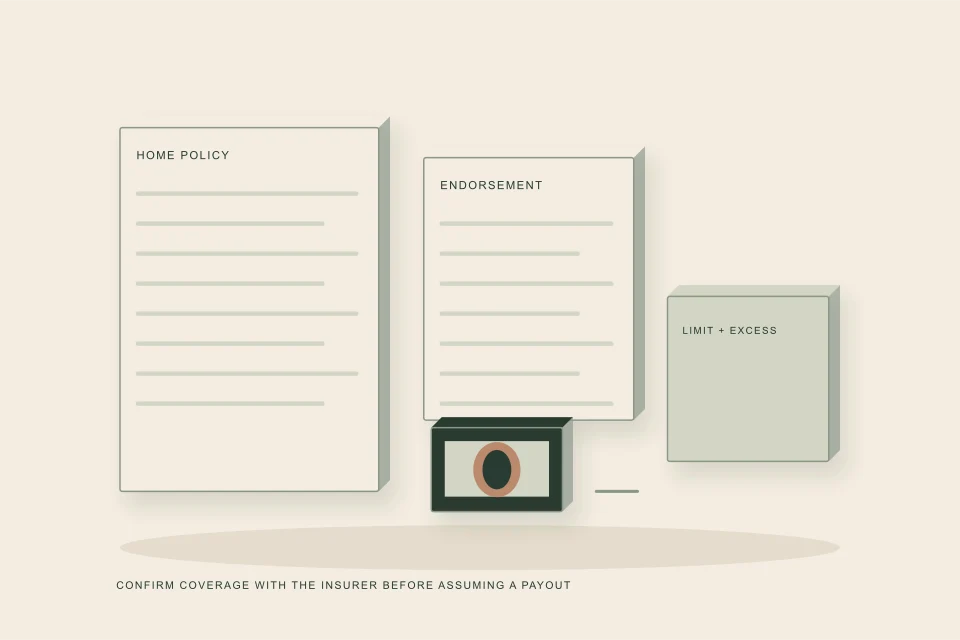
Coverage depends on whether you bought optional sewer backup coverage; the Insurance Bureau of Canada notes that basement water damage from a sewer backup is only covered with it. Does insurance cover sewer backup walks through the questions to ask your broker.
05 /Can I clean up sewage myself?
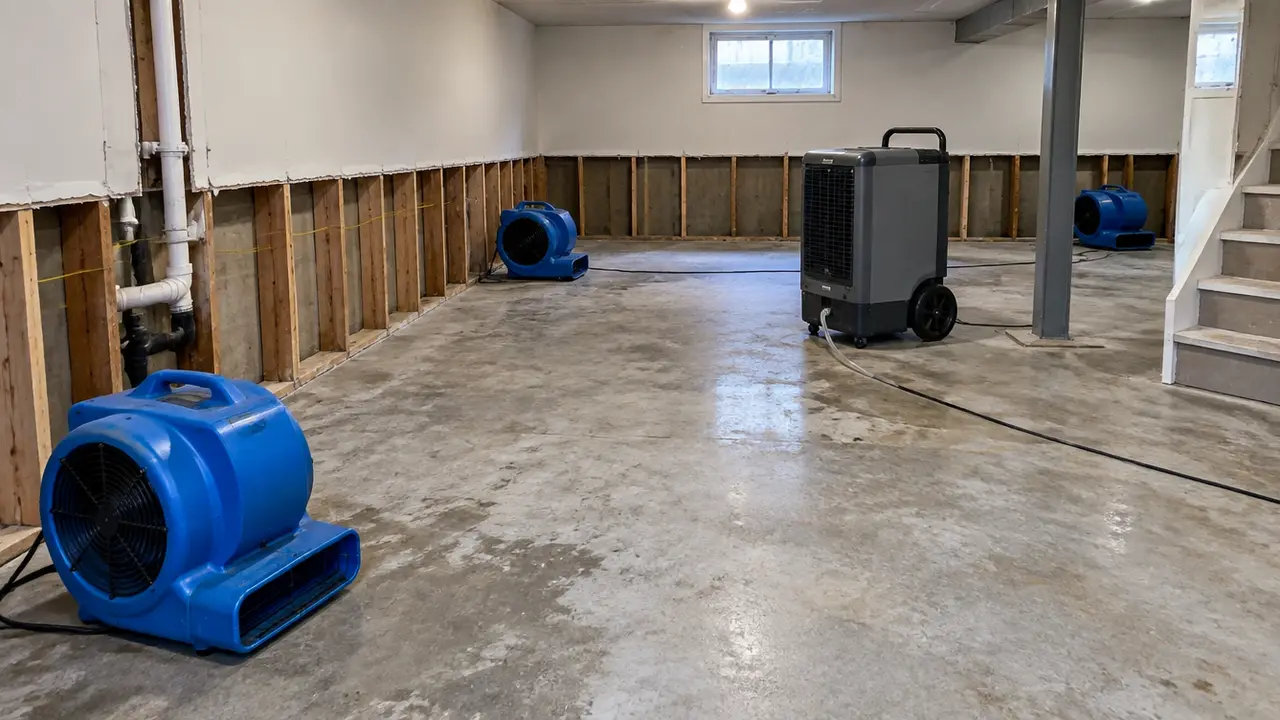
A small amount on sealed concrete can be cleaned by a healthy adult with the right gear. Anything larger, anything in a finished room, or any contamination of carpet, drywall or insulation is a job for a restoration company. Health Canada says children, pregnant women and people with respiratory problems should never handle water and materials contaminated by sewage.
- Wear rubber boots, waterproof gloves, eye protection and an N95 mask.
- Remove standing water, then clean hard surfaces and disinfect them.
- Materials Health Canada lists for removal after flood water exposure include insulation, drywall, carpets, particleboard furniture, mattresses, pillows, cushions and stuffed toys.
- Dry the area fast: Health Canada notes homes dried within 48 hours are less likely to grow mould.
- Do not run generators or other outdoor combustion equipment indoors while drying.
Wash hands thoroughly and keep cuts covered. If anyone develops a fever, stomach illness or an infected wound after cleanup, tell a doctor they were exposed to sewage. The health risks are set out further in is sewer gas dangerous.
06 /How long does it take to recover from a sewer backup?
Clearing the line takes hours. Cleanup and drying of a basement usually take days, and rebuilding finished space can take weeks, depending on how much had to be removed and how quickly trades and insurers move. Plan for the basement to be out of use for a while, and keep vulnerable people out of it until the restoration company confirms it is clean and dry.
07 /What should happen after the line is cleared?
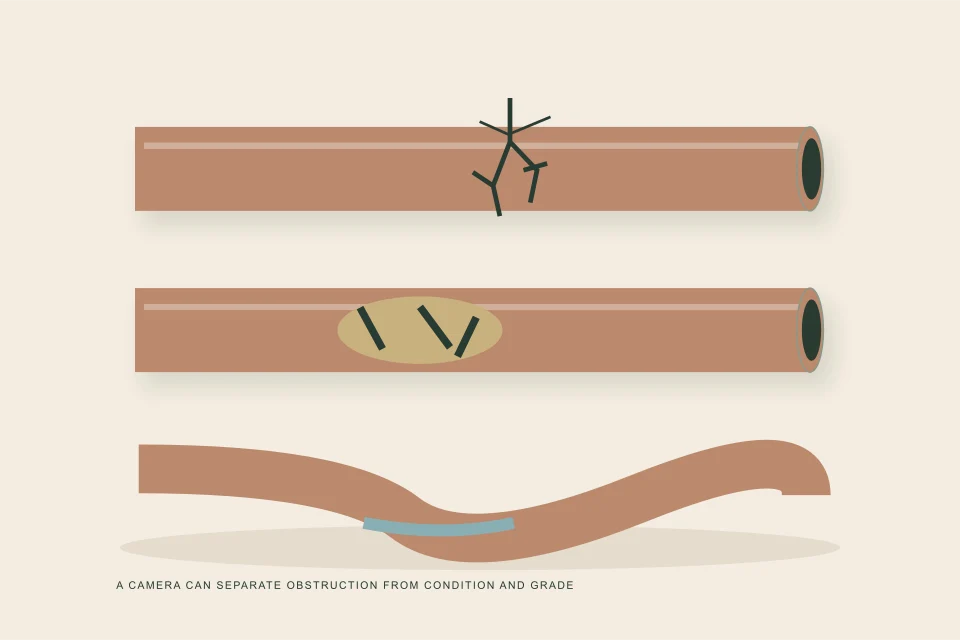
Find the cause before the next one. A recorded camera run with distances shows whether it was a one-off (a wad of wipes) or a defect that will repeat (roots, a sag, a broken joint). Keep that file; it is the basis for any repair quote and for a second opinion.
Then prevent a repeat: change what goes down the drains, schedule maintenance if roots are the cause, repair the defect the camera found, and ask about a backwater valve if the main was involved. Why sewers back up explains each cause and backups in the rain covers storm events. Planning ranges for clearing, cameras and repairs are on the cost answers page. If you want someone to look at your video or quote, send it to the desk.
FAQQuestions people ask
Should I call the city or a plumber when sewage comes up the floor drain?
Call the city first if neighbours are affected, it is raining hard, or sewage came in while nobody was using water. Otherwise call a drain-cleaning contractor.
Can I stay in the house during a sewer backup?
Usually, if the water is confined to the basement, there is no electrical hazard and nobody feels unwell. Keep vulnerable people away from the affected area.
Is it safe to run the washing machine after a backup is cleared?
Wait until the line has been cleared and, ideally, filmed. A partial blockage can back up again under the surge a washer sends.
Who pays for cleanup if the city sewer backed up?
It depends on your insurance and your municipality. Report it to the city with dates and photos, call your insurer, and ask the city about its claims process.
What if I rent and the sewer backs up?
Tell the landlord or property manager immediately in writing. The building and its drains are generally theirs to repair; your own belongings are a tenant insurance question.
NETWORKGo deeper across the HAUSE Sewer network
Sewer backup: what to do in the first hour
What to do in the first hour of a sewer backup: electrical safety, stopping water use, calling a sewer cleaner, insurance photos, health and cleanup.
SewerInspector.caShould you scope the sewer before buying a house?
When a sewer scope before buying a house is worth it, which homes need one most, how to fit it inside a condition period, and what to do with the result.
SewerRoots.caWhat tree roots in a sewer line look like, on camera and on the cable
What tree roots in a sewer line look like on camera: fine roots, tap roots and root balls, PACP codes, look-alikes like grease, and what cut joints show.