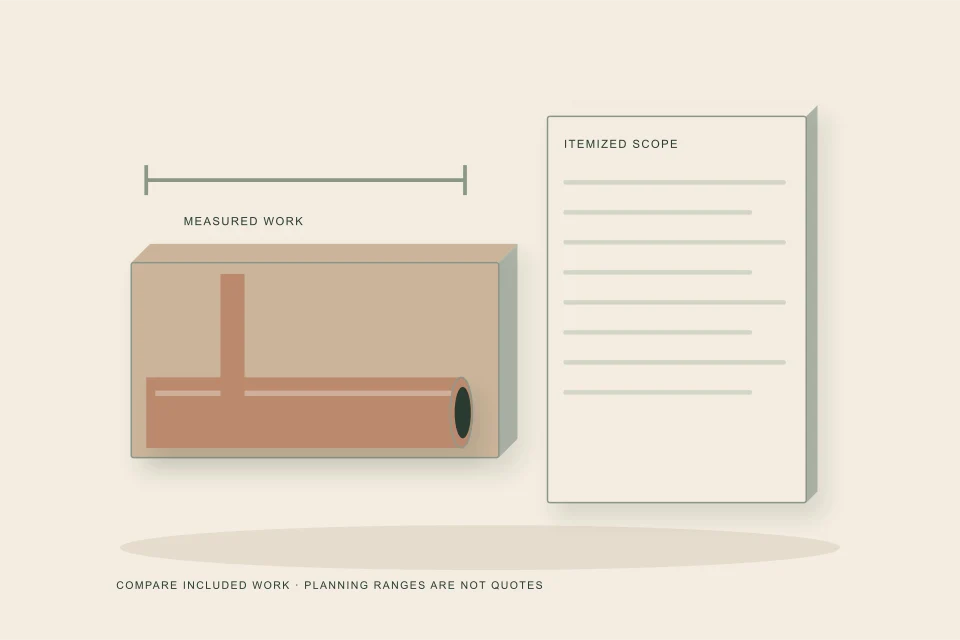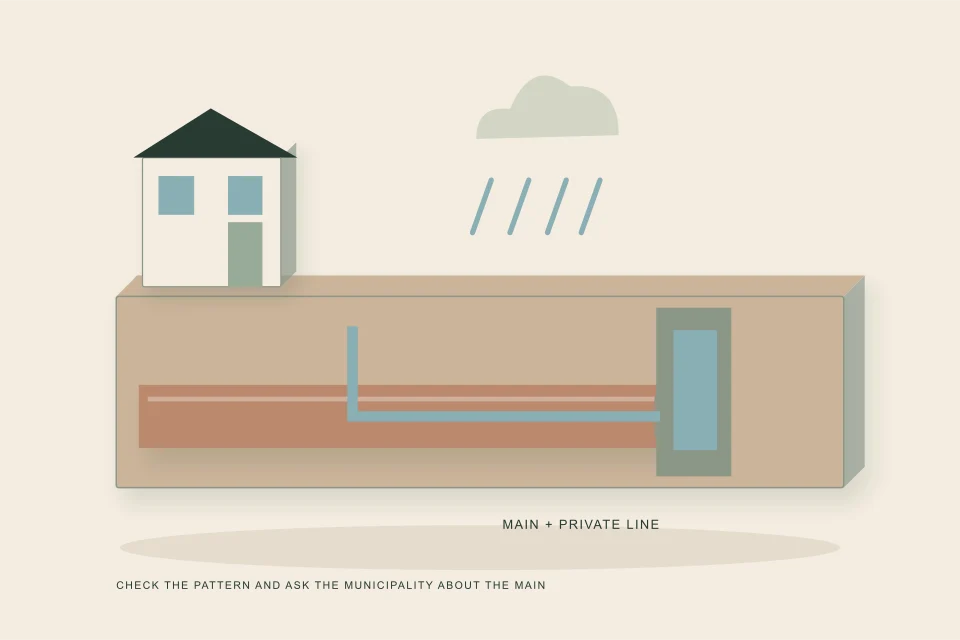
A sewer backs up in heavy rain when stormwater and groundwater get into the sanitary system faster than it can carry them away. Downspouts or weeping tile connected to the sanitary line, water pouring through manhole lids and seepage through cracked pipes fill the main, and wastewater rises back up connected laterals to the lowest drain in houses without a closed backwater valve.
- A sanitary sewer is sized for wastewater; rain that reaches it takes up capacity it was never designed to have.
- Rain backups often hit several houses on a street at once, and can arrive even when nobody is using water.
- A normally open backwater valve is the main household defence against a surcharged main.
- Separating weeping tile and downspouts from the sanitary line protects your house and the neighbours; some cities subsidise it.
01 /How does rain get into a sanitary sewer?
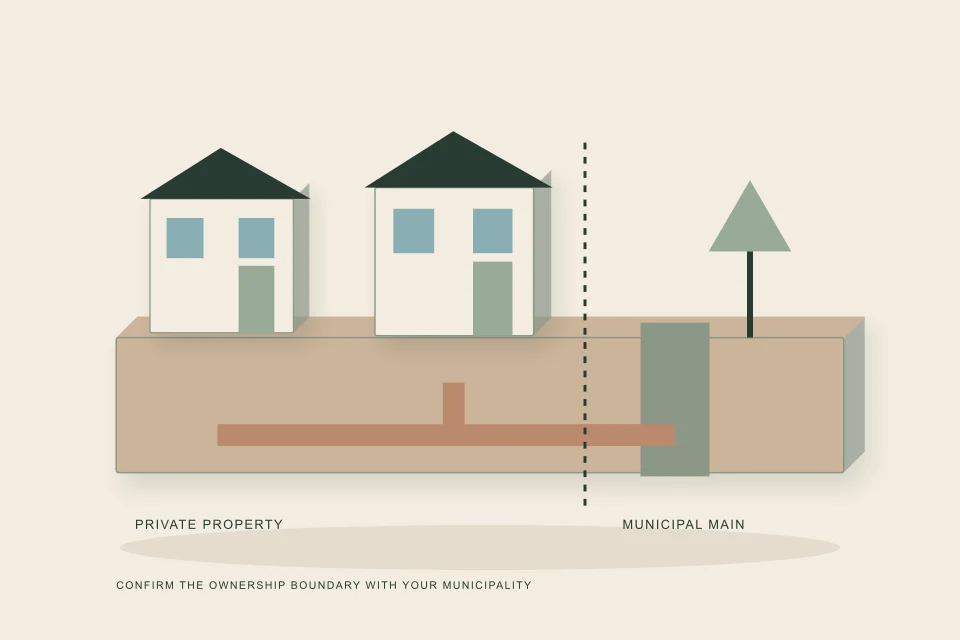
Through connections that should not exist and cracks that should not be there. Engineers call the first kind inflow: roof downspouts, foundation weeping tile or area drains piped into the sanitary line, and water pouring through manhole lids in flooded streets. The second kind is infiltration: groundwater seeping in through cracked pipes and open joints in mains and private laterals when the ground is saturated.
Many older homes were built with weeping tile draining into the sanitary sewer, which was accepted practice in their day. Newer subdivisions in most Canadian cities send foundation water to a sump pit instead. Older neighbourhoods in some cities also have combined sewers that carry storm water and wastewater in the same pipe by design, which makes storm backups more likely there.
02 /Why does a full main push sewage into my basement?
Because your lateral is connected to it, and water levels even out. When the main fills past the height of your lowest drain, the pressure in the sewer pushes wastewater back up the lateral until the level inside your house matches the level in the main. Your basement floor drain, the lowest opening, is where it appears.
Two clues distinguish a rain backup from a blockage in your own line. First, it happens during or shortly after heavy rain or rapid snowmelt. Second, it often affects several houses on the street, and it can happen while nobody in the house is running water. If both are true, call your municipality (311 in many cities) to report it, because the problem is in their system as much as yours. The difference, and why the basement looks the same either way, is drawn in why sewers back up.
03 /Is a rain backup a sewer backup or a flood?
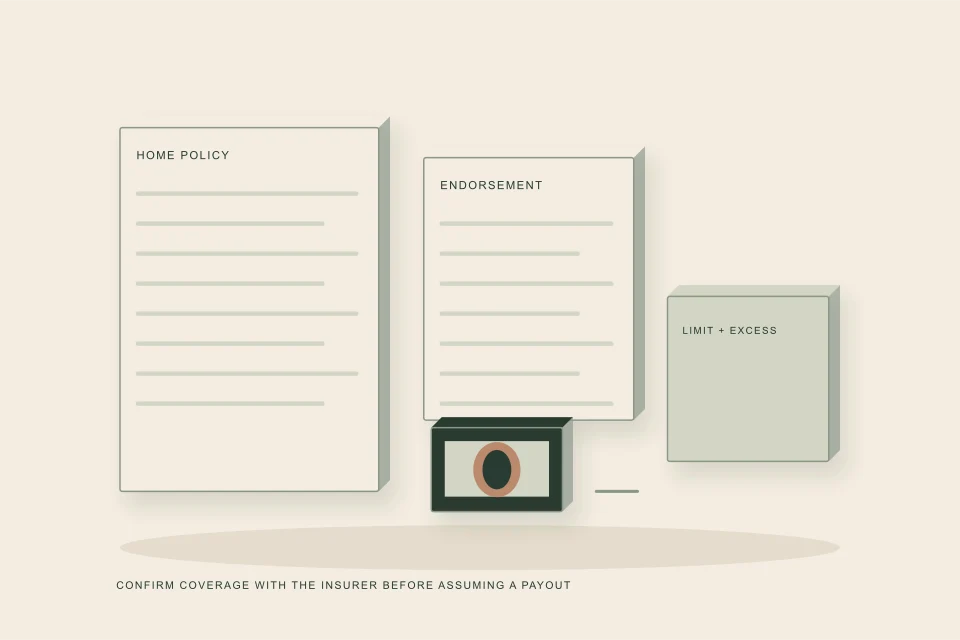
For insurance it matters a great deal. Water that comes up through your drains because the sewer backed up is a sewer backup. Water that runs over the ground and in through windows, doors or walls from heavy rain or snowmelt is overland water. Groundwater seeping through the foundation is a third category again. Each is covered, or not, by a different part of a home insurance policy.
| How it gets in | Usual name | Coverage to ask about |
|---|---|---|
| Up through a floor drain, toilet or shower | Sewer backup | Optional sewer backup coverage |
| Over the ground and through windows, doors or walls | Overland water or flood | Optional overland flood coverage |
| Through the foundation or floor from saturated soil | Groundwater or seepage | Often excluded; some insurers offer an endorsement |
The Insurance Bureau of Canada notes that basement damage from a sewer backup is only covered if you bought the optional sewer backup coverage. Details are in does insurance cover sewer backup. Photograph where the water came in before cleanup; it helps settle which kind it was.
04 /How does a backwater valve protect against rain backups?
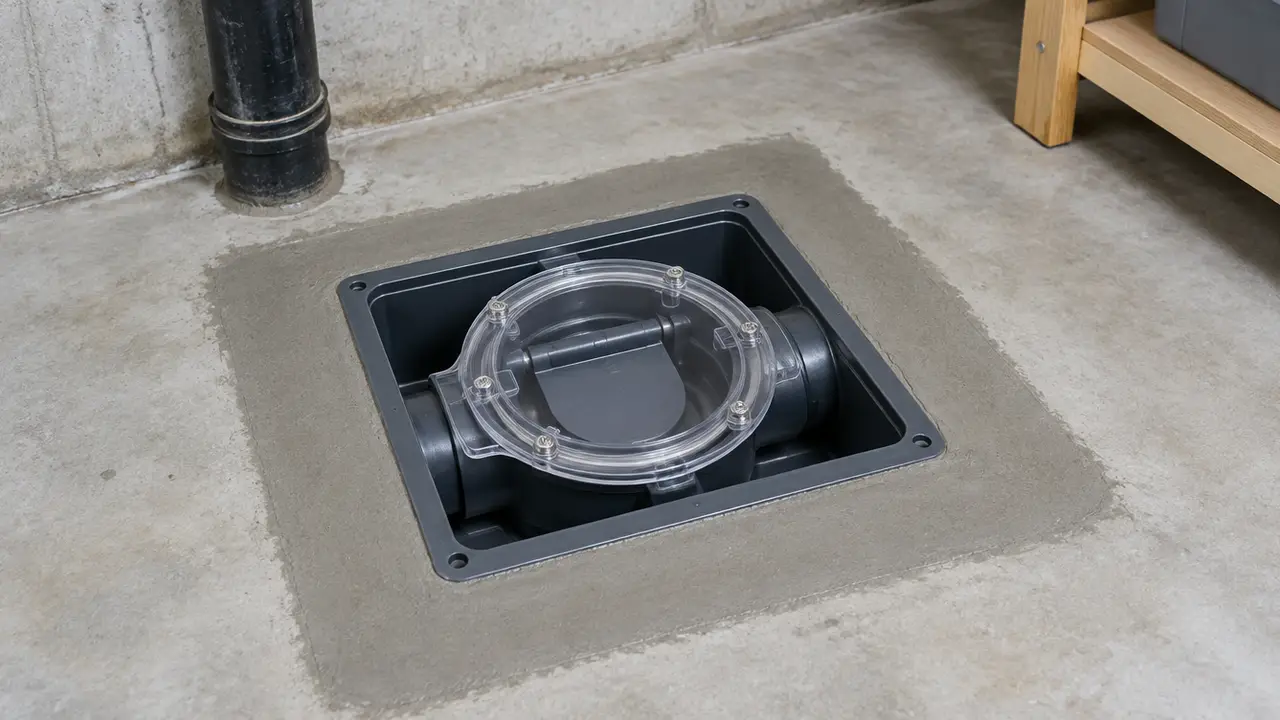
A mainline backwater valve sits on the building drain and holds a flap that normal outgoing flow keeps open. When the main surcharges and water starts flowing back toward the house, the flap closes and blocks it. It is the most direct household protection against a full city main, and the City of Calgary recommends one for below-grade fixtures.
- Stop using water while the valve is closed; otherwise your own wastewater fills the protected drains.
- Keep the access cover clear and have the valve cleaned; debris can hold the flap open.
- Install it under a permit, with the fixtures it protects shown on the drawing.
- In homes where weeping tile drains into the sanitary line, the valve design must account for it, often with a sump; get that designed by a licensed plumber.
Some cities subsidise valves. As checked in September 2026, EPCOR in Edmonton offers up to $800 for eligible homes, first come, first served, and Toronto's Basement Flooding Protection Subsidy pays up to 80 per cent of the invoiced cost to a maximum of $1,600 per valve for eligible work after November 12, 2025. Both have eligibility rules; confirm before you book the work. Other cities are listed on the across Canada page.
05 /What else lowers the risk of a rain backup?
Keep storm water out of the sanitary line, starting with your own house. Downspouts should discharge onto the ground well away from the foundation, where your municipality allows it. Weeping tile that drains into the sanitary line can often be disconnected and redirected to a sump pit and pump, which is a bigger job that needs a permit and proper design.
- Check your downspouts
Make sure none disappear into a pipe in the ground that could lead to the sewer. Extend them to discharge away from the house, where permitted.
- Grade the lot
Soil should slope away from the foundation so water does not pond against the walls.
- Find out where your weeping tile goes
A plumber with a camera can tell whether it drains to the sanitary line.
- Add a backwater valve
Especially if your street has had surcharge backups.
- Protect the sump
If you have one, add a battery backup and an alarm; a pump that fails in a storm floods the basement just as surely.
Toronto's subsidy also covers severing and capping a storm sewer or weeping tile connection, a sump pump with alarm and battery backup, and a home plumbing assessment, as published. Winnipeg advises homeowners to install either a backwater valve or a sump pit drainage system on the sewer line. The pattern is the same everywhere: separate the storm water, then block the backflow.
06 /Can my neighbours' drainage affect my risk?
Yes, collectively. Every downspout, weeping tile and cracked lateral on the street that feeds storm water into the sanitary main adds to the load in a storm. One house cannot overload a main, but a neighbourhood of older homes with foundation drains tied to the sanitary sewer can. That is why cities that run protection programs often target whole areas, and why disconnection helps the street as well as the house.
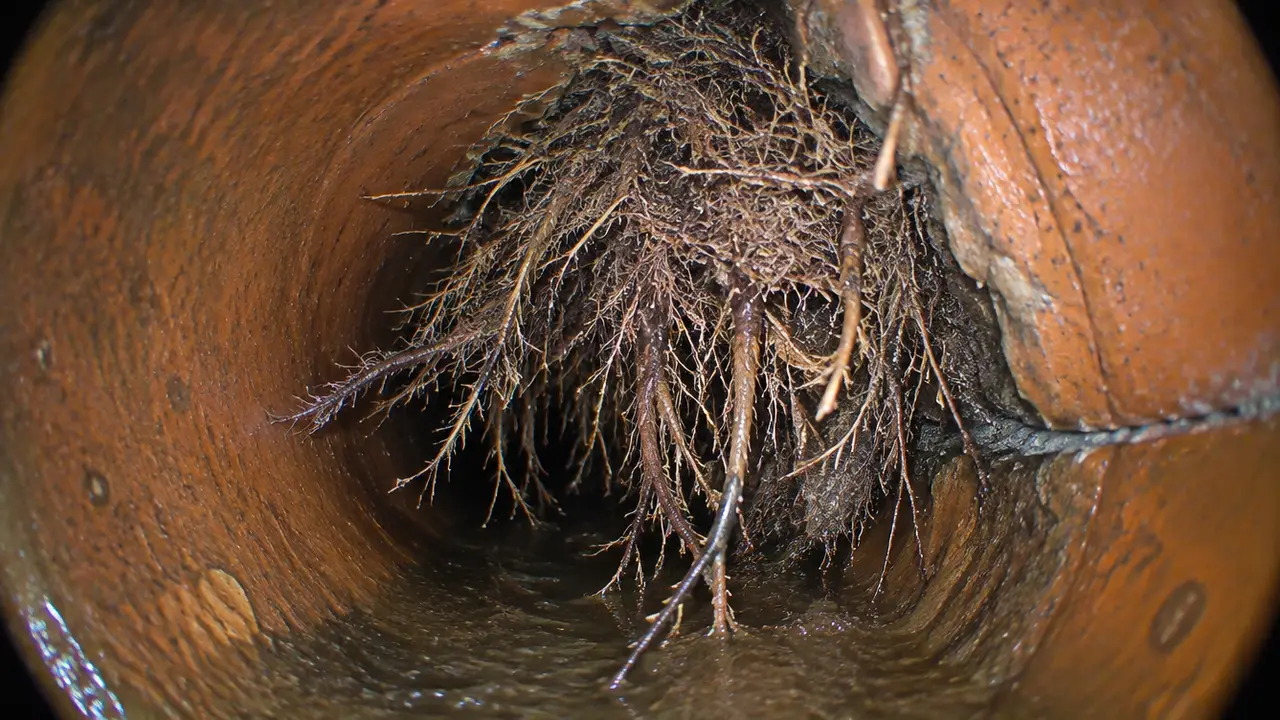
Your own lateral matters too. A cracked or root-damaged private line lets groundwater in during wet weather, which adds to the flow and can let the surrounding soil wash into the pipe. Repairing it protects your basement and reduces what the main has to carry.
07 /What should I do after a rain backup?
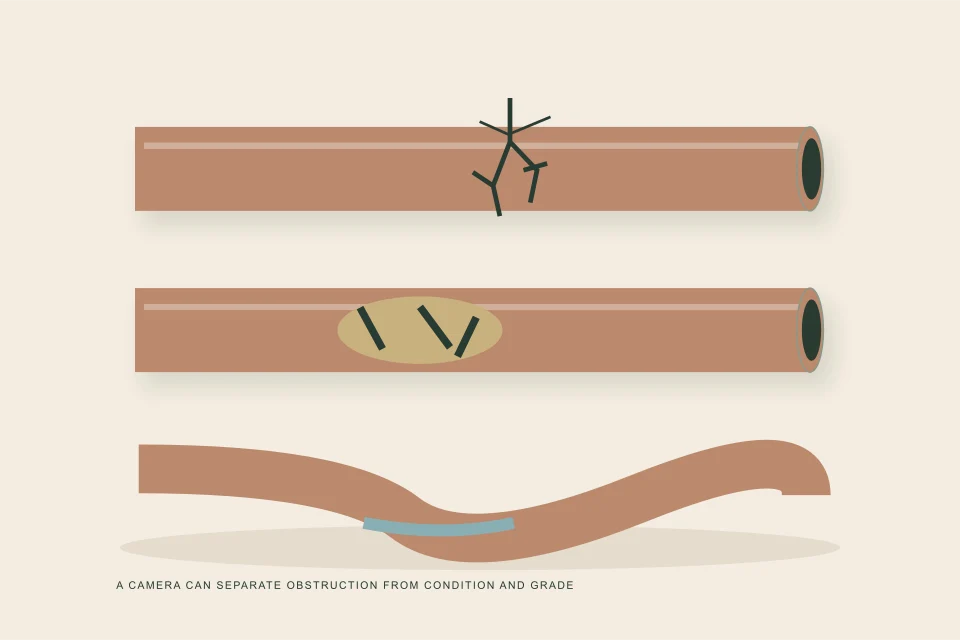
Report it to your municipality with the date and time, even after the water has gone down, so the event is on record. Document the damage for your insurer before cleanup, and follow public-health cleanup advice for sewage. Once the storm passes, have the line filmed: a surcharge can hide a private defect, and an insurer or city may ask what condition your lateral was in.
The first hour is covered in what to do when the sewer backs up, smells during storms in why a sewer smell comes and goes, and the Sewer Symptom Triage has a "during heavy rain" option. To talk through a backwater valve or a quote for one, contact the desk.
FAQQuestions people ask
Why does my basement drain back up only when it rains?
Storm water is getting into the sanitary sewer and filling the main, which pushes wastewater back up connected laterals. Report it to your municipality and ask about a backwater valve.
Can snowmelt cause a sewer backup?
Yes. Rapid melt saturates the ground and adds inflow and infiltration just like rain, especially where weeping tile drains to the sanitary line.
Does a sump pump stop sewer backups?
No. A sump handles foundation groundwater. It helps by keeping that water out of the sanitary line, but a backwater valve is what blocks sewage flowing back from the main.
Is it legal to connect a downspout to the sewer?
Many municipalities prohibit or discourage it because it overloads the sanitary system. Confirm your city's rules before changing a connection.
Should I report a rain backup to the city if the water is gone?
Yes. Reports with dates help municipalities find overloaded areas, and a record helps if you make a claim.
NETWORKGo deeper across the HAUSE Sewer network
What causes sewer backup, and how to tell which cause is yours
What causes sewer backup: roots, grease, wipes, sags, broken pipe, frozen lines and rain-overloaded city sewers, plus how to tell which one caused yours.
SewerInspector.caInspecting the sewer after a backup: finding out why it happened
Why a sewer camera inspection after a backup matters: private vs municipal causes, timing, what to record for insurance, and how to stop it happening again.
PipeCleaning.caHow to clean outside drain pipes: downspouts, yard drains and weeping tile
How to clean outside drain pipes in Canada: downspout leaders, yard drains, weeping tile, sump lines and the sewer cleanout, plus thawing frozen lines.