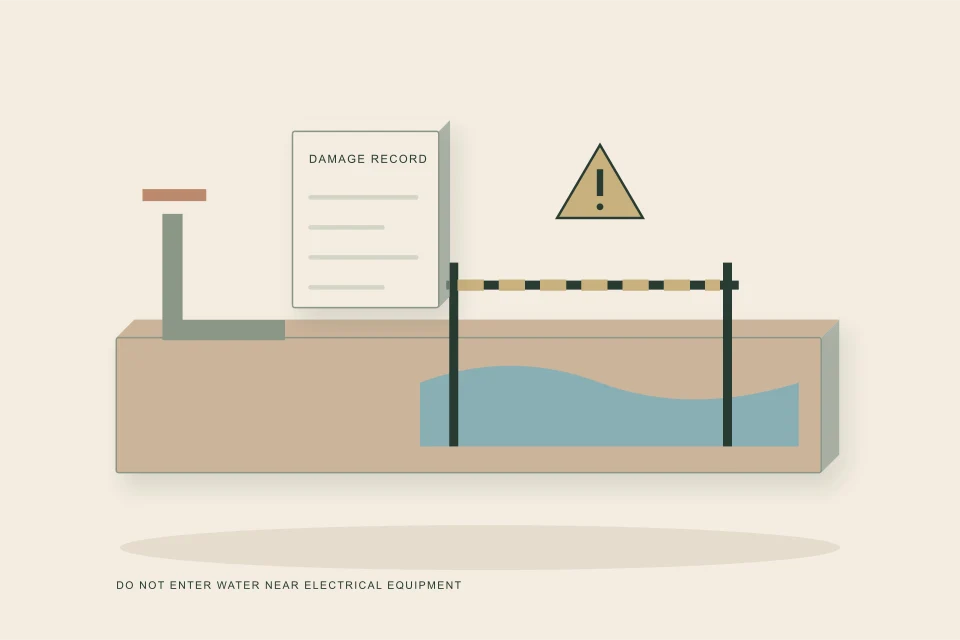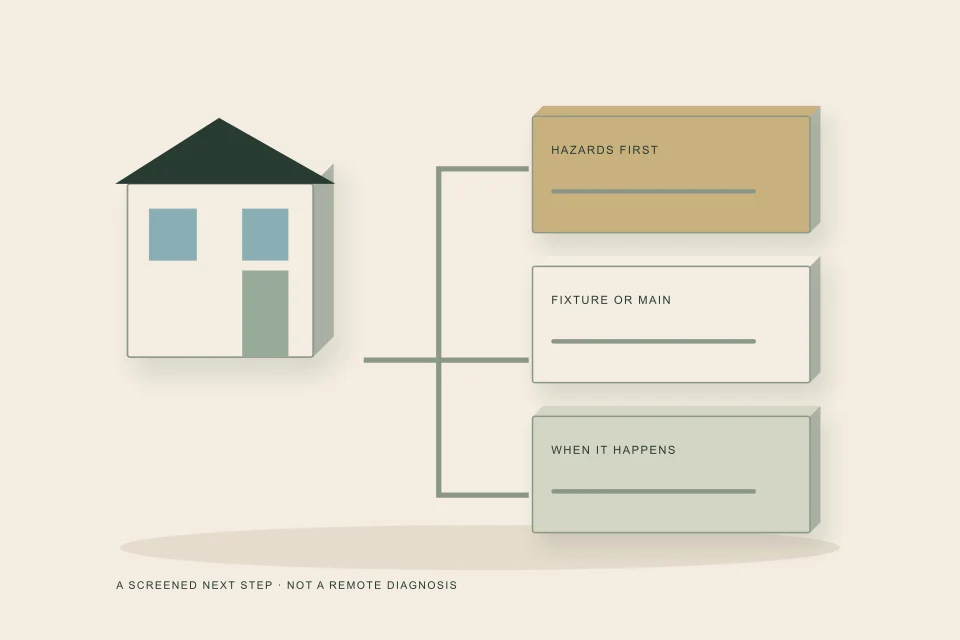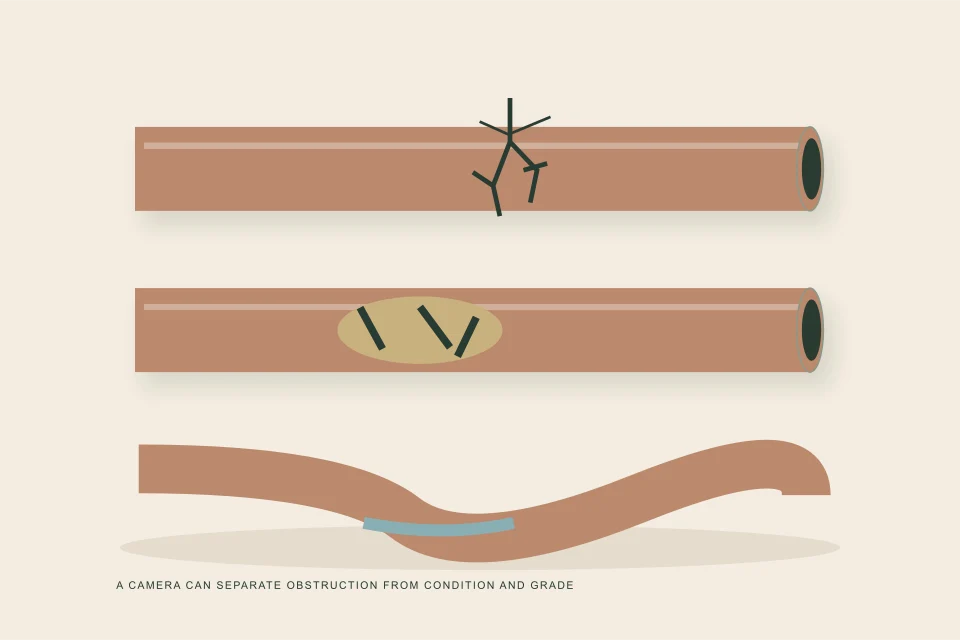
A sewer backs up when wastewater cannot get past a point and has nowhere to go but up the lowest drain. Either something blocks your own building drain or lateral (wipes, grease, roots, a sag, a broken section), or the city main is full or blocked and pushes back. The basement floor drain overflows first because it is the lowest opening.
- The lowest opening in the house, usually the basement floor drain, is where every backup shows first.
- A blockage in your own line backs up only your house, and only when you use water.
- A full or blocked city main can push sewage in even when nobody in the house is using water, and often affects neighbours too.
- Backups that return after clearing almost always have a physical cause in the pipe that only a camera shows.
01 /Why does sewage come up through the basement floor drain?
Because water always finds the lowest way out. Every drain in the house connects to one building drain under the basement floor. When the pipe downstream is blocked or full, water stacks up behind the obstruction until it reaches the first opening it can spill from. In most Canadian homes that is the basement floor drain, then a basement shower or toilet, and only later anything upstairs.
That is also why the basement is the only place many people ever see a backup. It does not mean the problem is in the basement. The blockage can be ten or twenty metres away under the front lawn, or in the main under the street.
02 /What blocks a private sewer line?
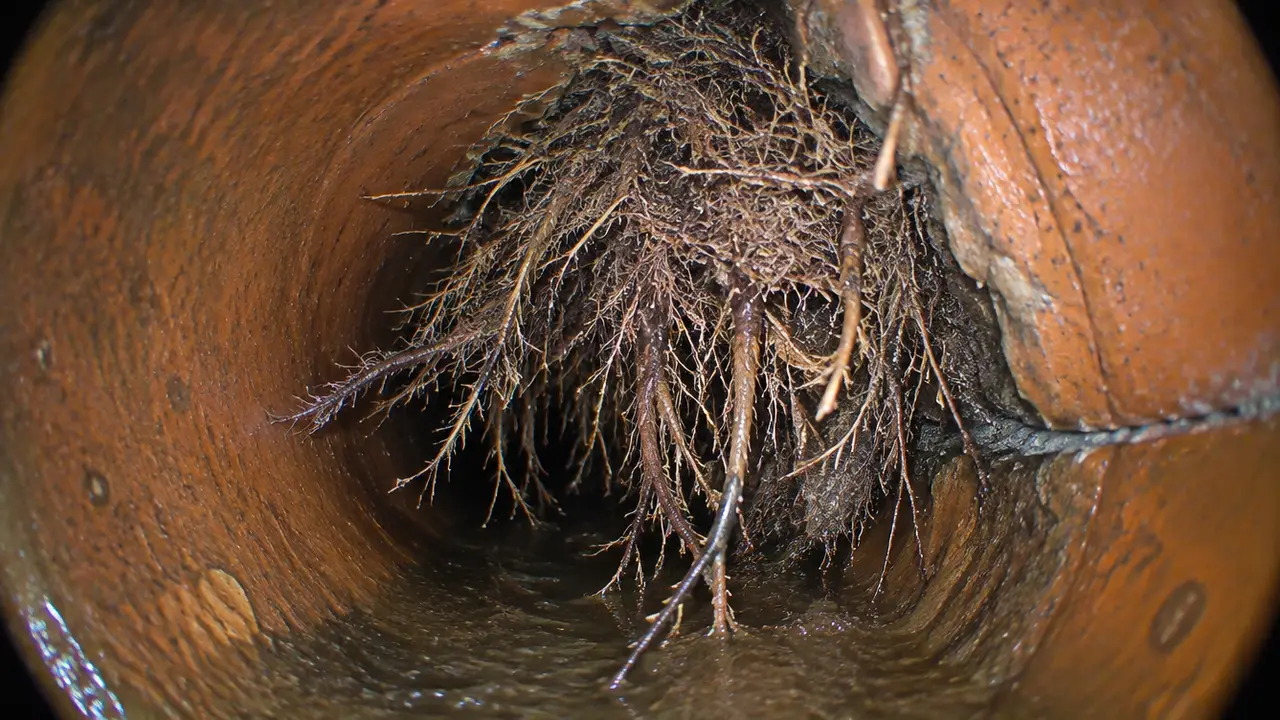
Most backups start with something in the owner's own pipe. Municipal utilities list the same offenders again and again: wipes and paper towels, grease, hair, roots, and occasionally toys and other objects. EPCOR in Edmonton adds sagging pipes, collapsed sections and root intrusion to that list, which is a reminder that many blockages are caused by the pipe itself catching debris.
| Cause | How it blocks | Typical clue |
|---|---|---|
| Wipes and paper towels | Do not break down; snag on joints and build a plug | Sudden backup after heavy use |
| Fat, oil and grease | Coats the pipe wall and hardens, narrowing the bore | Kitchen drains slow first; recurs slowly |
| Tree roots | Enter through joints, grow into a mesh that catches solids | Older lateral, mature trees, worse in late summer and fall |
| Sag or belly | A low section holds water and solids that settle | Camera shows standing water over a length |
| Offset or broken joint | A lip catches paper; soil can wash in | Recurring blockage at the same distance |
| Collapse | The pipe has lost its shape or a section is missing | Cable will not pass; camera stops |
| Scale in cast iron | Corrosion builds rough ridges that trap debris | Older house, rust flakes on camera |
Several of these work together: roots open a joint, the joint offsets, the offset catches wipes. A clearing contractor can open the line in each case, but only a camera tells you which cause you have. Signs the main line is clogged covers how to recognise a main-line blockage before it becomes a backup.
03 /How can the city main cause a backup in my house?
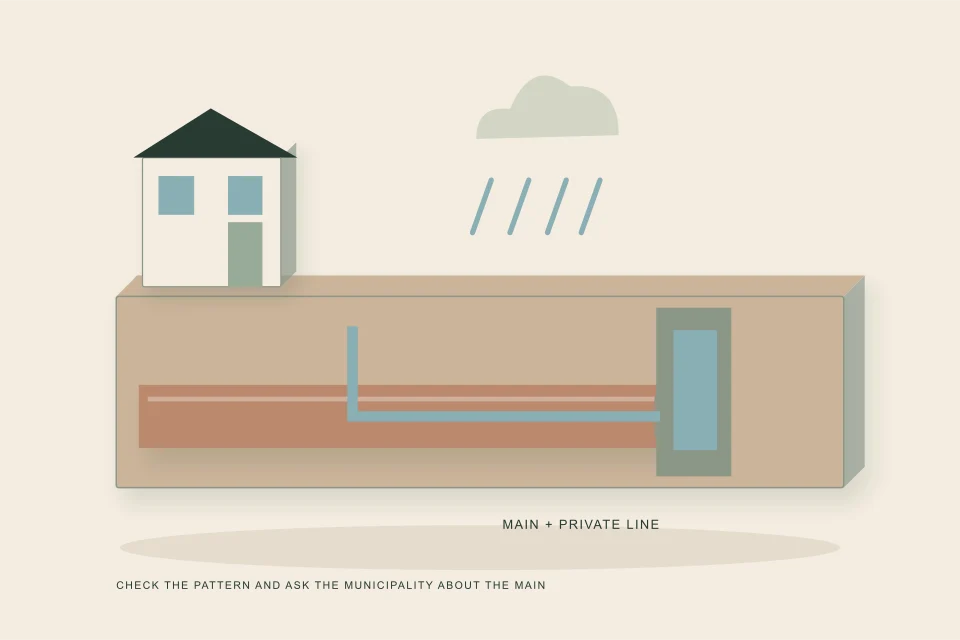
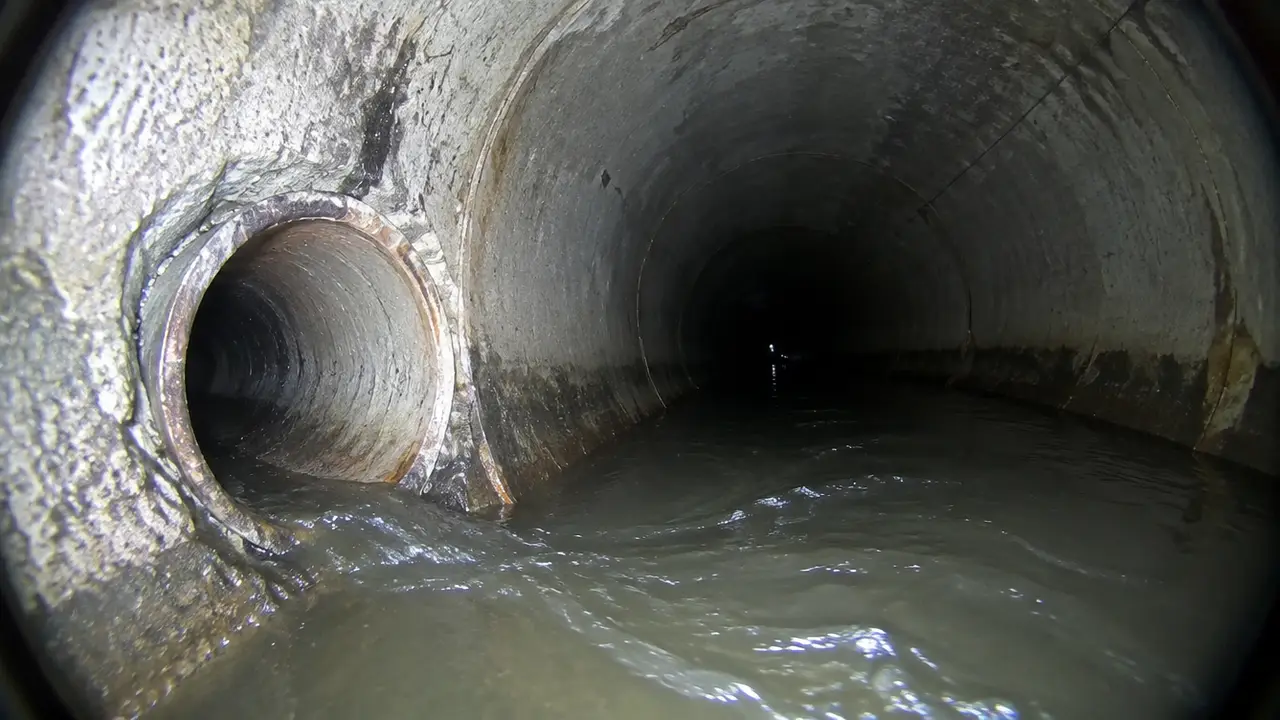
If the municipal main is blocked or running full, wastewater in it can rise back up the laterals connected to it and into any house without a closed backwater valve. This happens after heavy rain, during snowmelt, or when the main itself is blocked. It is more likely when several houses on the street have trouble at once, or when sewage comes in while nobody is using water.
Cities investigate this for you. The City of Calgary asks you to call 311, and a crew may run a steel snake from your cleanout to the main to tell a private blockage from a public one; you are expected to clear about two metres around the cleanout so they can reach it. Toronto sends a technician to inspect the City-side portion of the service line with a CCTV camera; if it is clear, the private side is the owner's to repair. EPCOR in Edmonton offers basic diagnostic help and states that it does not reimburse plumbers' fees wherever the blockage turns out to be.
When rain is the trigger, read sewer backups when it rains, which explains why a separated sanitary sewer can fill in a storm.
04 /Why does my sewer keep backing up after it is cleared?
Because clearing removes the blockage, not the reason it formed. A cable punches a hole through roots, but the roots regrow from the joint they came through. Grease scraped off a wall returns with the next months of cooking. A sag keeps collecting solids, and an offset joint keeps catching paper. If a line needs clearing more than about once a year, the pipe is telling you something.
- Ask for the camera after clearing
A recorded run from the cleanout to the main, with distances on screen, while the line is clean and flowing.
- Note the distance of every finding
Roots at 11 m and an offset at 14 m is a different job from roots every joint along 20 m.
- Match the fix to the finding
Grease calls for jetting and better habits; roots at one joint for a sectional liner or spot repair; a sag for digging at that spot.
- Compare the maths
Repeated emergency clearing adds up. The cost answers page compares a few years of clearing with a one-time repair.
Which repair suits which defect is set out in your sewer repair options, and planning ranges are on the cost answers page.
05 /Why does the sewer back up when I do laundry or flush?
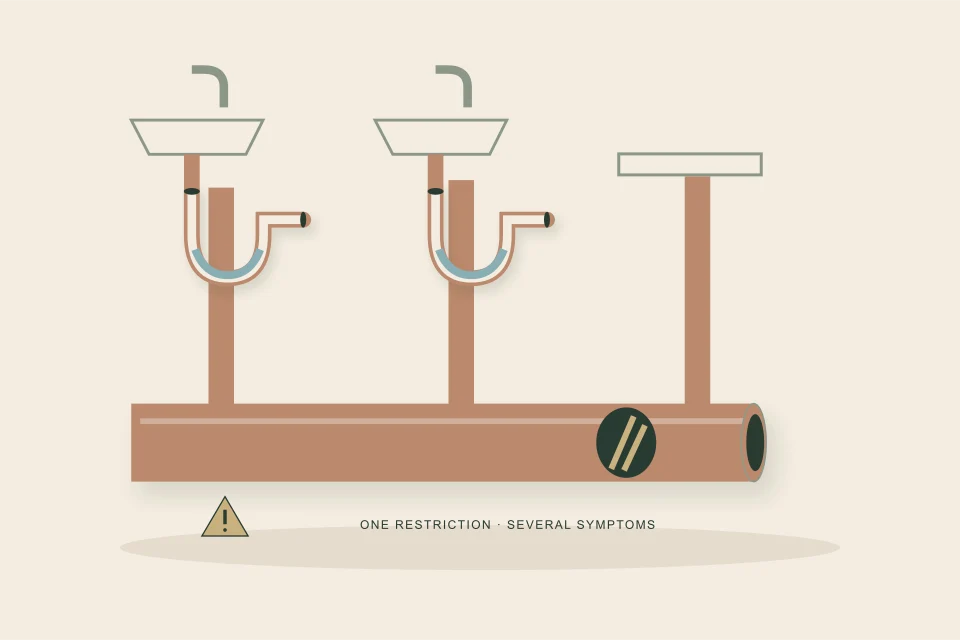
A washing machine pumps out a large volume of water in a short burst, and a toilet sends a slug of water down at once. A line that is partly blocked can cope with a trickle from a sink but not with a surge, so the surge backs up to the lowest opening. Laundry-day backups are one of the clearest early warnings of a main-line restriction.
If the floor drain gurgles, burps or seeps when the washer drains, or the lowest toilet bubbles, stop doing laundry until the line has been cleared and filmed. The same pattern with no backup yet is explained in why drains gurgle.
06 /Will a backwater valve stop my sewer backing up?
Only one kind. A normally open mainline backwater valve lets wastewater leave the house and closes when flow reverses from the main, so it protects against a surcharged city sewer. It cannot help with a blockage in your own line: while it is closed, water you use in the house has nowhere to go and will come up inside the protected area.
The City of Calgary recommends a backwater valve on below-grade fixtures to help prevent sewage damage. Some cities offer subsidies; those checked for this site are listed on the across Canada page. A valve needs an accessible cover and periodic cleaning, and while it is closed you should stop using water.
07 /How do I stop my sewer backing up again?
- Put wipes, paper towels, floss, diapers and sanitary products in the garbage, even if the package says flushable.
- Wipe greasy pans with paper towel before washing; collect fat in a container for the garbage or compost where accepted.
- Keep the cleanout accessible and know where it is.
- Film the line after any backup, and again before buying an older house.
- Fix the defect the camera finds instead of paying to clear the same spot every year.
- Ask about a backwater valve if your area has had surcharge backups.
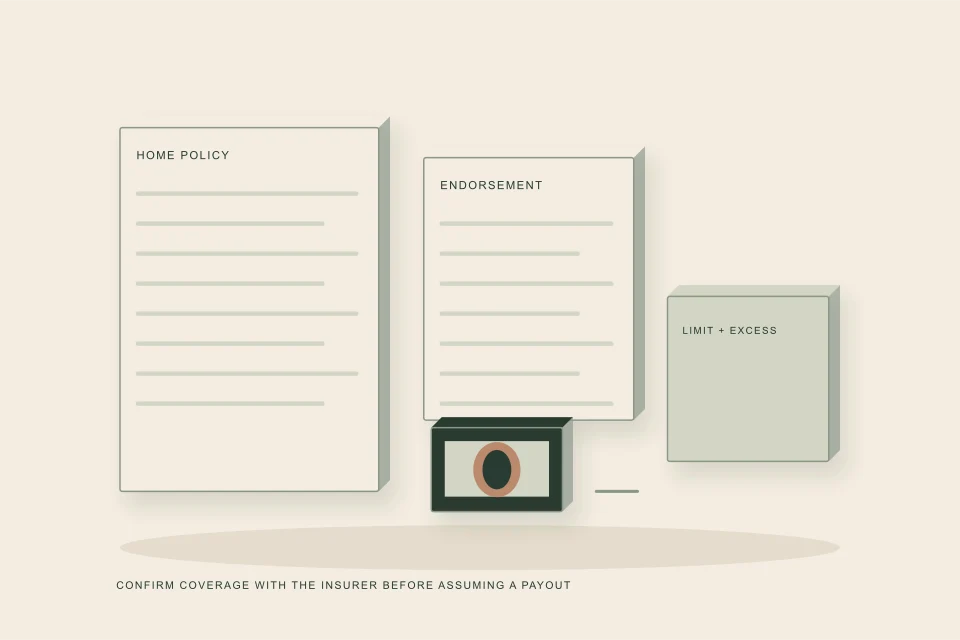
If it is happening now, what to do when the sewer backs up covers the first hour, and the Sewer Symptom Triage sorts the urgency and who to call. For costs if your home is damaged, read does insurance cover sewer backup. You can also ask the desk about your situation.
FAQQuestions people ask
Can the city sewer back up into my house?
Yes. A full or blocked municipal main can push sewage up connected laterals into any house without a closed backwater valve, most often after heavy rain.
Why does only my house back up and not the neighbours?
That points to a blockage in your own building drain or lateral. If neighbours are affected too, suspect the main and call your municipality.
Can a sewer back up into a bathtub or shower?
Yes, if the tub or shower is the lowest opening, as in many basement bathrooms. It rises wherever the drain is lowest.
Can tree roots cause a sewer backup?
Yes. Roots enter through joints and form a mesh that catches paper and solids. They are one of the most common causes of repeat backups in older laterals.
Do wipes labelled flushable really cause sewer backups?
Municipal utilities, including Calgary, ask people not to flush wipes. They do not break down like toilet paper and are a common starting point for blockages.
NETWORKGo deeper across the HAUSE Sewer network
Clog Locator: find the blockage before you pick up a cable
Use the Clog Locator to find where a drain clog sits (trap, branch, stack, main or lateral) and which auger class and cable size fits the pipe.
SewerCleaners.caMain sewer line cleaning: what is actually involved
Main sewer line cleaning explained: how pros access the line, cable vs jetting, camera proof, how long it lasts, and what a complete job should include.
SewerRoots.caSigns of roots in your sewer line
Signs of roots in your sewer line: gurgling, slow floor drains, seasonal backups and what a camera shows. Ten symptoms ranked, plus how to confirm roots fast.