The Sewer Symptom Triage takes three answers (what you notice, where, and when) plus up to ten facts about the house, and returns an urgency level, the part of the drain system most likely at fault, up to four likely causes in order, safe checks you can make, and who to call. Danger rules always run first. It applies published editorial rules; it does not diagnose your pipe.
- Two answers override everything: symptoms around a smell, and a rotten-egg smell near a gas appliance. Both return "Leave now".
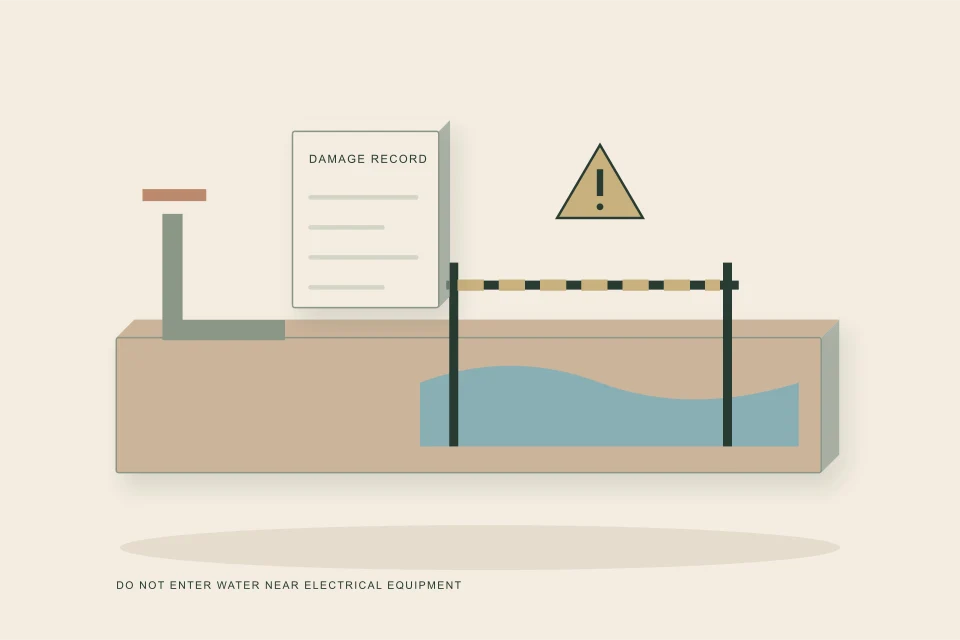
- Sewage rising with water near electrical equipment returns "Stay out of the water" before any plumbing advice.
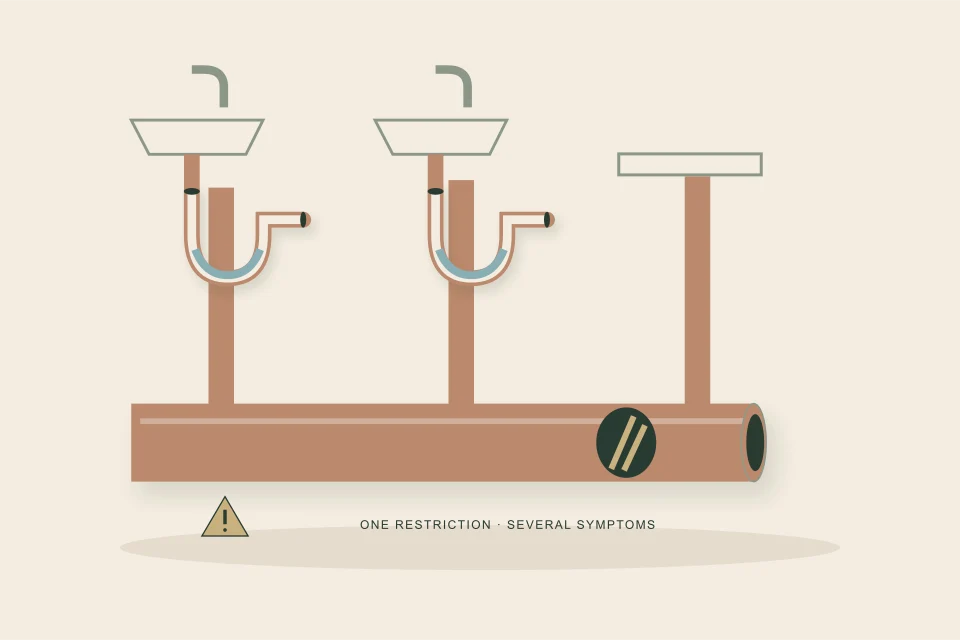
- How many drains are affected decides the zone: one fixture points to its trap, the lowest drain or several floors point to the main line.
- Rain or neighbours with the same problem move the answer toward the city main.
Sewer Symptom Triage
01 /What does the Sewer Symptom Triage do?
It sorts a drain or sewer symptom into the kind of problem it most likely is, so your next move fits the situation. A dry trap in a guest bathroom and a sewage backup in the basement can both start with the same complaint, "it smells like sewer", but one is fixed with a glass of water and the other needs the water turned off and a contractor on the way. The triage asks the questions that separate those cases.
It returns six things: an urgency label, the zone of the system most likely at fault, up to four causes ranked from most to least likely, a short list of checks that are safe for a homeowner, who to call, and whether a recorded camera inspection is worth asking for. Each rule is set out below so you can see why an answer came out the way it did.
02 /Which questions does it ask?
Three drop-downs and one set of tick boxes. The drop-downs describe the symptom; the boxes add facts that shift the likely cause or the urgency.
| Input | Choices |
|---|---|
| What are you noticing? | Sewer or rotten-egg smell · one drain slow or clogged · several drains slow · water or sewage coming up from a drain · gurgling or bubbling · wet, sunken or smelly spot in the yard · sewer charge jumped |
| Where? | One fixture · one bathroom or one floor · the lowest drain · fixtures on more than one floor · outside, or no particular fixture |
| When? | All the time · during or after heavy rain or snowmelt · when the washer drains or a tub empties · when a toilet flushes · comes and goes · during a cold snap |
| Tick boxes | Headache, dizziness, nausea or sore eyes · gas appliance nearby or possible gas leak · water near outlets or the panel · built before about 1975 · large trees near the line · neighbours affected · a rarely used drain · recent plumbing work or a new toilet · condo or shared line · backwater valve installed |
03 /How does it decide how urgent the problem is?
The urgency rules run top to bottom, and the first one that matches wins. That order is deliberate: nothing about drainage should soften a safety answer.
- Leave now
If you ticked the headache and dizziness box with any symptom, or you chose a smell and ticked the gas appliance box. Natural gas utilities add an odorant that smells like rotten eggs, and hydrogen sulfide in sewer gas can deaden your sense of smell, so the tool treats both as reasons to get into fresh air first.
- Stay out of the water
If sewage is coming up and water is near outlets, cords, the furnace or the panel. The electric hazard comes before the plumbing.
- Urgent — today
If sewage or water is coming up from a drain, or several drains are slow and the lowest drain or fixtures on more than one floor are involved.
- Soon — this week
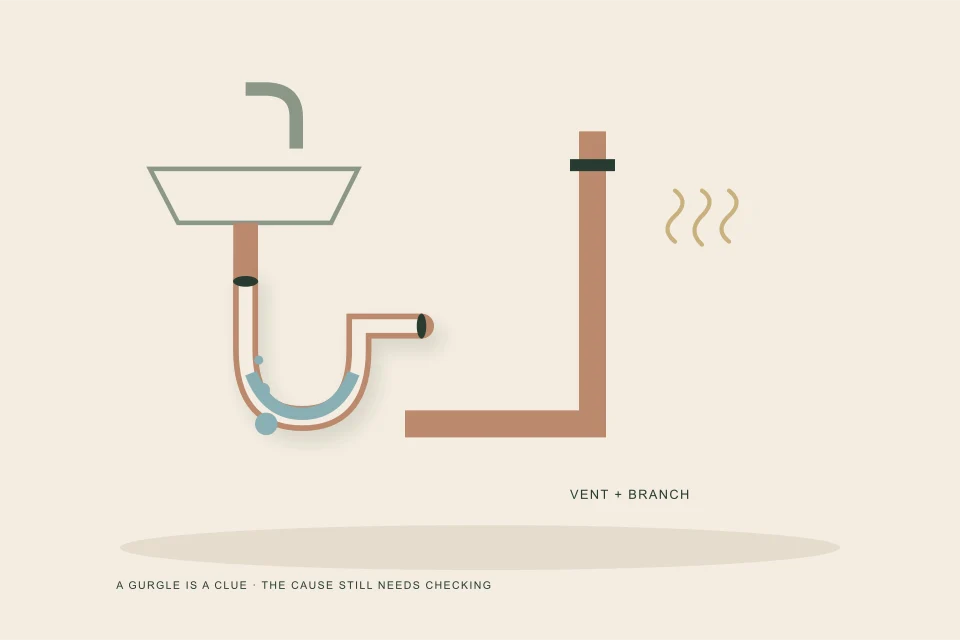
Several slow drains in other patterns, a wet or sunken spot in the yard, gurgling at the lowest drain or on several floors, or a smell that is there all the time without a rarely used drain to explain it.
- Check it yourself first
Everything else: one slow fixture, a smell that comes and goes, gurgling at one fixture, or a higher bill.
04 /How does it name the likely fault zone?
The zone appears on the badge under the urgency. Again the first matching rule wins.
- A jump in the sewer charge points to your metered water use, not the pipe.
- Heavy rain or neighbours with the same trouble, combined with a backup, several slow drains or the lowest drain, points to the city main running full or a blockage in your line. The tool names both because only a camera and the municipality can separate them.
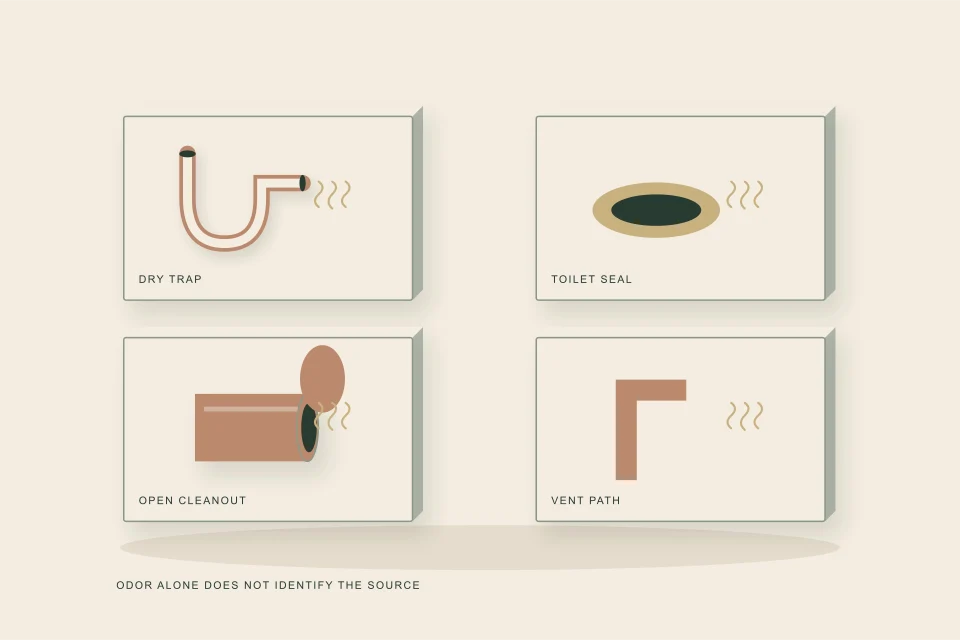
- A smell at the lowest drain points to that drain's trap or seal, or a nearby cleanout or pit lid; a smell on several floors points to the venting, or to traps and seals on several floors.
- One fixture points to that fixture's trap or branch drain, or for a smell to its trap, seal or vent.
- One bathroom or one floor points to the branch drain or vent that serves it.
- The lowest drain or several floors point to the main building drain or the lateral.
- Outside or no particular fixture points to the lateral outside, or for a smell to a vent, a cleanout or the lateral.
Those zones follow the way a drain system is built: fixtures join branches, branches join the stack, the stack joins the building drain under the floor, and the building drain leaves as the lateral. A fault affects everything upstream of it and nothing downstream, which is why counting affected fixtures is so useful. The reasoning is walked through in signs the main line is clogged.
05 /How are the likely causes ranked?
Each symptom has a base list, and certain answers move a cause to the top. The tool shows at most four, with duplicates removed.
| Symptom | Moved to the top when | Base causes |
|---|---|---|
| Smell | Flushing or recent work: toilet seal or disturbed joint. Rarely used drain: dry trap. Washer: standpipe. Comes and goes: roof vent plume or a slowly drying trap. Rain: a full main pushing air. Outside: vent, cleanout cap or lateral. | Siphoned trap from a poor vent; loose cleanout cap or unsealed sump lid; cracked or unglued pipe in a wall |
| One slow drain | Nothing | Hair, soap or grease in the trap or branch; a partly blocked vent; a warning that a second slow drain means the problem is further down |
| Several slow drains | Old house or trees: roots at joints | Blockage in the building drain or lateral; wipes, grease or scale; a sag or offset holding debris |
| Backup | Rain or neighbours: city main full. Old house or trees: roots or a broken section. Washer: a partial blockage that overflows under a big discharge (added last). | Blockage in your own line; wipes, grease or a foreign object |
| Gurgling | One fixture or one bathroom: that group's vent. Washer or flush: a big discharge meeting a restriction (added last). | A partial blockage in the main pushing air back through traps |
| Yard | Nothing | Leaking, broken or separated lateral; blocked cleanout overflowing; soil washing into a joint |
| Bill | Nothing | Running toilet or dripping fixture; outdoor watering counted as wastewater; rate change, longer period or estimated reading |
A cold snap adds a frozen shallow section of lateral or a frost-closed roof vent at the top of the list for every symptom except the bill.
06 /What else does the result include?
Three safe checks for the symptom, shown unless the result is "Leave now" or "Stay out of the water". For a smell they are refilling rarely used drains, rocking each toilet to feel for movement, and tightening cleanout caps and sump lids. For a backup they are stopping all water use, leaving cleanout caps closed while the line is under pressure, and photographing everything with the time.
Who to call follows the facts you gave. A danger result puts the gas utility or 911 first. A condo or shared line adds the property manager, because common lines are the corporation's to investigate. Backups and several slow drains add your municipality when rain or neighbours are involved, then a drain-cleaning contractor with a camera, and for a backup your insurer. A yard problem calls for a contractor with a camera and locator. Smells, single slow drains and gurgling outside a danger result get a licensed plumber if the simple checks fail.
A camera recommendation appears for several slow drains, backups, yard problems, gurgling at the lowest drain or several floors, and for an older house or trees near the line with any drainage symptom. If you ticked a backwater valve and sewage came up at the lowest drain or several floors, the result explains that the valve may be stuck or fouled, or that the water came from your own fixtures draining into a blocked line, which no valve can stop.
07 /What are the limits of the triage?
It cannot see your pipes, smell your air or read your meter. It turns a description into the most probable explanation under fixed rules, and a real house can break the pattern: two problems at once, a mislabelled fixture, a vent that was never installed. When the result and what you see disagree, trust what you see and get it looked at.
- It never shows a price. Planning ranges are on the cost answers page.
- It does not know your city's ownership split or programs; the across Canada page lists the ones checked for this site.
- It treats every smell with symptoms as a reason to leave, even when the cause turns out to be harmless. That is intentional.
For the reasoning behind each symptom, read why a house smells like sewer, is sewer gas dangerous, why sewers back up, why drains gurgle and why a sewer bill jumps. If the result points to a contractor, the vetting checklist helps you check one, and you can describe your situation to the desk.
FAQQuestions people ask
Why does the triage tell me to leave for what might just be a dry trap?
Because a smell with headaches or dizziness, or a rotten-egg smell near a gas appliance, cannot be told apart from a dangerous one by a web form. Fresh air first costs nothing; the dry trap will still be there.
Can the triage tell whether a backup is the city's fault?
No. It flags the city main as likely when rain or neighbours are involved. Your municipality and a camera run decide where the blockage was.
Why does counting slow drains matter so much?
A blockage affects every fixture upstream of it. One slow drain means a local clog; several, or the lowest one first, means the shared pipe further down.
Does the triage save my answers?
No. Everything runs in your browser and nothing is sent anywhere unless you use the quote form separately.
What should I do after the triage says to get a camera inspection?
Ask for a recorded run of the whole line with distances on screen, keep the file, and use it for every quote and any second opinion.
NETWORKGo deeper across the HAUSE Sewer network
Is sewer backup dangerous? Health risks, what it smells like and what it looks like
Is sewer backup dangerous? How sewage can make you sick, what sewer backup smells and looks like, when the smell is harmful, and who should stay away.
DrainAugering.caClog Locator: find the blockage before you pick up a cable
Use the Clog Locator to find where a drain clog sits (trap, branch, stack, main or lateral) and which auger class and cable size fits the pipe.
SewerJetting.caHow to use a drain jetter: a safety-first walkthrough for rental units
How to use a drain jetter or rented sewer jetter: setup, nozzle choice, feeding and pulling hose, and the stop rules that help prevent injection injuries.