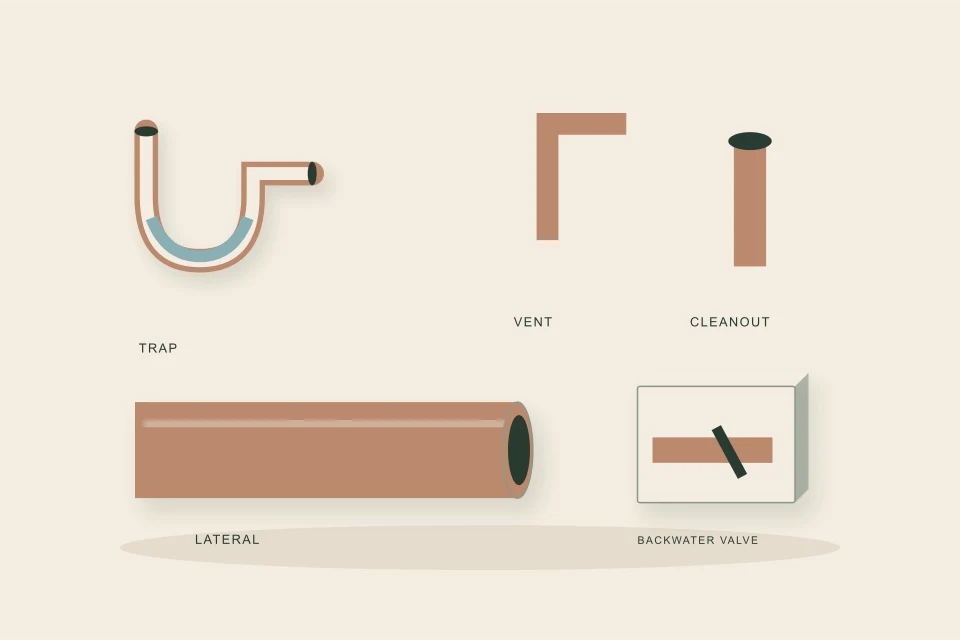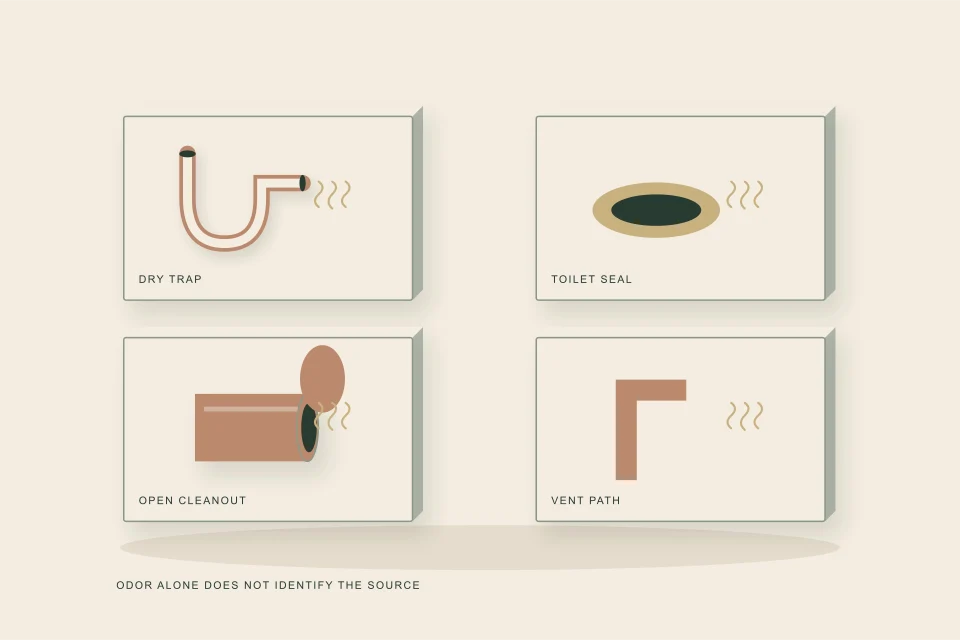
Most sewer smells inside a Canadian house come from a lost water seal or a loose joint, not a broken sewer. The usual culprits are a floor drain or shower trap that has dried out, a toilet whose wax ring has failed, a sink trap siphoned by poor venting, or a loose cleanout cap or sump lid. Refill traps and check seals before paying anyone.
- Every drain in the house is protected by a plug of water in its trap; lose the water and sewer air comes straight up.
- The room the smell is strongest in narrows the suspects to two or three.
- A smell that appears when a toilet flushes or after a toilet was reset points to the seal under it.
- A rotten-egg smell near a gas appliance, or any smell with headaches or dizziness, means get outside first and investigate later.
01 /Why does my house smell like sewer?
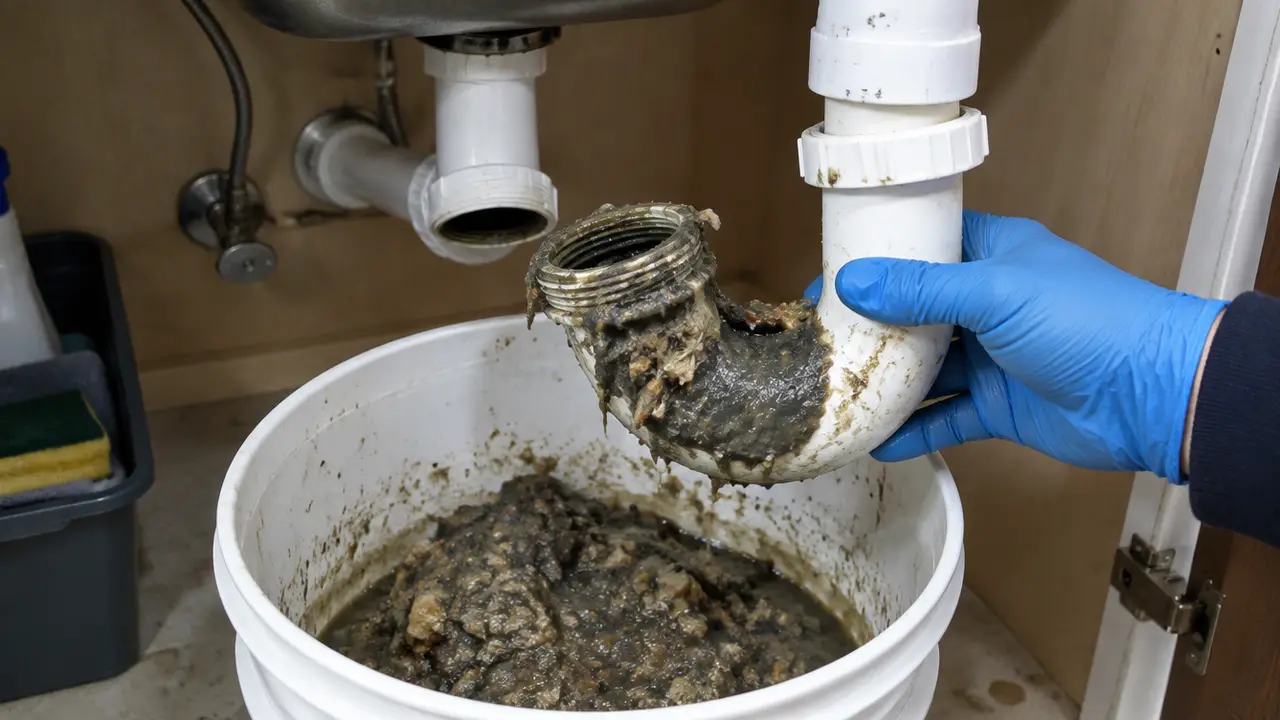
Because air from the drain system is getting into a room. The drain pipes behind your walls are connected to the city sewer and hold air that carries hydrogen sulfide, ammonia and other gases. Plumbing keeps that air out with water seals in traps and airtight joints, and vents it through the roof. A sewer smell means one of those barriers has a gap: a trap without water, a seal that has lifted, a cap that has come loose, or a pipe joint that has opened.
That is good news for your wallet. Most of these gaps take minutes and a few dollars to close. The work is in finding which one it is, and the fastest way to do that is to notice where the smell is strongest and when it appears.
02 /Which room is the smell in, and what does that point to?
Start where the smell is strongest, because each room has a short list of likely sources. Sniff at floor level near drains, at the base of toilets, and inside vanity cabinets, then compare.
| Room or spot | First suspects | Quick check |
|---|---|---|
| Basement near the floor drain | Dry floor-drain trap; missing cleanout plug inside the drain body | Pour a large jug of water down the drain |
| Basement utility area | Loose cleanout cap on the stack; unsealed sump or sewage ejector lid | Tighten caps; check the lid gasket and bolts |
| One bathroom | Toilet wax ring; dry shower or tub trap; sink overflow channel | Rock the toilet; run each fixture for a minute |
| Laundry room | Washer standpipe with no trap or a dry trap; overflow from a fast discharge | Look under the standpipe for a U-bend; watch it during the drain cycle |
| Kitchen | Siphoned sink trap; dishwasher drain loop missing; food in the disposal | Check the trap holds water after a full sink drains |
| Under a sink cabinet | Slip-joint nut loose on the trap; air admittance valve failed | Feel for moisture; tighten by hand |
| Upstairs or through the whole house | Cracked or unglued vent in a wall; roof vent air drifting down | Note weather and wind when it happens |
If the smell is everywhere at once and faint, think about the roof vent and the weather before tearing into walls. A smell that comes and goes with wind, rain or time of day is covered in why a sewer smell comes and goes.
03 /How does a drain trap stop sewer smell, and how does it fail?
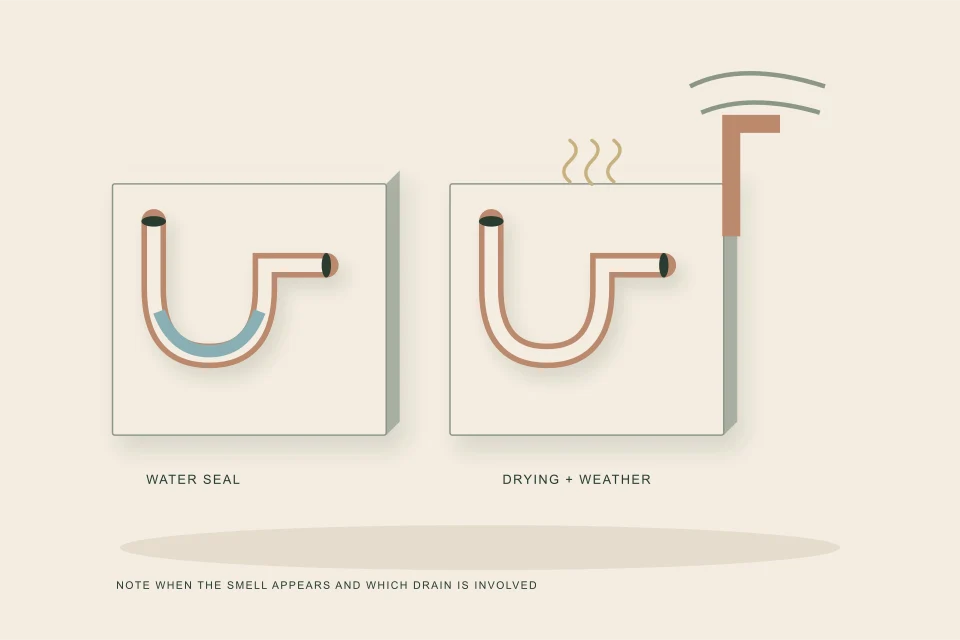
A trap is the U-shaped bend under every sink, tub, shower and floor drain, and built into every toilet. Water stays in the bottom of the U after each use and forms a plug that air cannot pass. A trap stops working in three ways: the water evaporates from a drain nobody uses, fast-moving water siphons it out because the vent is poor, or a surge in the pipe pushes it out.
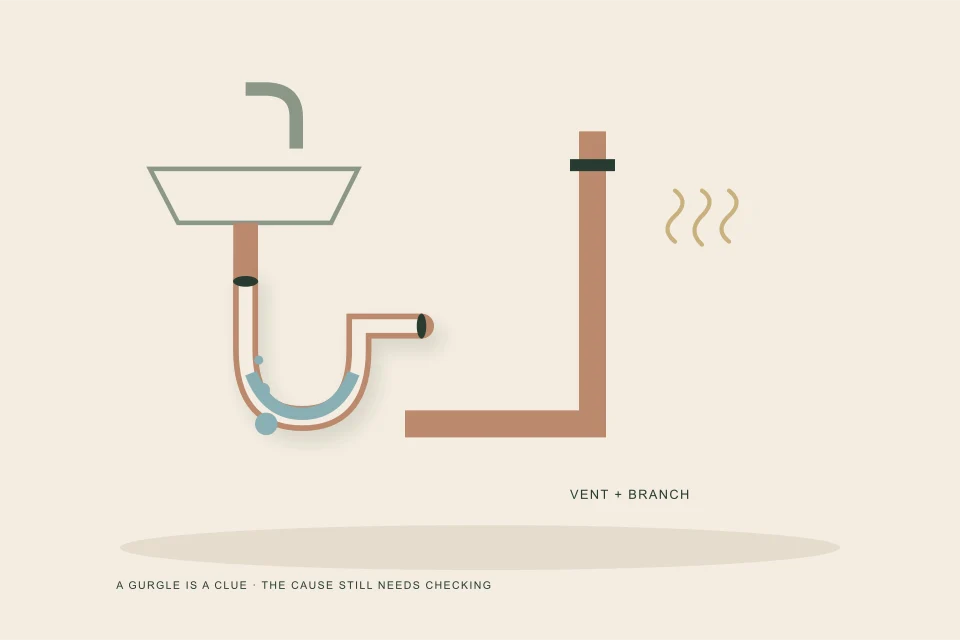
Evaporation is the most common cause of a basement sewer smell. A floor drain that only sees water when the furnace humidifier or water heater relief valve discharges can dry out over weeks, faster in dry winter air. The fix is a jug of water every few weeks, or a trap primer or seal device that a plumber can add. Siphoning happens when a sink or tub drains fast through a line with a missing, blocked or undersized vent; the trap empties itself and the smell arrives right after use. Blow-out happens when a slug of water or air pressure from a partial blockage downstream shoves the trap water up and out; it usually comes with gurgling, which is explained in why drains gurgle.
04 /Could the sewer smell be coming from the toilet?
Yes, and it is one of the most common sources. A toilet sits on a wax or foam ring that seals it to the drain flange in the floor. If the toilet rocks, was removed for flooring or renovation, or the flange sits below the finished floor, the seal can lift and let sewer air out around the base, often strongest just after a flush.
- Rock the toilet gently with your knees. Any movement means the seal is suspect.
- Look for staining, soft flooring or caulk that has cracked around the base.
- Check the bowl holds a normal water level; a low level can mean a crack in the porcelain trap or a siphoning problem.
- If the smell started after a new toilet or new floor, the seal is the first suspect, even if the work looked tidy.
Resetting a toilet on a new seal is a routine plumbing job. Do not simply add caulk around a rocking toilet: it hides the movement, and the seal underneath keeps failing.
05 /What about vents, cleanouts and sump pits?
Each is an opening into the drain system that is meant to be sealed or to discharge above the roof. A cleanout is a capped access port on the stack or building drain; a loose, cracked or missing cap is an open door for sewer air. A sump pit that collects foundation water should not smell like sewer, but a sewage ejector pit, which lifts wastewater from a basement bathroom, must have a sealed, bolted lid and its own vent.
Vents are the other half of the system. The stack carries drain air up and out through the roof, and branch vents let air in so drains flow without sucking traps dry. A vent pipe inside a wall that has cracked, or a joint that was never glued, leaks air into the house continuously, and the smell tends to be strongest in one wall or ceiling area. Some fixtures use an air admittance valve, a one-way valve under the sink that lets air in but not out; when it sticks open, it leaks sewer air into the cabinet.
06 /What if the smell is rotten eggs rather than sewage?
Treat a rotten-egg smell near a furnace, water heater, stove or dryer as a possible gas leak until ruled out. Gas utilities add an odorant called mercaptan so leaks smell of sulphur or rotten eggs, and their advice is to leave the building and call from outside. Do not switch anything on or off on the way out.
A rotten-egg smell that only comes out of the hot water taps, and not the cold, is usually a reaction inside the water heater rather than the sewer. It is a water heater question, not a drain one. The health side of sewer gas, including which symptoms matter, is covered in is sewer gas dangerous.
07 /How do I find a sewer smell that will not go away?
Work through the free checks in order, then pay for a test that finds leaks you cannot see. Plumbers use a smoke test, which fills the drain and vent system with harmless visible smoke from the roof vent or a cleanout, so it appears wherever the system leaks. A camera inspection finds cracks, open joints and roots in pipes you cannot reach.
- Refill every trap
Run water in every fixture, including guest showers, laundry sinks and floor drains. Wait a day and see if the smell has gone.
- Check the seals
Rock toilets, tighten cleanout caps, and inspect sump and ejector lids.
- Keep a log
Note time, weather, wind and what was running when the smell appeared. Patterns point to venting, a surge or a specific fixture.
- Book a smoke test
A plumber seals the system and fills it with smoke. It shows unglued joints, cracked vents and dry traps directly.
- Camera the drains
If smoke points below the floor or outside, a recorded camera run shows the pipe itself.
If you are unsure whether the smell is part of a bigger drainage problem, the Sewer Symptom Triage sorts it by where and when it happens and tells you who to call. When the smell comes with slow drains, the problem is probably further down; read signs the main line is clogged. If you want a second pair of eyes on what you have found, describe it to the desk.
FAQQuestions people ask
Why does my basement smell like sewer only in winter?
Dry indoor air evaporates the water in floor-drain traps faster, and the drain may see less water in winter. Refill it and consider a trap seal device.
Can a clogged vent make the whole house smell like sewer?
It can make drains siphon their traps dry, which lets sewer air out at those fixtures. A blocked roof vent also slows drains and causes gurgling.
Why does my bathroom smell like sewer after a shower?
Often the shower or tub trap is being siphoned by a poor vent, or the smell is coming from the sink overflow channel, which traps grime and gets wet during showers.
Is a sewer smell from the washing machine drain normal?
No. The standpipe should have a trap holding water. A missing trap, a dry one, or a partial blockage that makes it overflow can all let sewer air into the laundry room.
Should I pour bleach down a drain that smells?
It will not fix a dry trap or a failed seal, and mixing cleaners can release toxic gas. Refill the trap with water and check seals first.
NETWORKGo deeper across the HAUSE Sewer network
Is sewer backup dangerous? Health risks, what it smells like and what it looks like
Is sewer backup dangerous? How sewage can make you sick, what sewer backup smells and looks like, when the smell is harmful, and who should stay away.
DrainAugering.caHow to snake a bathtub or shower drain
How to snake a bathtub or shower drain: clear hair at the stopper, feed cable through the tub overflow, reach the shower trap, and spot a branch clog.
SewerInspector.caCan a sewer scope cause problems? The real risks and how to avoid them
Can a sewer scope cause an issue? The real risks of a camera inspection: toilet reset leaks, seized cleanout plugs, stuck cameras, odours and who pays.