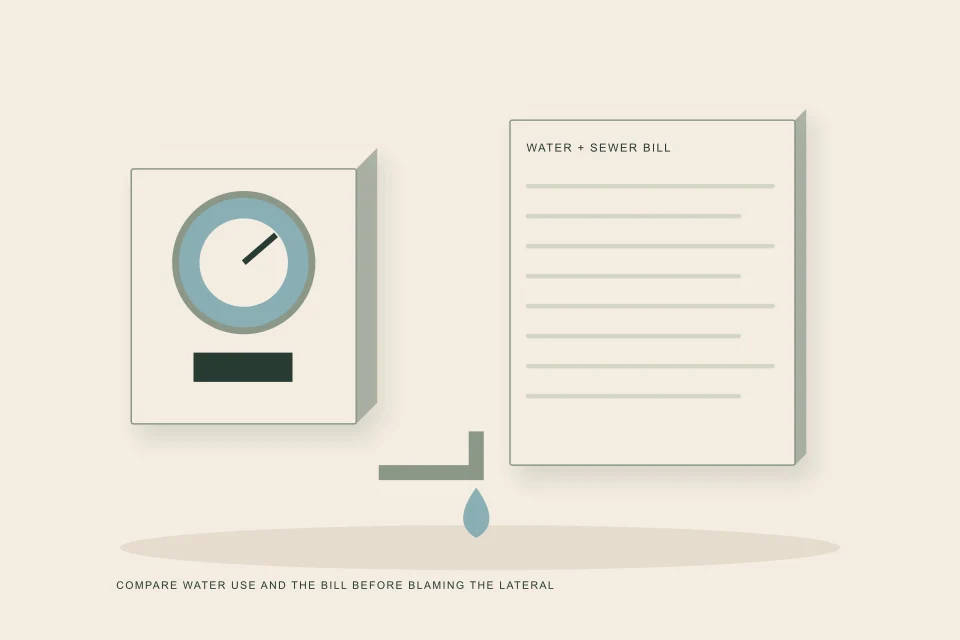
In most Canadian cities the sewer (wastewater) charge is calculated from the water your meter records, so anything that raises water use raises the sewer charge too, often at a higher rate per cubic metre than the water itself. Fixed monthly service and stormwater charges sit on top. A sudden jump is usually a leak, a running toilet, a rate change, a longer billing period or an estimated reading.
- There is usually no sewer meter: the wastewater charge is a share of your metered water, times a rate.
- Calgary bills residential wastewater on 88 per cent of metered water all year, as published in September 2026.
- A running toilet raises the water and the sewer lines of the bill together, and some utilities will not credit the sewer part.
- A meter test with every tap off is the fastest way to find a hidden leak.
01 /How is the sewer charge on my water bill calculated?
Almost always from your water meter. Houses do not have a meter on the sewer, so utilities estimate the wastewater you send them from the water you take. The usage part of the sewer charge is your metered water, or a set share of it, multiplied by a wastewater rate. Fixed monthly charges for water service, wastewater service and stormwater are then added whether you use water or not.
The Alberta Utilities Consumer Advocate describes water bills in the province as a mix of fixed charges for infrastructure and variable charges that depend on consumption, and notes that bills vary from community to community. The structure is similar in most Canadian cities, but the shares, rates and fixed charges are set locally.
02 /Why is my sewer bill higher than my water bill?
Because collecting and treating wastewater usually costs more than supplying clean water, and the rate reflects that. When the wastewater rate per cubic metre is higher than the water rate, the sewer line on your bill can be larger even though it is based on the same meter reading, or on a slightly smaller share of it. Add a fixed wastewater service charge and a stormwater charge, and the sewer side of the bill often outweighs the water side.
| City | Usage part of the wastewater charge | Other sewer-related charges |
|---|---|---|
| Calgary | Residential wastewater is charged on 88 per cent of metered water, all year | Fixed wastewater service charge; fixed stormwater service charge |
| Edmonton (EPCOR) | A variable rate per cubic metre of water consumed | A fixed sanitary charge that varies with meter size; a stormwater charge based on lot area, development intensity and runoff |
Calgary explains the 88 per cent as an allowance for water that never reaches the drain, such as watering the garden. Other cities use different shares, seasonal averaging or none at all. Your bill, or your utility's rates page, states the method; look for the words wastewater, sanitary, sewer or drainage.
03 /Why did my sewer bill suddenly go up?
Look at the consumption first. If the cubic metres on the bill jumped, something used more water: a leak, a running toilet, a new household member, a pool or lawn, or a long billing period. If consumption is normal but the charge rose, the rate or the fixed charges changed, or the bill covers more days. Estimated readings followed by an actual read can also produce one large bill.
| Reason | What the bill shows | How to check |
|---|---|---|
| Running toilet or dripping fixture | Consumption up steadily, no change in habits | Meter test with all water off; dye test in toilet tanks |
| Outdoor watering or pool fill | Summer consumption spike | Compare with last summer; check how your city bills it |
| Rate increase | Same consumption, higher cost per m³ | Compare the rate lines with the last bill |
| Longer billing period | More days on the bill | Check the service dates |
| Estimated then actual reading | A low bill followed by a catch-up | Look for "estimated" on the earlier bill |
| Hidden leak underground | Consumption up, no visible water | Meter test; call the utility or a plumber |
Calgary's billing page says a higher-than-expected bill could be the result of an undetected leak, and suggests contacting the billing provider when a bill is well above normal usage. Edmonton's EPCOR says in its wastewater FAQ that it will not credit sanitary charges for leaks such as a running toilet, because that water did enter the sewer system. Finding leaks early is cheaper than arguing about them later.
04 /How do I check for a leak that is raising my bill?
Use the meter. Turn off every tap, appliance, humidifier and irrigation system, make sure nobody uses water, and read the meter or watch its leak indicator for 15 to 30 minutes. If it moves, water is going somewhere. Then find the fixture by elimination, starting with toilets, which are the most common silent leak.
- Meter test
Read the meter, use no water for half an hour, read it again. Any movement means a leak.
- Toilet dye test
Put a few drops of food colouring in each toilet tank and wait without flushing. Colour in the bowl means the flapper is leaking.
- Listen
A toilet that refills by itself or hisses is leaking into the bowl, which goes straight to the sewer.
- Check the obvious
Dripping taps, humidifier drains, water softener cycles, a water heater relief valve dripping into the floor drain.
- Call for help
If the meter moves and nothing inside explains it, the leak may be in the buried water service; call the utility or a plumber.
05 /Can I dispute a high sewer charge?
You can ask your utility to review it, and you should if the consumption does not match anything that happened in the house. Ask for the meter reads behind the bill, whether any were estimated, and whether the meter can be tested. If a leak was the cause and you have fixed it, ask whether the utility has any leak adjustment policy; some do for specific situations and some, like EPCOR for sanitary charges, say they do not credit leaked water.
Keep the evidence: a photo of the meter reading, the plumber's invoice for the repair, and your usual monthly consumption. In Alberta, the Utilities Consumer Advocate can help residential customers with utility billing questions.
06 /Why is my apartment or condo sewer bill so high?
In a building with one meter, the water and sewer bill is shared out by a formula, so you pay for the whole building's use, including other units' leaks and common areas. If units are sub-metered, your own meter drives your share, but a building may add administration fees. A jump that you cannot explain from your own use is a question for the property manager.
Ask how the bill is allocated, whether the building has had a leak or a rate change, and whether the meter reading was estimated. In rentals, the lease says who pays utilities and how they are divided; tenancy rules on utility billing vary by province, so confirm with your provincial residential tenancy office if the method is unclear.
07 /Does a higher sewer charge mean something is wrong with my sewer line?
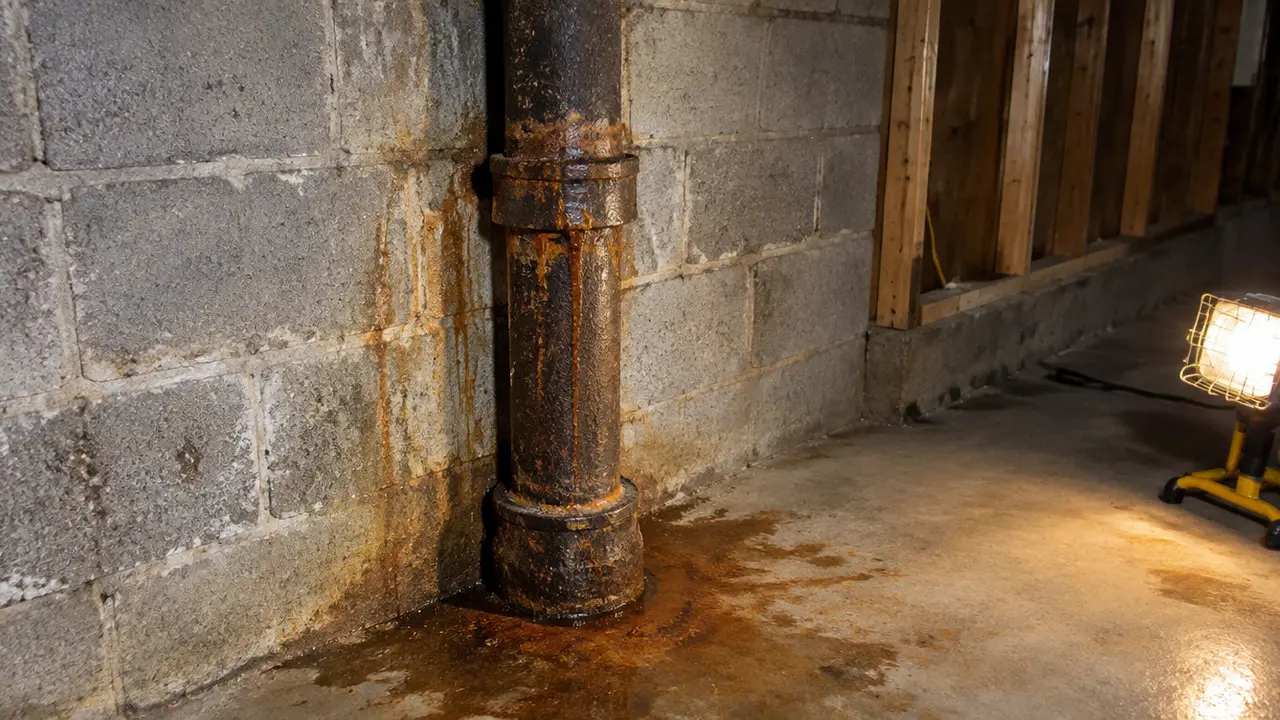
Almost never. The charge is driven by water use and rates, not by the condition of your pipe. A broken sewer line does not change the meter reading; a leaking water line does. The one link is indirect: a running toilet or a leak that you ignore on the water side also sends that water down the drain, and a chronic leak can mask other drainage problems.
If your question is really about the sewer line itself, start with the Sewer Symptom Triage, which has a "sewer charge jumped" option, or signs the main line is clogged. Repair prices are on the cost answers page, and regional utility links are on the across Canada page. If you want help reading a bill, ask the desk.
FAQQuestions people ask
Why is my sewer charge higher than my water charge?
The wastewater rate per cubic metre is often higher than the water rate, and fixed wastewater and stormwater charges are added. Both usage charges come from the same meter reading.
Do I have a sewer meter?
Almost certainly not. Residential wastewater is estimated from your metered water use, sometimes as a set percentage of it.
Can I get a credit on my sewer bill for watering the lawn?
It depends on the city. Calgary builds an allowance into its 88 per cent residential share; other utilities use different methods. Ask your utility.
Why is my sewer bill the same every month?
You may be on a flat rate, an estimated reading, or a budget billing plan, or your use may simply be steady. The bill states which applies.
Will fixing a running toilet lower my sewer bill?
Yes. Because the sewer charge follows metered water in most cities, stopping a leak lowers both the water and the wastewater lines.
NETWORKGo deeper across the HAUSE Sewer network
Sewer Backup Checklist
Sewer Backup Checklist: 24 steps in six stages, from making it safe to after cleanup, with a progress meter and a copy-ready summary for your insurer.
SewerQuotes.comDrain and sewer cleaning cost: augering, jetting and descaling
Drain and sewer cleaning cost in Canada (2026): main-line augering, hydro jetting and descaling price ranges in CAD, and how to avoid paying twice.
SewerRoots.caWhose tree, whose pipe: who pays when roots block a sewer line
Who is responsible when a city or neighbour's tree sends roots into your sewer line: the general Canadian pattern, the evidence, and how to raise it.