A faint sewer smell from a dry trap is unpleasant and irritating but rarely harmful for a healthy adult who fixes it promptly. Sewer gas becomes dangerous when it is strong or concentrated: hydrogen sulfide can cause headaches, dizziness and collapse at high levels, and it deadens your sense of smell. Confined spaces such as pits and manholes can be deadly. Sewage itself carries germs.
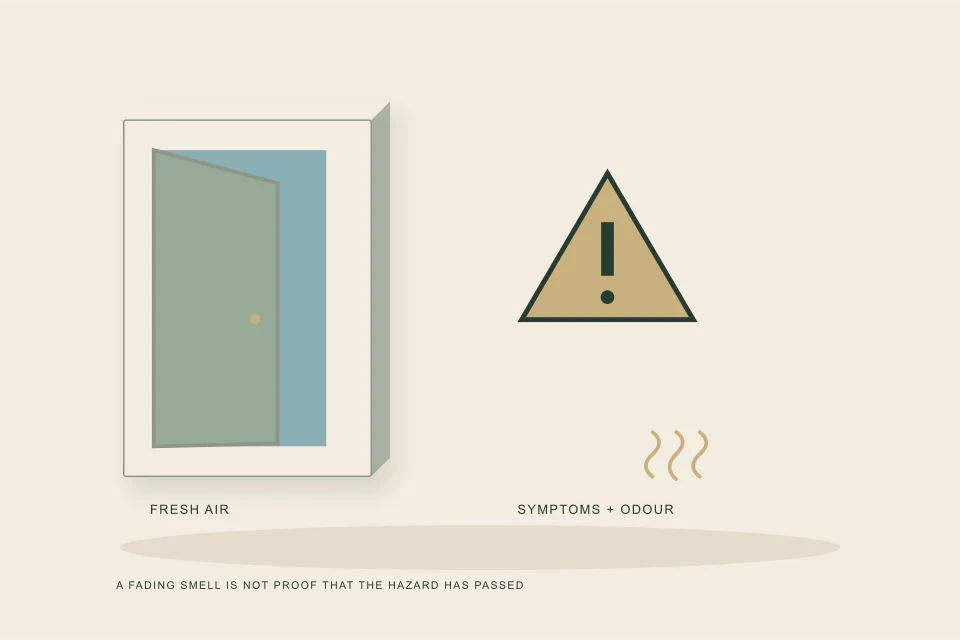
- The main gas that makes sewer air smell, hydrogen sulfide, can dull your sense of smell, so a fading odour is not proof the air is safe.
- Headache, dizziness, nausea or sore eyes around a strong smell mean get into fresh air before investigating.
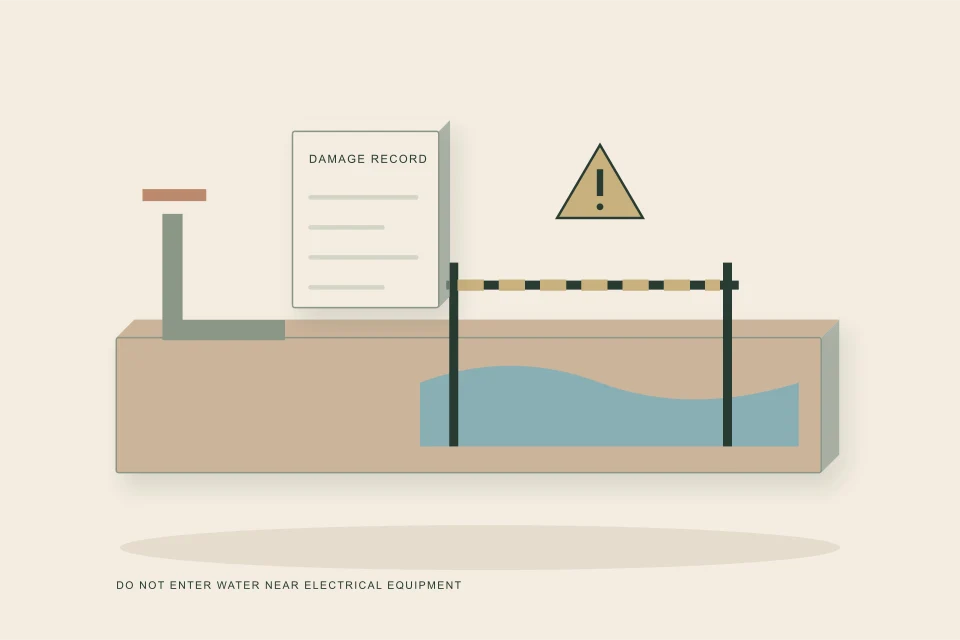
- Never lean into or enter a sump pit, ejector pit, manhole or trench to find a smell.
- Sewage water is a separate hazard: germs, not gas. Children, pregnant people and anyone with breathing problems should stay away from it.
01 /What is sewer gas made of?
Sewer gas is the air inside drains and sewers, changed by decomposing waste. Its signature smell comes mainly from hydrogen sulfide, which smells of rotten eggs. It can also carry ammonia, methane, carbon dioxide and other compounds in varying amounts. In a house drain the mix is diluted and vented through the roof; in a closed sewer, pit or tank it can build up.
The Canadian Centre for Occupational Health and Safety lists "sewer gas" as another name for hydrogen sulfide and notes that it can dull the sense of smell. That single fact explains much of the safety advice below. The occupational exposure guideline it cites from the ACGIH is 1 ppm averaged over a work shift, with a 5 ppm short-term limit, which shows how seriously workplaces treat the gas.
02 /Can a sewer smell in the house make you sick?
A mild, occasional sewer smell from a dry trap or a loose seal is mostly a nuisance: it can irritate eyes and throat and cause headaches or nausea in some people, and the usual cause takes minutes to fix. What deserves attention is a strong or sudden smell, a smell that will not clear with ventilation, or anyone feeling unwell around it. Those are reasons to get into fresh air first.
| Situation | Risk level | What to do |
|---|---|---|
| Faint smell near one unused drain | Low | Refill the trap, ventilate, check again tomorrow |
| Smell after a flush at one toilet | Low | Check the toilet seal; open a window meanwhile |
| Strong smell throughout a floor | Moderate | Ventilate, find the source today, stop using drains near it |
| Any smell with headache, dizziness, nausea or sore eyes | High | Get everyone outside; call 911 if symptoms are severe or do not clear |
| Rotten-egg smell near a gas appliance | Treat as gas leak | Leave, and call the gas utility or 911 from outside |
| Smell from an open pit, manhole or trench | High | Do not lean in or enter; call a professional |
03 /Why is a fading sewer smell not proof the air is safe?
Because hydrogen sulfide can deaden the nose. After a while in a smelly room, or at higher concentrations, people stop noticing the odour even though the gas is still there. That is why "it doesn't smell as bad now" is not a reason to go back into a basement that was strong enough to give you a headache. Ventilate, fix the source, and judge the air by how you feel.
The same effect is behind the rule that nobody should put their head into a sump pit or sewage ejector basin to sniff for a problem. Gas can collect in low, enclosed spaces, and you cannot rely on smell to warn you. Detectors for hydrogen sulfide exist, but a household carbon monoxide alarm does not detect it.
04 /Is sewer gas flammable or explosive?
Some of its components can be. Methane and hydrogen sulfide both burn, and in closed sewers, septic tanks and large pits they can reach concentrations that ignite. In a house with working traps and vents, drain air is diluted far below those levels. The practical rule is to keep flames and sparks away from open sewer access, pits and tanks, and to call the gas utility for any smell that could be natural gas.
Natural gas is odorised with mercaptan so that it smells like sulphur or rotten eggs, which makes it easy to confuse with sewer gas. Enbridge's advice if you smell gas is to evacuate immediately, avoid using phones, switches or electronics near the leak, and call from outside. A sewer smell that seems to come from a furnace room is exactly the case where that caution matters.
05 /Why are pits, manholes and trenches so much more dangerous?
Because gas collects where air cannot move. A sewage ejector pit, a septic tank, a manhole or a deep trench can hold air with little oxygen and high levels of hydrogen sulfide. Workers who enter them follow confined-space rules with gas testing and rescue plans. Homeowners should not enter them at all, and should not send anyone else in to rescue someone who has collapsed there.
- Keep sump and ejector lids closed and sealed; open them only to service the pump, with ventilation.
- Never enter a manhole, septic tank or sewer access, for any reason.
- Stay out of excavations deeper than your waist unless a contractor has made them safe.
- If someone collapses in a pit or tank, call 911. Do not follow them in.
06 /Is sewage itself dangerous if it backs up?
Yes, but the hazard is germs rather than gas. Sewage carries bacteria and viruses, and wet materials start growing mould within a day or two. Health Canada advises that children, pregnant women and people with respiratory problems should never handle water and materials contaminated by sewage, and that homes dry within 48 hours are less likely to grow mould.
For a backup, that means protective gear (gloves, boots, eye protection and a mask) for anyone cleaning, discarding porous materials that soaked up sewage, and drying fast. The first hour is covered in what to do when the sewer backs up. Health Canada also warns against running outdoor combustion equipment, such as generators, indoors while drying out, because of carbon monoxide.
07 /Who is most at risk from sewer smells and sewage?
People who are closest to the source for longest, and people whose lungs or immune systems are already under strain. Anyone who sleeps or works in a basement room beside a floor drain, infants who spend time on the floor, older adults, people with asthma or other breathing problems, and anyone pregnant should be kept away from a smelly basement or a backup until the source is fixed and the area is clean and dry.
Tenants in basement suites deserve a special mention. A suite often shares a floor drain or a laundry standpipe with the rest of the house, and the person living next to it may be the only one who notices the smell. If you rent a basement suite and smell sewer, tell the landlord in writing with dates, because the fix is usually simple and the record matters if it turns into a backup. Landlords should treat a suite tenant's smell complaint the way they would a water leak.
Pets are the other group people forget. Dogs and cats spend their time near the floor, drink from places they should not, and walk through spills. Keep them out of any area with sewage or a strong odour.
08 /How do I stop sewer gas getting into the house?
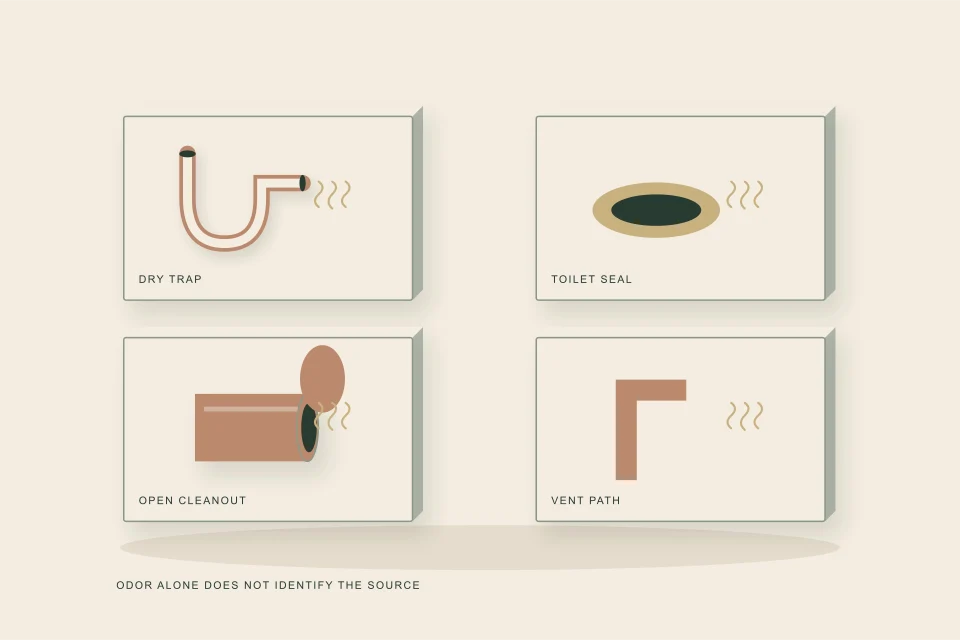
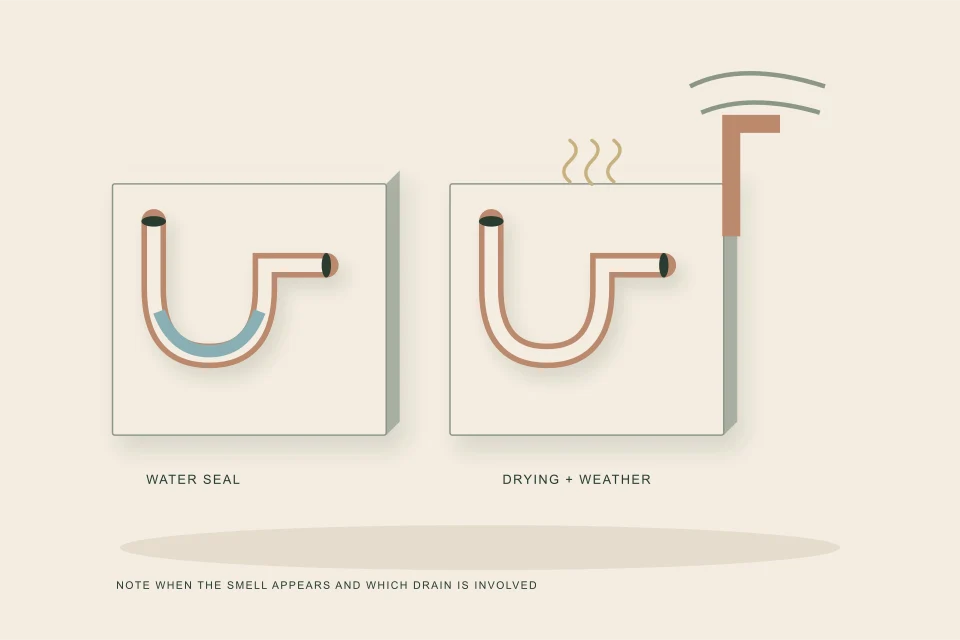
Restore the barriers. Keep water in every trap, fix toilets that rock, keep cleanout caps and pit lids tight, and have a plumber repair a cracked or unglued vent. Most homes need nothing more. When a smell keeps returning despite those checks, a smoke test finds the leak.
Room-by-room sources are listed in why the house smells like sewer, and weather-driven smells in why the smell comes and goes. If you are not sure how urgent your situation is, the Sewer Symptom Triage puts danger questions first. To ask about a smell that will not go away, contact the desk.
FAQQuestions people ask
Can sewer gas give you a headache?
Yes. Headache is one of the listed effects of hydrogen sulfide exposure. A headache around a sewer smell is a reason to get into fresh air and find the source.
Can sewer gas kill you in a house?
Deaths are linked to confined spaces such as pits, tanks and sewers, where gas concentrates. In a house the danger rises with a strong, persistent smell; leave and ventilate if anyone feels unwell.
Will a carbon monoxide detector pick up sewer gas?
No. CO alarms detect carbon monoxide. Hydrogen sulfide needs its own detector, which is more common in workplaces than homes.
Is it safe to sleep in a house that smells like sewer?
If the smell is faint and nobody has symptoms, ventilate, refill traps and fix the source promptly. If it is strong or anyone feels unwell, sleep elsewhere until it is found.
Are pets more sensitive to sewer gas?
Pets are close to floor drains and spend more time low down, where heavier gases and drain openings are. Keep them away from a smelly basement until it is fixed.
NETWORKGo deeper across the HAUSE Sewer network
Is sewer backup dangerous? Health risks, what it smells like and what it looks like
Is sewer backup dangerous? How sewage can make you sick, what sewer backup smells and looks like, when the smell is harmful, and who should stay away.
DrainAugering.caDrain auger safety: how rotating cable injures, and how to stop it
Drain auger safety: how rotating cable injures hands and arms, the right gloves, foot pedal control, electrical and sewer gas hazards, and hard stop rules.
SewerRoots.caSigns of roots in your sewer line
Signs of roots in your sewer line: gurgling, slow floor drains, seasonal backups and what a camera shows. Ten symptoms ranked, plus how to confirm roots fast.