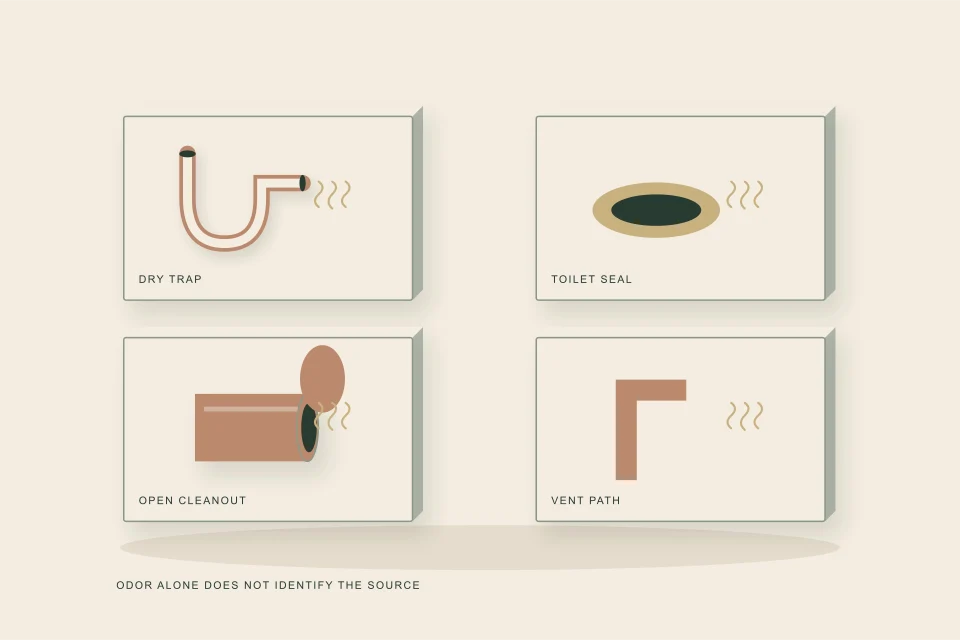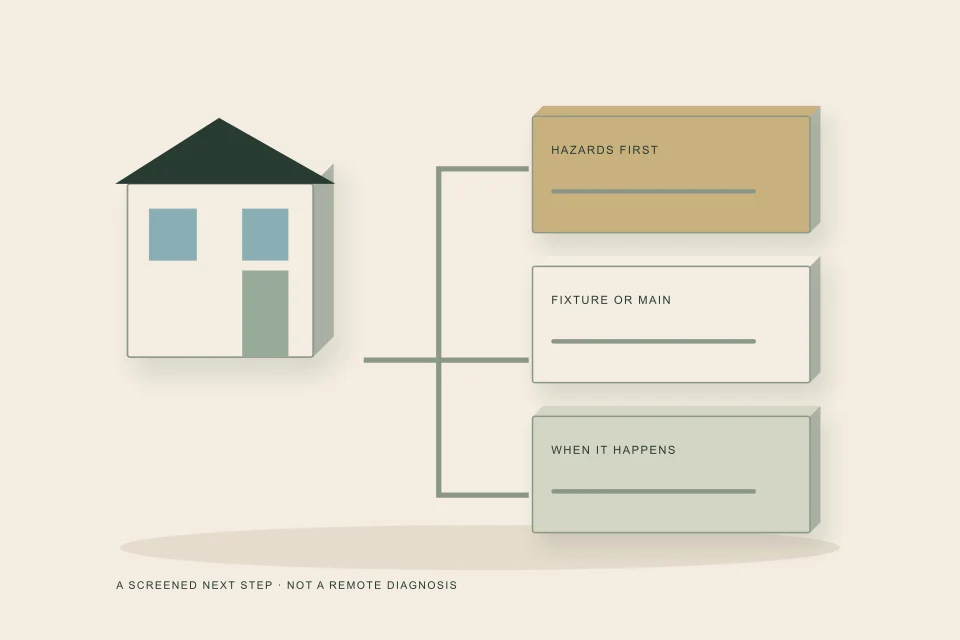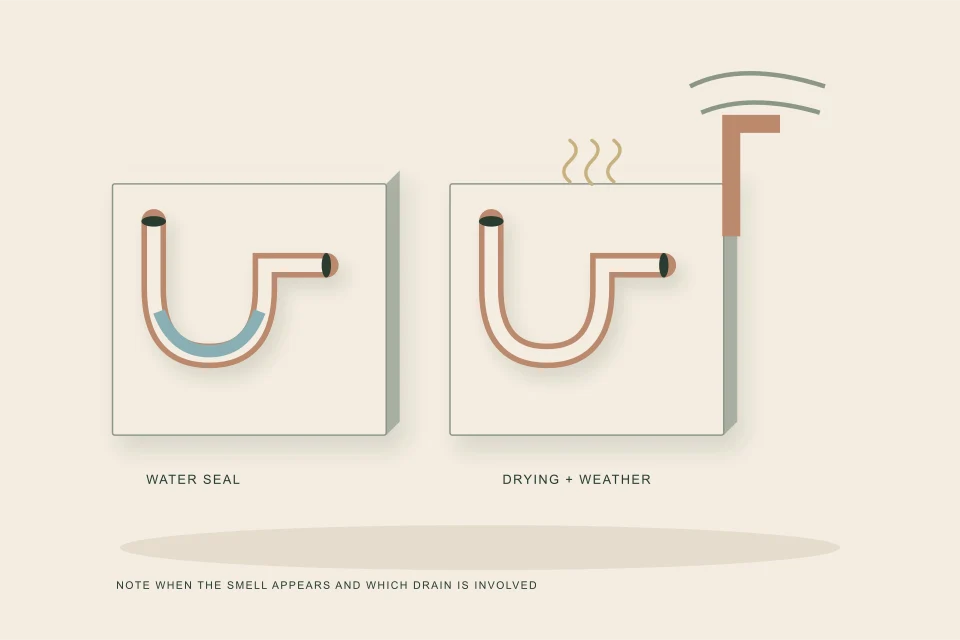
A sewer smell that comes and goes usually follows something that changes air pressure or water in the drain system: still air letting roof-vent air settle, a storm filling the sewer, exhaust fans or a furnace pulling air through a weak trap, or a big discharge that siphons a trap. Log when it happens; the pattern names the cause.
- Outside smells on calm evenings are usually the roof vent plume settling, not a leak.
- A smell that appears when a bathroom fan, range hood or dryer runs points to a weak trap being pulled by negative pressure.
- A smell right after a sink, tub or washer drains points to a siphoned trap and a venting problem.
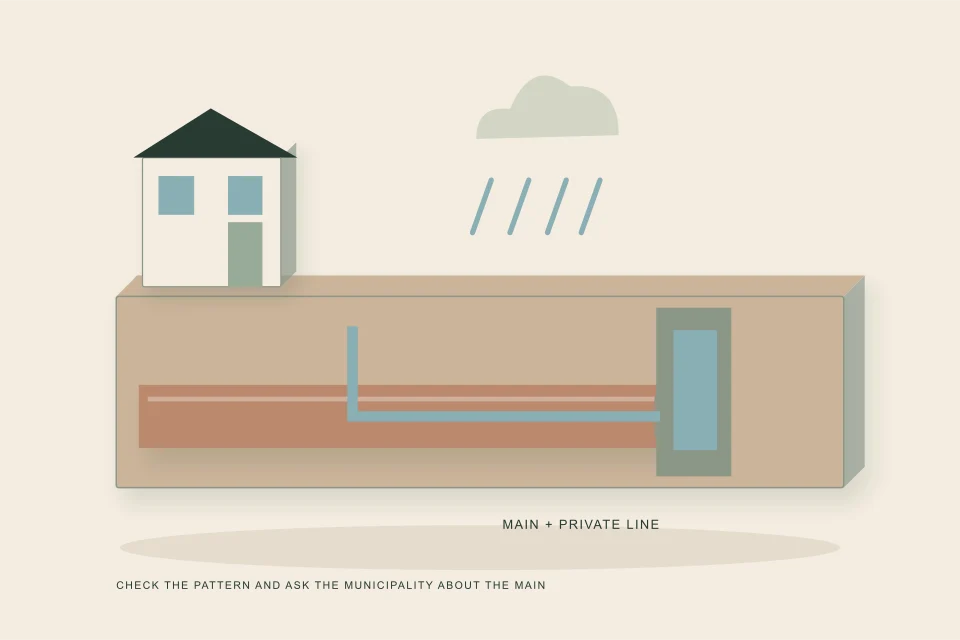
- A smell only during heavy rain can mean the sewer main is filling; if drains also slow, treat it as a backup risk.
01 /Why does the sewer smell come and go instead of staying?
Because the barriers that keep drain air out are only just failing. A trap with half its water, a vent that barely copes, or a seal that lifts a little will hold on most days and leak when conditions push them: a pressure change, a gust, a surge of water or a fan pulling air. That is why an intermittent smell is easier to solve than it seems. Record when it happens, and the trigger points to the weak spot.
Keep a simple log for a week or two: date and time, where the smell was strongest, the weather and wind, and what was running in the house (laundry, dishwasher, shower, bathroom fan, furnace, dryer, range hood). Three or four entries usually show a pattern that matches one of the cases below.
02 /Why does it smell like sewer outside the house at night?
On calm evenings, air near the ground cools and stops moving, so the plume of drain air that normally rises from roof vents and disperses can drift down and pool around houses. The smell is often strongest near the house on still nights and gone by a breezy afternoon. It is normal venting, not a leak, unless it is constant or strongest at one spot in the yard.
- Smell around the roofline or near upstairs windows on still evenings: roof vent plume, yours or a neighbour's.
- Smell at one spot in the yard, especially with soft or wet ground: a leaking lateral or a cleanout missing its cap.
- Smell at the street near a manhole: the municipal sewer; report it to your municipality.
- Smell near a basement window well or window: check the floor-drain trap inside first.
Wind can make it worse in a different way. Gusts across a short roof vent, or a vent near a dormer or a taller part of the roof, can push air back down the stack and into weak traps. Plumbers sometimes extend or relocate a vent that sits in a wind shadow. If the smell outside is constant, look at where your sewer line runs and check for a missing cleanout cap or a soft spot above the lateral.
03 /Why does it smell like sewer when it rains?
A storm changes both the air and the water in the sewer. As rain and groundwater get into the sanitary system, flow rises in the main, air in the pipes is pushed ahead of it, and weak trap seals let some of that air into houses. If the sewer fills high enough, water can follow the air. A smell only in heavy rain is worth taking seriously.
If drains slow or gurgle in the same storms, read why sewers back up when it rains. A smell after rain that comes from the yard can also mean water is soaking through a broken lateral and carrying odour up through the soil.
04 /Why does the house smell like sewer when a fan or the AC runs?
Fans that blow air out of the house, such as bathroom fans, range hoods, clothes dryers and some furnace and fireplace setups, lower the air pressure indoors slightly. Replacement air comes in wherever it can, and a dry or weak trap is one of the easiest paths. The smell appears within minutes of the fan starting and fades after it stops.
Air conditioners and furnaces have their own link to drains. A condensate line that runs to a floor drain or a small trap can dry out in the off-season and then carry drain air into the ductwork, spreading a faint smell through the house when the system runs. Check that condensate traps hold water and that the line ends where it should. If the smell tracks the furnace or AC, tell the HVAC technician about it at the next service.
05 /Why does it smell after the sink, tub or washer drains?
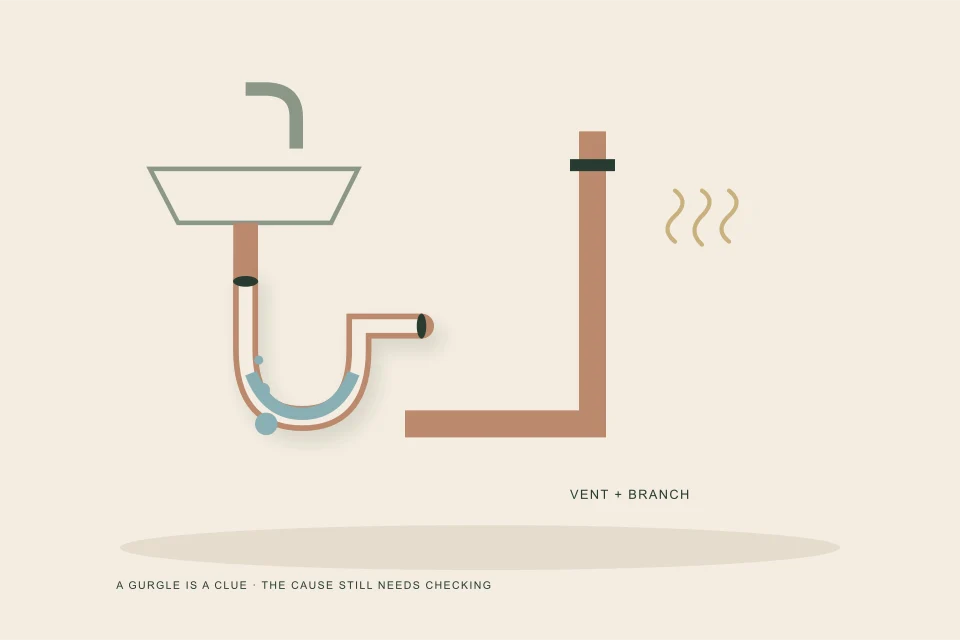
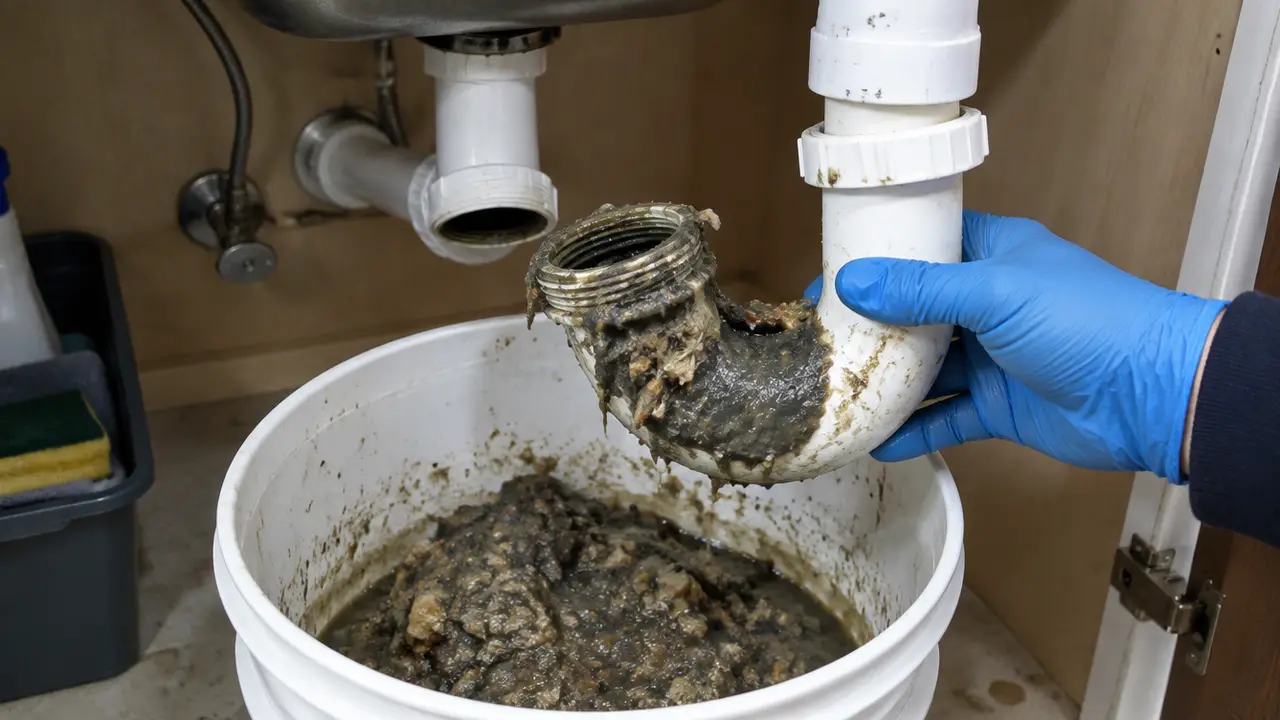
Draining a full basin or a washing machine sends a slug of water down the pipe. If the vent for that fixture is blocked, missing or too small, the moving water pulls the water out of its own trap, or a neighbouring one, and leaves the trap open. The smell arrives seconds after draining, often with a gurgle.
| When it smells | Likely weak point | Next step |
|---|---|---|
| Seconds after a basin or tub drains | Siphoned trap from a poor vent | Check the trap refills; have the vent checked |
| When the washer pumps out | Standpipe trap, or a restriction downstream | Watch the standpipe; see if other drains gurgle |
| When a toilet flushes | Toilet seal, or air pushed through nearby traps | Rock the toilet; listen for gurgling nearby |
| After days away | Evaporated traps | Refill every trap on return |
| On hot days | Faster evaporation and stronger decomposition odours | Refill traps more often; check the sump or ejector lid |
Gurgling that comes with the smell is the stronger clue, because it means air is being forced through water somewhere. That pattern, and when it signals a clog rather than a vent, is set out in why drains gurgle.
06 /Could a smell that comes and goes be a leak inside a wall?
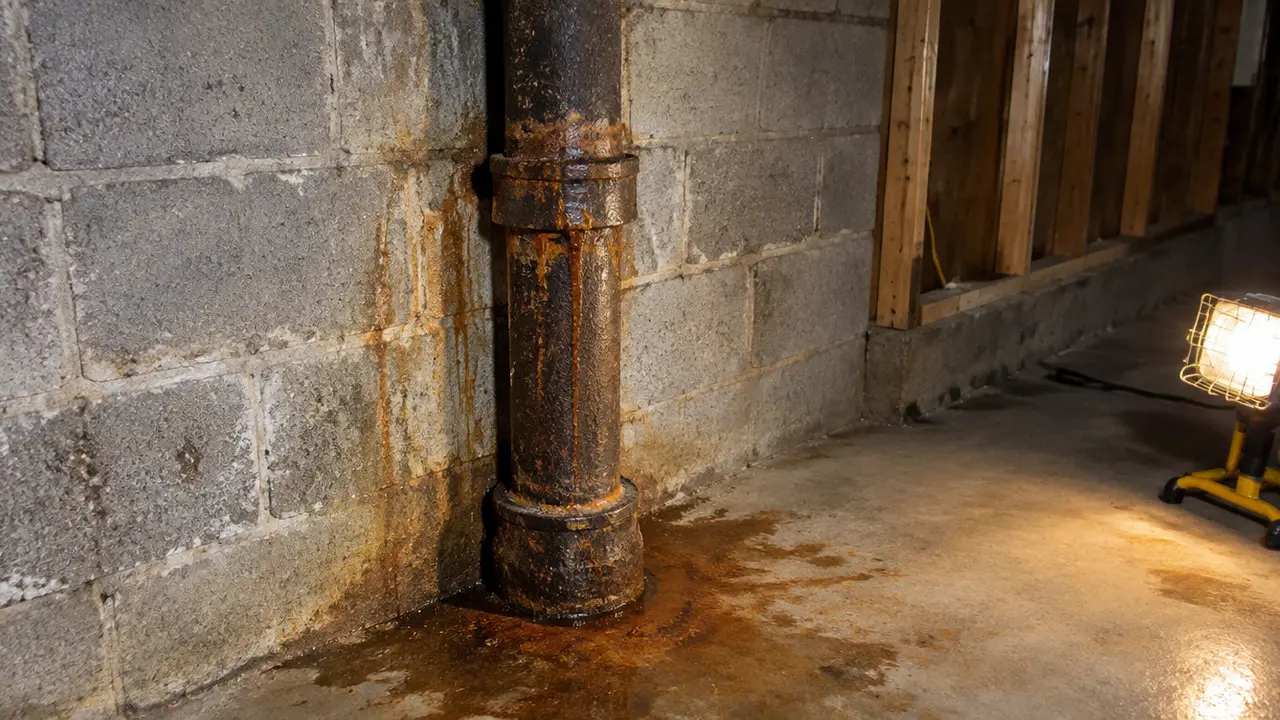
Yes. A drain or vent pipe inside a wall or ceiling can crack, or a joint can pull apart or was never glued, and it will only leak air when the pressure in the pipe is higher than in the room. That happens during flushes, laundry cycles and gusty weather, so the smell arrives in bursts and is strongest in one wall, closet or ceiling area, often upstairs where there is no drain in sight.
Clues that point inside the wall: the smell is strongest where no fixture is; it follows the route of the stack between floors; there is staining, bubbling paint or a damp patch; or it started after renovation work nearby, such as a new bathroom fan, pot lights or a wall-mounted TV fastened into a pipe. A smoke test is the tool for this, because the smoke shows the exact joint without opening the wall first.
Older homes with cast iron stacks can develop cracks along the pipe as it corrodes. Plastic drain-waste-vent systems more often leak at a joint. Either way, the repair is a plumbing job, and the wall only needs opening where the smoke comes out.
07 /Why does the smell come back after I fix it?
Usually because the fix treated the symptom and not the path. Refilling a trap that is being siphoned solves the smell until the next heavy drain. Caulking around a rocking toilet hides the movement while the seal underneath keeps lifting. Air freshener and drain deodorisers mask the odour but leave the opening in place. A smell that returns within days of a fix means the real weak point is still open.
- Confirm every trap in the house holds water a day after use.
- Confirm every toilet is solid on the floor.
- Confirm every cleanout cap, sump lid and ejector lid is tight and sealed.
- If all three check out, book a smoke test to find leaking joints and vents.
- If the smoke points below the floor or outside, have the line filmed.
Room-by-room suspects are in why the house smells like sewer, and the health side is in is sewer gas dangerous. The Sewer Symptom Triage has a "comes and goes" option that ranks causes by the pattern, and you can send your log to the desk for a second look.
FAQQuestions people ask
Why does my sewer vent smell outside?
Roof vents are meant to release drain air. On still or damp days the plume can drift down instead of dispersing. Constant smell at ground level, or at one spot, points to something else.
Why does sewer smell get worse on hot days?
Heat speeds up evaporation from traps and the breakdown of waste in drains and pits, so weak spots show up more.
Can a clothes dryer cause a sewer smell?
Indirectly. A dryer blows a lot of air out of the house, and makeup air can be drawn in through a dry or weak trap.
Why does the smell only happen in one bathroom?
Something local to that room: its toilet seal, a trap that siphons, a sink overflow, or a vent serving that bathroom.
NETWORKGo deeper across the HAUSE Sewer network
Is sewer backup dangerous? Health risks, what it smells like and what it looks like
Is sewer backup dangerous? How sewage can make you sick, what sewer backup smells and looks like, when the smell is harmful, and who should stay away.
PipeCleaning.caHow to clean the pipes under a kitchen or bathroom sink
How to clean the pipes under a sink: remove and scrub the P-trap, clear the trap arm, fix a slow bathroom stopper, and reassemble without leaks, step by step.
DrainAugering.caHow to snake a bathtub or shower drain
How to snake a bathtub or shower drain: clear hair at the stopper, feed cable through the tub overflow, reach the shower trap, and spot a branch clog.