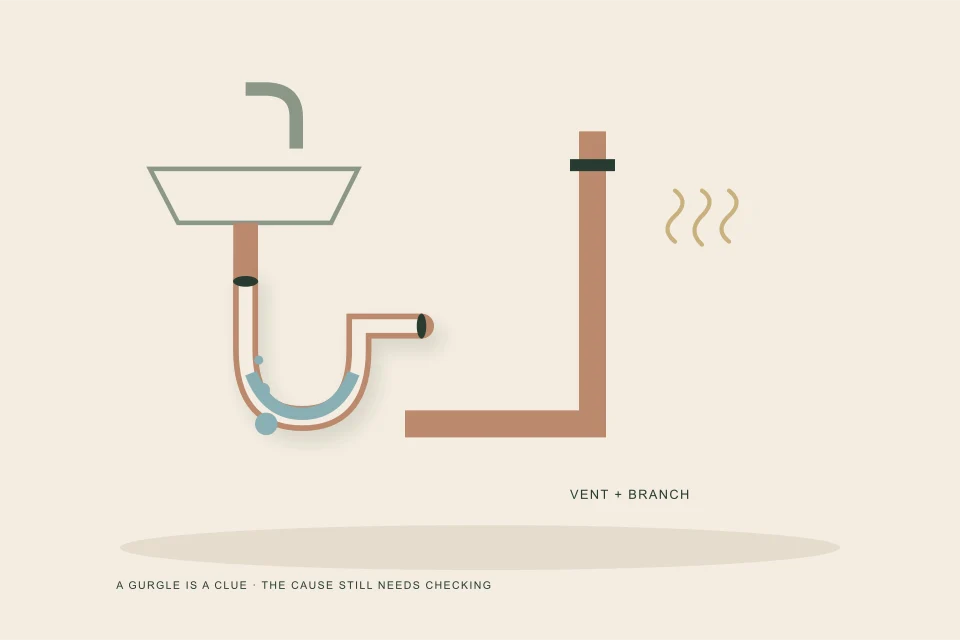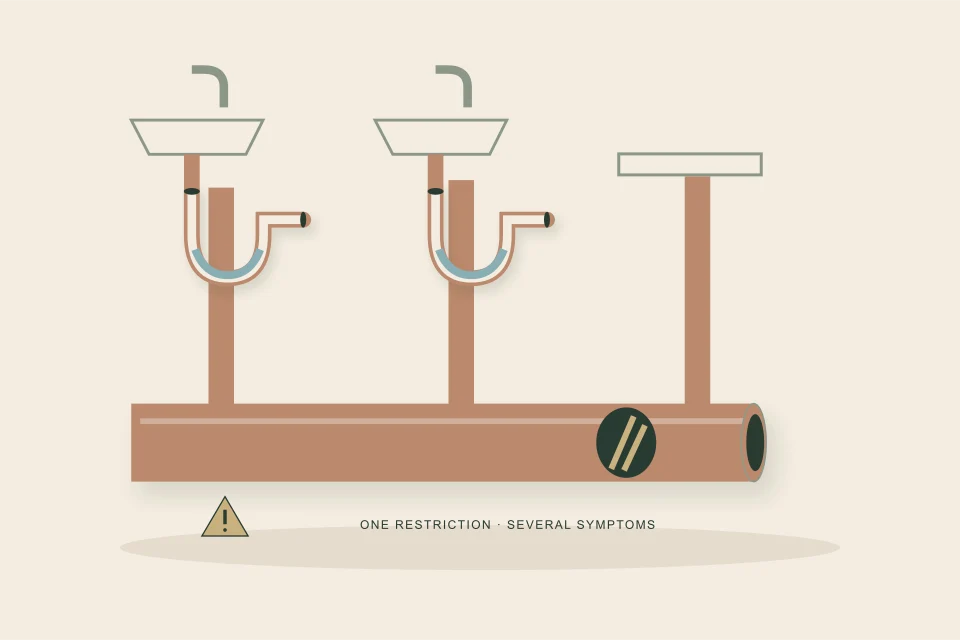
Your main sewer line is probably clogged when more than one fixture misbehaves at once, and especially when the lowest drain reacts first: water rising in the basement floor drain when the washer empties, a bathtub filling when a toilet flushes, or gurgling from a toilet when a sink drains. One slow sink on its own is almost always a local clog in that fixture's trap or branch.
- Count the fixtures: one slow drain is local, several slow drains are shared pipe.
- The lowest opening in the house shows a main-line clog first.
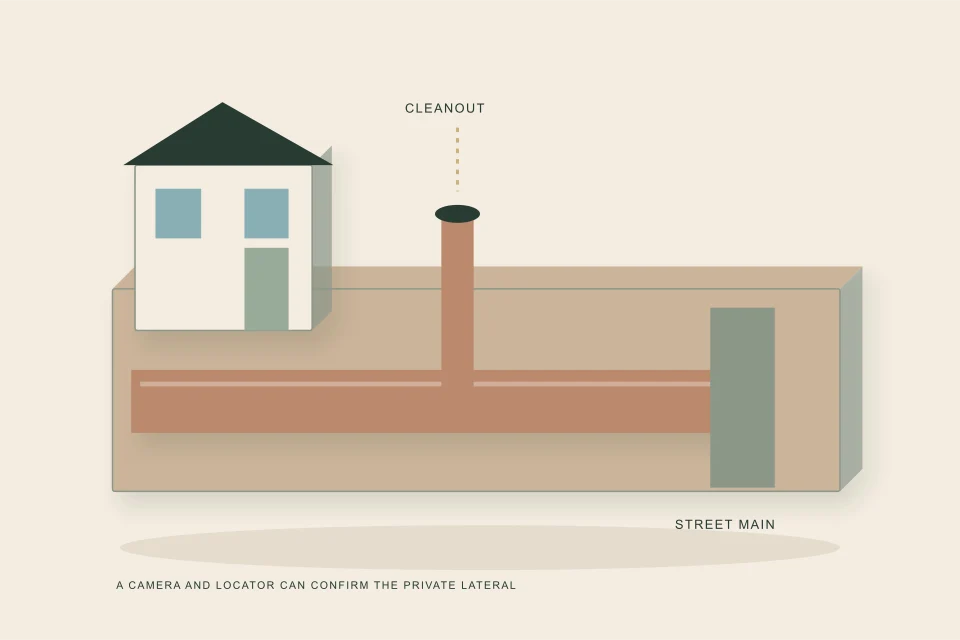
- Water standing in a main cleanout means the blockage is downstream of it.
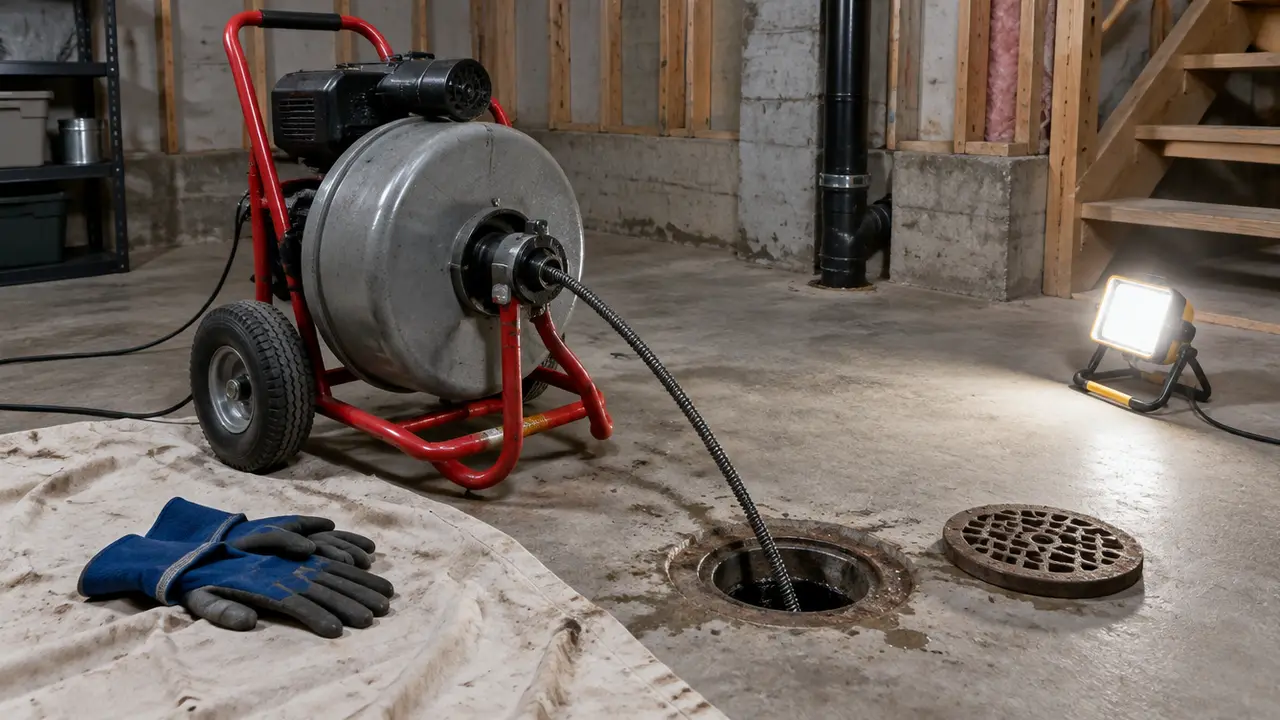
- A main-line clog needs a cable or jetter long enough to reach it, and a camera run afterwards to find out why.
01 /What are the signs of a clogged main sewer line?
The signs all come from one fact: every drain in the house shares the main building drain and the lateral beyond it. When that shared pipe narrows or blocks, the trouble shows up at several fixtures, starting with the lowest ones, and it gets worse when a lot of water is used at once. A slow drain that affects only one fixture is a different, smaller problem.
- Several fixtures are slow at the same time, on different floors.
- The basement floor drain gurgles, seeps or overflows when the washer drains or the tub empties.
- Flushing a toilet makes water rise in a nearby tub or shower, or bubbles appear in another toilet.
- The lowest toilet in the house is slow or bubbles when other fixtures drain.
- Sewer smell near the floor drain along with slow drainage.
- Water standing in the main cleanout when nobody is using water.
- A wet or soft patch in the yard above the lateral, in the worst cases.
02 /How is a main line clog different from a drain clog?
A drain clog sits in one fixture's trap or its branch pipe, so only that fixture drains slowly and the rest of the house is normal. A main line clog sits in the shared pipe below all the branches, so it affects everything, and it usually shows at the lowest drains first. The distinction decides the fix, the tools and the price.
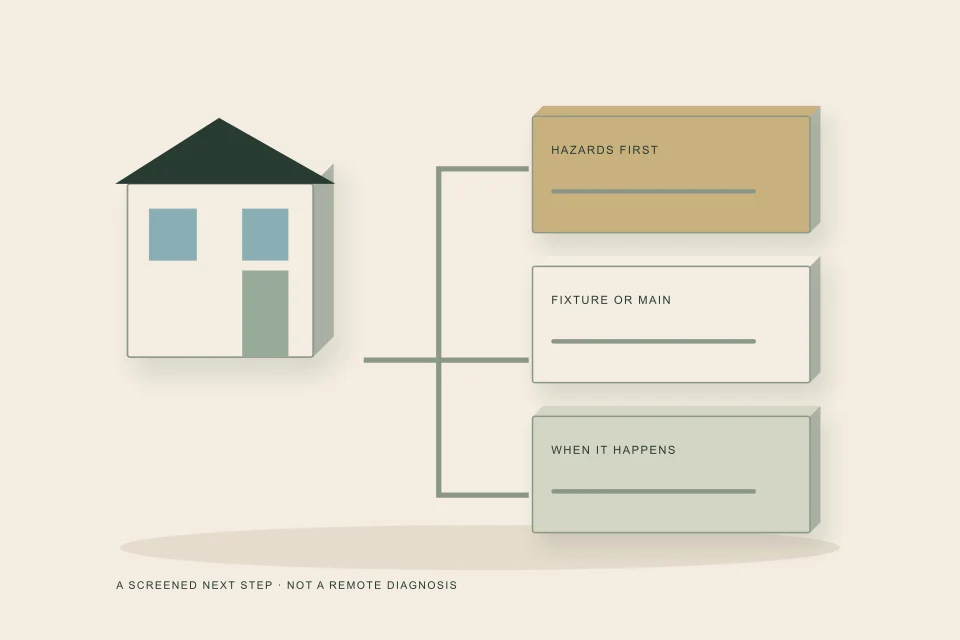
Two drains in the same bathroom are a middle case: they share a branch, so a blockage there affects both but not the rest of the house. The Sewer Symptom Triage applies these rules to your answers and names the likely zone.
03 /How can I test for a main line clog at home?
Use water and watch the lowest drain. Fill and drain the bathtub, or run the washing machine's drain cycle, while someone watches the basement floor drain and the lowest toilet. If water rises, gurgles or bubbles there, the shared pipe is restricted. Stop the test the moment water appears; you are looking for a reaction, not trying to cause a backup.
- Start with the fixture that is slow
Clean its trap or stopper. If that fixes it, you are done.
- Run a second fixture nearby
If it is slow too, the problem is further down than either trap.
- Flush the highest toilet
Watch the lowest fixtures for rising water or bubbles.
- Drain a large volume
A full tub or a washer pump-out, with someone at the floor drain ready to call stop.
- Look at the cleanout
If a cleanout has a clear cap or is already open for service and nothing is running, standing water inside means the blockage is downstream.
04 /Should there be water in my sewer line or cleanout?
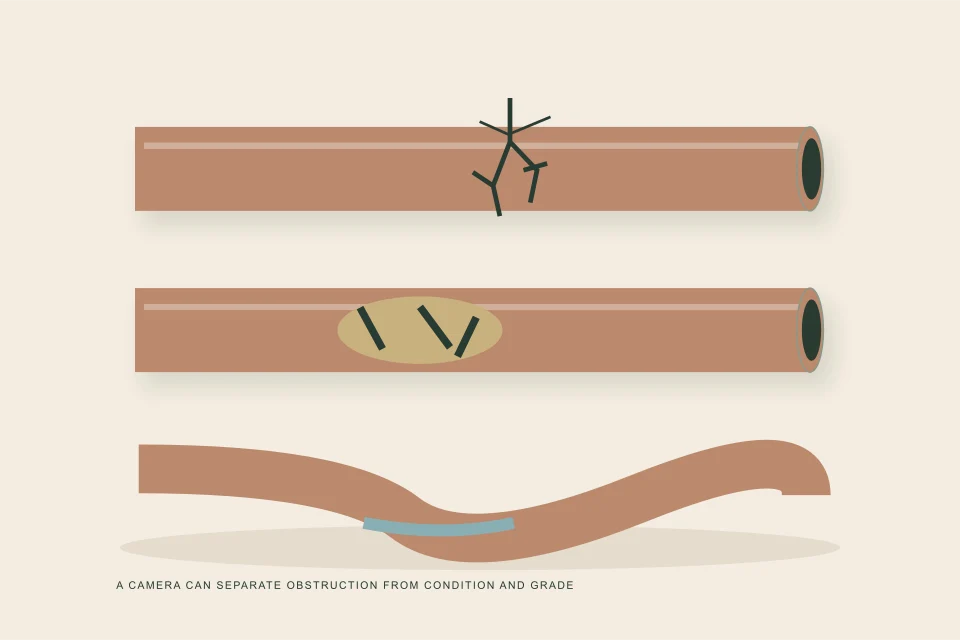
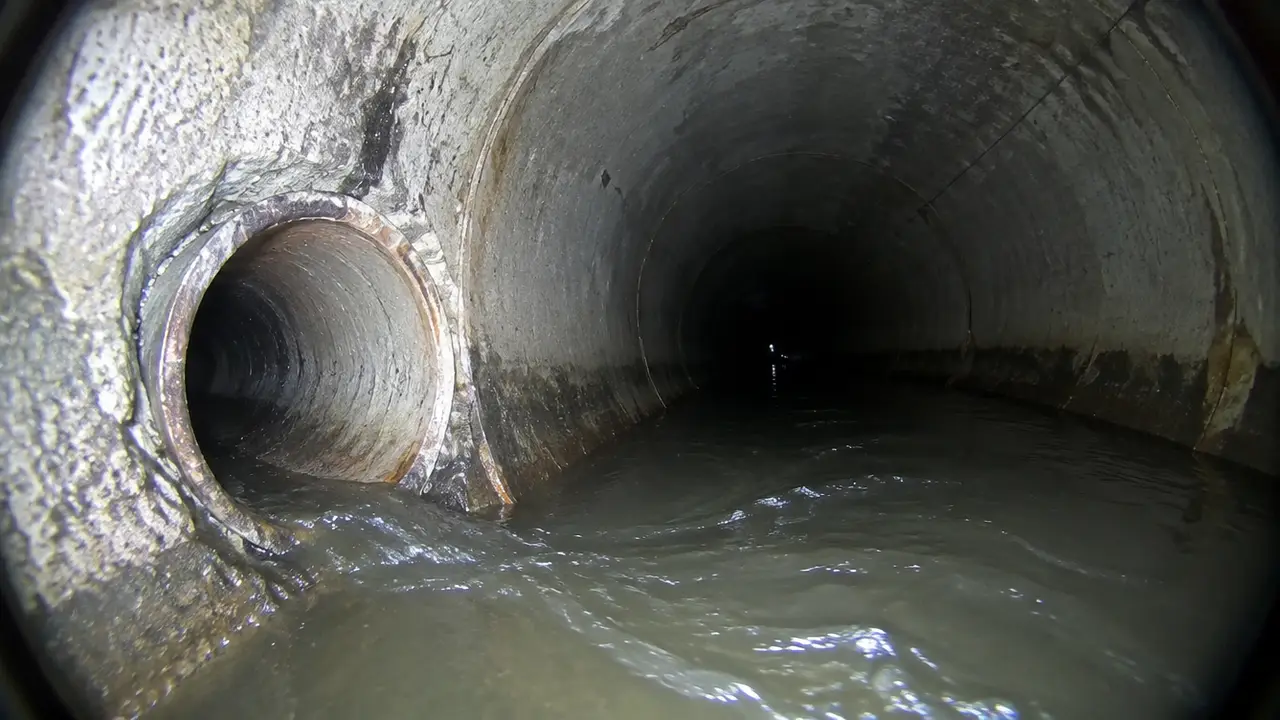
Not standing water. Apart from the water held in traps, a healthy drain line is empty between uses because it slopes toward the main. Water sitting in a main cleanout, or held along a length of pipe on a camera video, means something downstream is stopping it: a blockage, or a sag where the pipe has settled below its grade.
A small puddle at one spot on a camera run can be a minor dip; a long stretch of standing water is a belly that will keep collecting solids. That difference matters for repairs, because liners follow the existing grade and cannot remove a sag. Sags are explained with a profile drawing on the glossary and in your repair options.
05 /What usually causes a main sewer line to clog?
Things that should not be in the pipe, and defects in the pipe that catch them. Wipes, paper towels and grease are the most common material; roots, sags, offset joints and corroded cast iron are the most common defects. In a healthy line, the material passes. In a line with a defect, it collects at the same spot until flow stops.
| House age | Common pipe | Causes to suspect first |
|---|---|---|
| Before about 1950 | Cast iron inside, clay lateral | Roots at clay joints, scale in cast iron |
| About 1950 to 1975 | Cast iron, clay; fibre pipe in some areas | Roots, joint offsets, deformed fibre pipe |
| About 1975 to 1995 | Plastic inside, plastic or clay lateral | Sags from settling, roots where clay remains |
| After 1995 | ABS or PVC throughout | Wipes and grease, construction debris, settled bedding |
Those are tendencies, not rules; renovations and earlier repairs change what is actually underground. The camera run after clearing settles it. The causes are explained further in why sewers back up.
06 /What does it cost to clear a main sewer line?
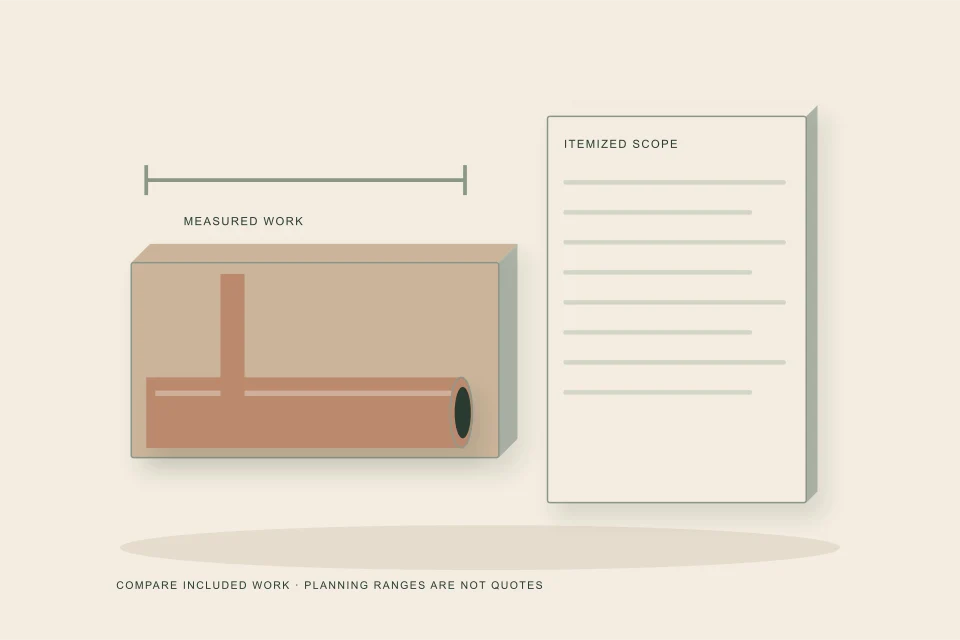
As a 2026 planning estimate in Canadian dollars, clearing a residential main line with a cable through an accessible cleanout typically quotes $200 to $450 in business hours. Hydro jetting usually quotes $450 to $1,100, and a camera run added to the same visit $150 to $350. Access through a toilet or roof vent, heavy roots, and after-hours calls push prices up.
| Service | Typical range |
|---|---|
| Branch drain clearing (one sink or tub) | $150–$350 |
| Main line cable through an accessible cleanout | $200–$450 |
| Main line cable through a toilet pull or roof vent | $300–$600 |
| Hydro jetting, residential main | $450–$1,100 |
| Camera run added to the same visit | $150–$350 |
Ask for the price before work starts, including any after-hours premium, and whether the camera is included. The full set of ranges is on the cost answers page. Methods are compared in depth on sister sites PipeCleaning.ca and SewerCleaners.ca.
07 /What should happen after the main line is cleared?
A camera run, while the line is clean and flowing. Clearing tells you the line was blocked; the camera tells you why, and whether it will happen again. Ask for the recorded file with distances on screen and a short written summary.
If the camera shows grease or wipes and a sound pipe, habits and occasional jetting are the answer. Roots, offsets, sags and broken sections are defects, and they call for a repair decision rather than repeated clearing. Why sewers back up explains each cause, and getting a second opinion shows how to check a repair recommendation. If you want help reading your video, send it to the desk.
FAQQuestions people ask
Why is my basement floor drain the first to back up?
It is usually the lowest opening in the house. When the shared pipe below it is blocked, water rises until it can spill out, and the floor drain is reached first.
Can a main sewer line clear itself?
A soft blockage can sometimes shift, but whatever caused it is still there. If the lowest drain reacted, have the line cleared and filmed rather than waiting.
Will a plunger fix a main line clog?
No. A plunger works on a trap or a short branch. A main-line clog needs a cable or jetter that reaches the blockage.
How long does it take to clear a main sewer line?
A straightforward clearing through an accessible cleanout often takes an hour or two, longer with heavy roots or difficult access. The camera run adds time.
Why does my toilet bubble when the washing machine drains?
The washer's surge meets a restriction downstream and pushes air back through the toilet's trap. It is a common early sign of a main-line restriction.
NETWORKGo deeper across the HAUSE Sewer network
Clog Locator: find the blockage before you pick up a cable
Use the Clog Locator to find where a drain clog sits (trap, branch, stack, main or lateral) and which auger class and cable size fits the pipe.
SewerCleaners.caMain sewer line cleaning: what is actually involved
Main sewer line cleaning explained: how pros access the line, cable vs jetting, camera proof, how long it lasts, and what a complete job should include.
SewerRoots.caSigns of roots in your sewer line
Signs of roots in your sewer line: gurgling, slow floor drains, seasonal backups and what a camera shows. Ten symptoms ranked, plus how to confirm roots fast.